-

Detailed Explanation of Technical Specifications for Pollution-Free Pesticide Use in Potatoes
1. Cultivating strong seedlings free of pests and diseases (1) Seed potato selection: For pollution-free potatoes, seed potatoes that are pest- and disease-resistant, disease-tolerant, and free of pest and disease damage should be selected. A seed-production field free of pests and diseases should be strictly established, and pest- and disease-free small whole seed potatoes should be cultivated in the pest- and disease-free seed-production field. The small whole seed potatoes kept for seed should be selected during storage. After the seed potatoes are taken out of the cellar, they should be strictly selected, using young and mature tubers as seed, and eliminating tubers with undesirable traits such as irregular shape, rough and aged skin, protruding eyes, and dull skin color. The quality of seed potatoes shall meet the requirements for improved grain crop varieties or above under GB8079-1987.
-
Classification of Koi Varieties and Detailed Explanation of Their Main Characteristics
Through continuous crossbreeding, improvement and selective breeding, koi have now been developed into more than one hundred varieties. Japanese koi are mainly divided into 13 categories according to their colors, markings and scale distribution. 1. Kohaku koi: the base color of the body surface is silvery white, inlaid with changing red markings. 2. Taisho Sanke koi: the base color of the fish body is snow white, with crimson and jet-black markings emerging. 3. Utsuri koi: the fish body has black as its base color, with triangular markings that are either white, red or yellow. 4. Showa Sanke koi: the fish body
-
What varieties of freshwater angelfish are there? A detailed guide to common species classification
1. Common Angelfish Scientific name: pterophyllum scalare English name: Angelfish Native to the waters from the central Amazon River to the Peru and Ecuador region, it is the original species from which today's general artificially improved angelfish breeds are derived. In its scientific name, pterophyllum means "as soft and light as a feather," while scalare describes its body stripes as being like a ladder. Apart from breeding, there are no obvious external sexual characteristics; the male's external genital organ is pointed, while the female's is
-
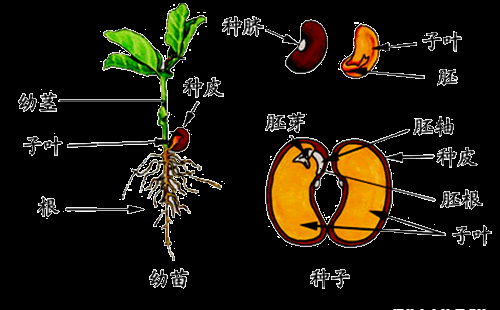
Plant Seed Identification Guide: Teaching You to Recognize Plant Seeds
A mature seed consists of the seed coat, embryo and endosperm. The embryo consists of the radicle, plumule, hypocotyl and cotyledons. Some plant seeds have endosperm, such as corn, wheat and rice. In some plant seeds the endosperm is reduced, and the nutrients in it are transferred to the cotyledons, such as in legumes. Soak soybean or broad bean seeds in water overnight
-
Identification and Control Methods of Diseases in the Seedling Stage of Panax notoginseng
Because Panax notoginseng grows year-round in a shaded and humid environment, diseases such as black spot, round spot, phytophthora blight, rust rot and powdery mildew occur and cause serious damage, with annual losses from various diseases reaching 30%-40%, and in severe cases over 80%. The stage of emergence and leaf growth, when the plant is tender, the root system is underdeveloped and stress resistance is poor, is an important period for initial infection by many pathogens. If spring rain comes early and frequently, the disease spreads rapidly and the damage and losses are severe. Panax notoginseng generally takes 60-75 days from sowing to emergence; strengthening
-
Identification and Control Methods for Common Cherry Blossom Diseases and Pests
There are many types of cherry blossom diseases and pests. The common ones are described below: Perforation-type brown spot disease occurs in May and June. Small purplish-brown spots appear on the leaves, then gradually expand into circles. After the diseased spots dry and shrink, they become small holes. The pathogen mostly overwinters on diseased branches and leaves. The optimum temperature for its development is 25°C to 28°C. It spreads by wind. In rainy seasons, infection and disease development are favored. When the tree is weak, drainage is poor, and ventilation and light penetration are poor, the disease occurs severely. Control methods: (1) Strengthen cultivation management, carry out reasonable pruning, and pay attention to cutting off diseased shoots, timely clearing
-
Identification and Control Methods for the Potato Ladybird Beetle
The potato ladybird beetle (Henosepilachna vigintioctomaculata Motschulsky) belongs to the order Coleoptera, family Coccinellidae. It is widely distributed in northern China. It mainly damages potatoes, eggplants, Chinese cabbage, rapeseed, as well as beans, cucurbits and so on. [Field identification] Both adults and larvae feed on leaves, gnawing the epidermis and mesophyll on one side, creating many net-like pits. The adult is about 8 mm long and hemispherical. The body dorsum and elytra are yellowish-brown; the center of the pronotum
-
Key Points from the Seminar on Pollution-Free Fishery Product Certification
On August 14, at the 2007 National Pollution-Free Fishery Product Certification Exchange Seminar held in Shenyang, Liaoning Province, the person in charge of the Fishery Sub-center of the Agricultural Product Quality Safety Center of the Ministry of Agriculture stated: at present, China's fishery product certification rate (annual output of certified products/annual output of aquatic products) is still very low. In particular, in major fishery provinces with an annual output of more than 1 million tons, the certification rate is below 10%. China is a major fishery production country. In order to adapt to domestic and international consumption trends for fishery products and ensure the quality of fishery products
-
Identification and Control Methods for Geranium Alternaria Leaf Spot
Geranium Alternaria leaf spot is a common leaf disease of geranium. The pathogen has a wide host range and can attack many woody and herbaceous ornamental flowers, seriously affecting their ornamental value. Symptoms: In the early stage of the disease, chlorotic spots appear on infected leaves, and the lesions gradually expand to form larger circular spots. The spots are dark brown with concentric rings. In the late stage of the disease, a dark green mold layer appears on the spots, which consists of the conidia of the pathogen. Pathogen: The pathogen is Alternaria tenuis Nees, belonging to
-
Symptoms, Identification, and Control Methods of Black Belly Disease in Scorpions
Also called black rot, it is caused by eating spoiled feed and becoming infected with black mold, or by environmental pollution and unclean drinking water. The disease mostly occurs in summer. Symptoms of affected scorpions are: in the early stage, the scorpion's abdomen turns black, the abdomen swells, activity decreases or stops, and appetite decreases or the scorpion stops eating; in the later stage, black decay appears on the front abdomen, and squeezing it by hand causes black mucus to flow out. This disease has a short onset time and a high mortality rate. Control methods: keep the feed and drinking water fresh and clean, and frequently wash the food dish and water dish; when sick
条件筛选