What to Do When Pepper Tree Leaves Turn Yellow and Drop? Common Disease Identification and Control
When watering the pepper tree, you must pay attention to the amount and frequency. What are the common diseases of the pepper tree? What to do when leaves turn yellow and drop:
What are the common diseases of the pepper tree:
Actually, the pepper tree has relatively few diseases, and anthracnose is the common one. In the early stage of anthracnose, spray alternately 3 times continuously with 25% Carbendazim wettable powder 500 times dilution, or 50% Procymidone wettable powder 1000 times dilution,
or 72.2% Propamocarb aqueous solution 1000 times dilution, using 1 of these 3 solutions, with an interval of generally 7-10 days during this period, which is best.
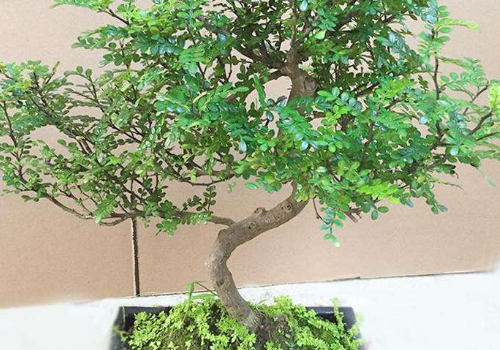
What to do when pepper tree leaves turn yellow and drop:
1. Replace the soil at the right time. The choice of soil for the pepper tree is the first step to ensure its growth. If its soil is poor, its leaves will slowly turn yellow and wither. At this time, what we should do is change its soil. The soil should be relatively fertile sandy soil with good drainage.
2. Increase light in time. The pepper tree also likes to grow in places with good light. If its light is insufficient, the problem mentioned above is very likely to occur, so we should give it enough light.
If it is placed indoors, it is best to put it in a place with relatively good light, such as a balcony or near a window, and it must not be placed in too dark an area. In addition to the above problems, we should also often let it get outdoor ventilation, as this will be more conducive to its growth.
3. Do a good job with watering management. When watering, the amount of water is also very important. It cannot be watered too much or too little. The humidity it needs is between 50 and 70. If it is watered too much, its roots will rot, and if it is watered too little, yellow leaves will also appear.
Generally, we just need to water it once every 3 to 5 days, and each time we must water thoroughly. The soil just needs to be moist; there is no need for standing water.
4. Avoid strong wind as much as possible. The pepper tree is relatively fragile, so it cannot withstand very strong wind. This is because its connection points are very fragile. If the wind blows, the leaves will easily fall off. If there is strong wind outside, it needs to be placed indoors, so that its leaves can be protected from being blown off by the wind.
Now you know about the care and pests and diseases of the pepper tree.
Chinese Parasol Tree Firmiana platanifolia Chinese Parasol Tree Illustrated Guide: How to Grow Chinese Parasol Tree / How to Propagate Chinese Parasol Tree
Chinese Parasol Tree ProfileChinese Parasol Tree Firmiana platanifolia
Aliases: Qingtong, Chinese parasol tree, Tongma, Wutong
Classification: Woody flowering plant
Family and Genus: Plantae, Angiosperms, Dicotyledons, Malvales, Sterculiaceae, Firmiana
Full bloom period: Summer
Chinese Parasol Tree. The "Chinese parasol tree" is a plant in the family Sterculiaceae and genus Firmiana. Its English name is Phoenix Tree. It is also known by the aliases Qingtong and Tongma, and it is also a large deciduous tree, reaching up to 15 m tall; the trunk is upright, and the bark is green and smooth. It is native to China and is cultivated in all provinces north and south, and it is also a common street tree and ornamental tree for courtyard landscaping. What we call French plane tree is actually one kind of sycamore, and it is mistakenly regarded as Chinese parasol tree by everyone only because its leaves resemble those of the Chinese parasol tree. The Chinese parasol tree grows quickly, its wood is suitable for making musical instruments, its bark can be used for papermaking and ropes, and its seeds can be eaten or pressed for oil. Because its trunk is smooth and its leaves are large and graceful, it is a famous...
Chinese Parasol Tree Cultivation Methods and Precautions Introduction to the Chinese Parasol Tree
Chinese Parasol Tree. The "Chinese parasol tree" is a plant in the family Sterculiaceae and genus Firmiana. Its English name is Phoenix Tree. It is also known by the aliases Qingtong and Tongma, and it is also a large deciduous tree, reaching up to 15 m tall; the trunk is upright, and the bark is green and smooth. It is native to China and is cultivated in all provinces north and south, and it is also a common street tree and ornamental tree for courtyard landscaping. What we call French plane tree is actually one kind of sycamore, and it is mistakenly regarded as Chinese parasol tree by everyone only because its leaves resemble those of the Chinese parasol tree. The Chinese parasol tree grows quickly, its wood is suitable for making musical instruments, its bark can be used for papermaking and ropes, and its seeds can be eaten or pressed for oil. Because its trunk is smooth and its leaves are large and graceful, it is a famous ornamental tree species. In ancient Chinese legend, the phoenix "does not perch except on the Chinese parasol tree." Many guqins in legends were made from Chinese parasol wood, and the Chinese parasol tree played an important role in Chinese culture. The writer Feng Zikai's essay of the same name, "Chinese Parasol Tree," can be called a fine piece. The Chinese parasol tree has already been introduced to many countries in Europe, the Americas and elsewhere as an ornamental tree species.
Morphological Characteristics and Appearance of the Chinese Parasol Tree
The Chinese parasol tree is a deciduous tree, reaching up to 15 m tall; the leaves are green and smooth.
Leaves
The leaves of the Chinese parasol tree are heart-shaped, palmately 3-5 lobed, 15-30 cm in diameter, with triangular lobes, gradually pointed at the tip, heart-shaped at the base, hairless on both sides or slightly covered with short soft hairs, with 7 basal veins, and the petiole is as long as the leaf blade.
Flowers
The Chinese parasol tree has terminal panicles, about 20-50 cm long, with lower branches up to 14 cm long, and pale purple flowers; the calyx is deeply 5-cleft almost to the base, the sepals are linear, curled outward, 7-9 mm long, covered outside with pale yellow short soft hairs, and inside with soft hairs only at the base; the pedicel is almost as long as the flower; in male flowers, the androgynophore is as long as the calyx, thicker in the lower half, hairless, with 15 anthers irregularly clustered at the tip of the androgynophore, and the degenerated ovary is pear-shaped and very small; in female flowers, the ovary is spherical and covered with hairs.
The flowering period of the Chinese parasol tree is around June.
Fruit
The Chinese parasol tree has membranous follicles, stalked, splitting into leaf-like forms before maturity, 6-11 cm long and 1.5-2.5 cm wide, with short down outside or nearly hairless, and each follicle has 2-4 seeds; the seeds are spherical, with a wrinkled surface, about 6-7 mm in diameter.
Ecological Habits of the Chinese Parasol Tree
The Chinese parasol tree is a light-loving plant. It likes a warm climate and is not cold-tolerant. It is suitable for growing in fertile, moist sandy loam and likes alkaline soil. The roots are fleshy and not tolerant of waterlogging, with a deep root system and thick roots; its sprouting ability is weak, and it is generally not suitable for pruning. It grows fairly quickly and has a relatively long lifespan, able to live more than a hundred years. During the growing season, if waterlogged for 3-5 days, the roots rot and the plant dies. It leafs out relatively late, and in autumn the leaves fall early. The leaves, flowers, roots and seeds can all be used as medicine, and the seeds can also be stir-fried for food and pressed for oil. It has strong resistance to a variety of toxic gases. It is afraid of viral diseases, afraid of giant bagworms, and afraid of strong wind. It is suitable for planting along village roads, beside homes, on hillsides, limestone hillsides and other places. It is a sun-loving tree species and likes to grow in warm, humid environments; it is tolerant of severe cold, drought and poor soil. In summer, the bark is not tolerant of strong sunlight. It grows better on sandy soil.
Cultivation Techniques for the Chinese Parasol Tree
The Chinese parasol tree is commonly propagated by sowing, and cutting and root division are also possible. Harvest when the fruit ripens in autumn, dry and thresh, then sow in autumn of the same year, or store in sand until spring sowing the following year. Drill sowing with row spacing of 25 cm, covering soil about 1.5 cm thick. The sowing rate per mu is about 15 kg. Seeds stored in sand germinate relatively uniformly, sprouting 4 to 5 weeks after sowing. Dry-stored seeds often germinate unevenly, so they can be soaked in warm water before sowing to promote germination. Under normal management, seedlings of the current year can reach more than 50 cm in height, and they are divided and cultivated the following year. Three-year-old seedlings can be released from the nursery. The planting site should be chosen in a high, dry area, apply base fertilizer in the hole, and after setting the trunk, seal the saw cut with wax. Pay attention to pests such as Chinese parasol psyllid, frost hawk moth and slug moth, which can be controlled with petroleum emulsion, dichlorvos, dimethoate, methamidophos and others. In the north, young trees must be wrapped with straw rope in winter to protect against cold. Apply fertilizer once each in early winter and early spring.
Disease and Pest Control of the Chinese Parasol Tree
The main diseases and pests of Qingtong include the Qingtong psyllid and the cotton leaf roller, among others.
Qingtong Psyllid
The Qingtong psyllid, also known as the Chinese parasol psyllid, is the main pest of Qingtong. The psyllid uses nymphs and adults to suck sap on the undersides of Chinese parasol leaves or on young twigs and trunks, damaging the conductive tissues. Young trees are especially susceptible, and in severe cases the entire plant's leaves turn yellow and the top shoots wither. The white cotton-like waxy substance secreted by the nymphs blocks the stomata on the leaf surface, affecting normal respiration and photosynthesis of the leaves, causing the leaf surface to appear pale and shriveled. When the wind blows, the white waxy threads flutter in the wind like flying mist and fall in flocs. If a person accidentally touches them, it feels sticky, and there is also a foul odor, and it is very difficult to wash off. It seriously pollutes the surrounding environment and affects the city's appearance.
Control Methods
Chemical control: in mid-to-late May, spray 10% imidacloprid powder 2000-2500 times dilution, 2.5% imidacloprid 1000 times dilution, or 1.8% abamectin 2500-3000 times dilution.
During the damage period, spraying clean water to wash off the flocculent material can kill many nymphs and adults. In early spring, spray 65% soap petroleum emulsion 8 times dilution to control overwintering eggs.
The boil bat moth harms Chinese parasol, magnolia and other trees. A veterinary syringe can be used to inject 40% fenitrothion emulsifiable concentrate 400 times dilution into the tunnels at the damaged sites to poison the larvae. Petroleum emulsion, dichlorvos, dimethoate, methamidophos and others can also be used for control.
Pay attention to protecting and utilizing natural enemy insects such as parasitic wasps, ladybugs and lacewings.
Cotton Leaf Roller
The larvae of the cotton leaf roller roll leaves into cylindrical shapes and hide inside, eating the leaves into notches or holes. In severe cases, they eat all the cotton leaves and continue to damage the bracts or young buds inside cotton bolls, affecting the growth and development of the cotton plant.
In addition to damaging cotton, its hosts also include amaranth, hollyhock, sunset hibiscus, velvetleaf, hibiscus, kapok and others.
Control Methods
Use your hands to crush the larvae and pupae inside the rolled leaves.
During the larval occurrence period, spray 40% dimethoate emulsifiable concentrate 1500 times dilution, or 5% imidacloprid emulsifiable concentrate 2000-3000 times dilution, or 25% chlorbenzuron No. 3 3000-4000 times dilution, once every 7-10 days.
Variety Classification of the Chinese Parasol Tree
1. American sycamore (Platanus occidentalis)
2. London plane (Platanus acerifolia)
3. Oriental plane (Platanus orientalis)
It belongs to Rosales and others, and it is not recommended to place it among Chinese parasol trees.
Distribution Area of the Chinese Parasol Tree
The Chinese parasol tree is mainly produced in Zhejiang, Fujian, Jiangsu, Anhui, Jiangxi, Guangdong, Nanjing, Hubei and other provinces, and is distributed from Hainan Island in Guangdong to Shandong, Beijing and Hebei in North China. It is also distributed in Japan, Korea, and South Korea. It is mostly artificially cultivated.
The Chinese parasol tree is also relatively common in the Yangtze River and Pearl River basins.
Landscape Uses and Horticultural Landscape of the Chinese Parasol Tree
The Chinese parasol tree has a tall and sturdy trunk, luxuriant branches and leaves, an oval crown, a straight trunk, green and smooth bark, and thick, emerald-green side branches. It grows rapidly, is easy to survive, and is tolerant of pruning, so it is widely planted as a street greening tree species and is also a fast-growing timber tree species; it has strong resistance to toxic gases such as sulfur dioxide and chlorine. The leaves, flowers, roots and seeds can all be used as medicine. It is often used for garden viewing, in residential areas, gardens, schools, institutions, factories, hillsides, courtyards, roadsides and in front of buildings.
Functions and Uses of the Chinese Parasol Tree: Wutong Seeds
Wutong seeds are the dried mature seeds of the plant Chinese parasol tree in the family Sterculiaceae. Harvest from late autumn to early winter, remove impurities, and dry in the sun. The dried seeds are spherical or nearly round, 6-8 mm in diameter, yellow-brown to dark brown, with the surface wrinkled into a net-like pattern. The outer seed coat is relatively brittle and easy to break, while the inner seed coat is tough. After removal, inside there is thick pale yellow endosperm; the two cotyledons are thin and large, pressed close to the endosperm, and the radicle is located at the narrower end. Both odor and taste are slight. Those that are large, plump, brown and free of impurities are considered best. Tao Yinju said: "There are four kinds of tong trees. Qingtong has green leaves and bark like wutong but no seeds. Wutong is white in color, its leaves resemble those of Qingtong and it has seeds, and the seeds are plump and can also be eaten." Li Shizhen said: "Wutong is found everywhere. The tree resembles tong but its bark is green and not cracked, its wood has no knots and grows straight, and its grain is fine and its nature is tight. Its leaves resemble those of tong but are slightly smaller, smooth and pointed. Its flowers have fine stamens and fall like mold. Its pods are about three inches long, formed of five pieces, and when old they split open like a winnowing basket, called gaoe. Its seeds are attached to the gaoe, with as many as five or six, or as few as two or three. The seeds are as large as pepper, and their skins are wrinkled. The seeds are sweet, neutral, and non-toxic." According to what is recorded in Zhenghe Bencao and Bencao Gangmu, the wutong is the wutong of the family Sterculiaceae.
Main Uses
The Chinese parasol tree is an ornamental tree cultivated in courtyards. Its wood is light and soft, and is a good material for making wooden boxes and musical instruments. The seeds can be eaten after being stir-fried or pressed for oil, and the oil is a non-drying oil. The root bark, stems, leaves, flowers, fruits and seeds can all be used medicinally to treat diarrhea, hernia and premature graying of hair and beard, and have the effects of clearing heat and detoxifying. The fibers of the bark are white and can be used for papermaking and rope braiding. Wood shavings can be soaked to extract mucilage, called paohua, which is used to smooth the hair.
Cultural Background of the Chinese Parasol Tree: Ancient Poems on the Wutong
Because the Chinese parasol tree is tall and upright, it is outstanding among trees. It has been valued since ancient times. Moreover, the Chinese parasol tree is often associated with the phoenix. The phoenix is the king of birds, and the phoenix is most willing to perch on the Chinese parasol tree, which shows how noble the Chinese parasol tree is. In China's Book of Songs, there are records about the Chinese parasol tree. In the "Juan A" section of the Major Court Hymns in the Book of Songs, a poem writes:
"The phoenix sings, on that high ridge. The Chinese parasol tree grows, there in the morning sun. Luxuriant and dense, harmonious and melodious."
This poem says that the luxuriant growth of the Chinese parasol tree attracted the phoenix to sing. Pengpeng qingqing refers to the lushness of the Chinese parasol tree; yongyong jiejie is the sound of the phoenix's call.
In the "Autumn Waters" chapter of Zhuangzi, the Chinese parasol tree is also mentioned. When speaking of Zhuangzi meeting Huizi, it says: "In the south there is a bird, its name is yuanchu. Do you know it? That yuanchu, when it sets out from the South Sea and flies to the North Sea, does not rest except on the Chinese parasol tree..."
In this chapter's painting, the Chinese parasol tree is also linked with the phoenix. The "yuanchu" here is a kind of phoenix. He said that the phoenix flies from the South Sea to the North Sea, and only when it encounters the Chinese parasol tree does it descend onto it. This shows the nobility of the Chinese parasol tree.
In Chapter 37 of Romance of the Three Kingdoms, there is this description: "The phoenix soars among a thousand fathoms, and does not perch except on the wutong; a scholar lies in wait in one place, and does not serve except a true lord."
Because the ancients often associated the Chinese parasol tree with the phoenix, people today often say: "Plant a Chinese parasol tree, and the phoenix will come of itself." Therefore, in former well-to-do families, Chinese parasol trees were often planted in the courtyard, not only because the Chinese parasol tree has presence, but also because the Chinese parasol tree is a symbol of auspiciousness.
There is even a Hakka nursery rhyme: "A child strikes the tong seed, the tong seed falls and the child is happy."
Essay
Feng Zikai, "Chinese Parasol Tree"
In front of the window of the upstairs room there were several Chinese parasol trees. These were all things in the neighbor's yard, but in form they belonged to me. Because they were at an appropriate distance from me, it was as if they had been planted especially for me to look at. Their owner might perhaps see their partial states more clearly than I did; but as for their overall appearance, that could only be seen from a considerable distance. A Tang poem says, "Only when the mountain is distant does it reveal its appearance." I think the same is true of trees. From early summer until now, these several Chinese parasol trees have, in front of me, shown all kinds of appearances in heavy makeup and light touches.
When spring was over and summer just beginning, I saw with my own eyes the scene of the new Chinese parasol trees first sprouting. Those tender yellow little leaves clustered at the tips of the bare branches, like a hall of tree lanterns, and also like a schoolchild's cut-and-paste design, evenly arranged and full of childishness. The leafing of plants also has all kinds of techniques. Some replace old leaves with new, deceiving people's eyes and secretly swapping green for yellow in the dark. Some are so subtle and gradual that people do not notice them changing from bare branches into green leaves. Only the Chinese parasol tree's leafing technique is the clumsiest, but its attitude is the most frank. Their branch tips are sparse and thick, and their leaves are flat and large. Once the leaves are born, the whole tree obviously changes appearance.
In summer, I again saw with my own eyes the scene of green leaves forming shade. Those leaves as large as round fans grew in dense layers. Looking over, not a thread of gap remained, like a great green screen, and also like a green mountain in a decorative painting. Among the courtyard plants I commonly see, apart from the banana tree, I am afraid none surpasses the Chinese parasol tree in leaf size. Although banana leaves are large in shape, they are not many in number; that clove knot takes several days to unfold one leaf, and the leaves on the whole tree are few and countable. Although Chinese parasol leaves are not as large as those, their number is greater. Those things like pig ears hang layer upon layer, from the low branches all the way to the top of the tree. With several Chinese parasol branches placed before the window, I feel there is really too much greenness. The ancients said, "The banana shares its green onto the window gauze," but their vision was too low, seeing only what was before the steps and below the window. If one climbs a tower and looks out, the banana tree then falls below the eye, and one should see "the Chinese parasol shares its green onto the window gauze."
For a month now, I have again seen with my own eyes the scene of Chinese parasol leaves falling. The appearance is truly miserable! At first the green darkened and became ink green; later it turned from ink green to scorched yellow; once the north wind rose, they made a great fuss, and the large yellow leaves began to leave the branches - at first one or two suddenly fell off, and later a great batch flew down in flocks, like something someone had thrown down from a tall building. The branch tips gradually became empty, revealing the houses behind the trees, and in the end only a few branch tips remained, returning to the appearance of early spring. These days they stand empty-handed before my window, like a bachelor who once married and had children but whose family has been broken and people lost, looking quite pitiful! I thought of the ancients' poem: "A tree on the high mountain, the wind blows its leaves away. Once gone several thousand li, when can they return to their former place?" If one wanted to gather all their fallen leaves and make them turn green together, return to the old branches, and restore the summer scene, even if one relied on the power of all the rulers in the world and exhausted all the mechanical efficiency in the world, it would still be impossible. There are many things in the world that turn from yellow back to green, but none symbolizes sorrow like fallen leaves, especially the fallen leaves of the Chinese parasol tree. Fallen flowers have also made people sad. But the lifespan of flowers is short, like an infant dying as soon as it is born. Although we also pity them, because our relationship with them has not lasted long and our memories are few, our sorrow is therefore not deep. The lifespan of leaves is much longer than that of flowers, especially Chinese parasol leaves. From first birth to complete fall, they occupy more than half a year, and moreover they are so luxuriant, so grand! Those few piles of great green, tall and thick before the eyes, are gone in a single morning! There is no greater symbol of "impermanence" than this!
But their owner probably has not felt this sorrow. Because although they planted them and owned them, they have not seen all the scenes described above. They merely sit under the window and glance at their roots and trunks, stand before the steps and look up at their branches and leaves, and sweep their fallen leaves for them, and that is all. How could they see their appearance? How could they feel their symbolism? From this we know that nature cannot be possessed. And we know that art also cannot be possessed.
Further Reading
The world-famous street tree, the French plane tree, can often be seen in Chinese parks and along both sides of streets. Today in China it is cultivated from Dalian, Beijing and Hebei in the north, to Shaanxi and Gansu in the west, to Sichuan and Yunnan in the southwest, and to Guangdong and the eastern coastal provinces in the south. In Nanjing, ordinary people all abbreviate it as "futong" or "fawu," yet it is neither a Chinese parasol tree nor native to France, and what we usually call the Chinese parasol tree actually refers to the "Chinese parasol tree."
What people habitually call the "French plane tree" is only one kind of Platanus. Originally, the genus Platanus has 8 species, native to North America, Mexico, the Mediterranean and India. Three species have been introduced and planted in our country. The fruits on the fruit stalk of Platanus may have 1 fruit ball, or 2 fruit balls, or more than 3 fruit balls, so the names differ, and they are respectively called American sycamore, London plane and Oriental plane. These are three different species. Lishi Wuyu summarizes them as follows:
American sycamore (Platanus occidentalis, native to North America, commonly called "American sycamore" or "meitong")
London plane (Platanus acerifolia, commonly called "London plane" or "yingtong")
Oriental plane (Platanus orientalis, native to southeastern Europe and India, commonly called "French plane tree" or "futong")
Why is Platanus called "French plane tree"? Originally, this kind of tree has leaves resembling those of the Chinese parasol tree, so everyone mistook it for the Chinese parasol tree. In the 17th century, in Oxford, England, people used the American sycamore (also called American sycamore) and the Oriental plane (also called French plane tree) as parents and hybridized them into the London plane, naming it "London plane." Because it is a hybrid, it has no place of origin. After it was widely cultivated in Europe, the French brought it to Shanghai and planted it along Xiafei Road (now the area of Middle Huaihai Road) as street trees. People called it "French plane tree," and one person echoed another, treating it as the Chinese parasol tree.
I believe many children who grew up or played in Nanjing would take the fruits of the French plane tree to play with (in 1925, to commemorate Mr. Sun Yat-sen, the Sun Yat-sen Mausoleum was planned and built, and street trees, namely French plane trees, were planted along Zhongshan Avenue and Lingyuan Road. Later, under the planning of the National Government, Nanjing once had as many as 200,000 French plane trees. The French plane tree is Nanjing's mother tree, and the French plane tree has already become part of Nanjing. One way to play was to pull off the hairs on the fruit and blow them, and another was that there was a net-like layer on the seeds. Children all took it off and called it a little fishing net. Under French plane trees in summer, one could often see "hanged ghosts," called "bagworms" or "case moths" in entomology. This kind of insect uses small twigs and leaves to spin silk into a bag to protect itself, and it spins silk to hang down from the tree. If an ordinary farming family raised chickens at home, they would catch them, cut open the bag, take out the insect body and feed it to the chickens.
Botanically, the French plane tree (Oriental plane) is a large deciduous tree, up to 35 m tall. The branches spread out, the crown is broad, and it is long-oval in shape. The bark is gray-green or gray-white and flakes off in patches. Buds are beneath the leaf scars, leaves are alternate, large, palmately 5-9 lobed, densely covered with stellate soft hairs when young, and later falling off. The flowering period is April-May, with spherical heads. The cones hang down, usually 2 in a string. The fruit ripens in September-October, and the base of the nut has long hairs. Deciduous tree, up to 35 m tall; branches spread out, crown broad; bark gray-green, irregularly flaking off, and after flaking appearing powdery green and smooth. Leaf blades triangular, 9-15 cm long, 9-17 cm wide, 3-5 palmately lobed, with irregular sharp teeth and wavy teeth on the margin, crown broad; bark gray-green, irregularly flaking off, and after flaking appearing powdery green and smooth. Leaf blades triangular, 9-15 cm long, 9-17 cm wide, 3-5 palmately lobed
Base truncate or nearly heart-shaped, with stellate hairs when young, later nearly hairless. Spherical inflorescences 2.5-3.5 cm in diameter, usually 2 in a string, shaped like hanging bells; flowers about 4 mm long; sepals 4; petals 4; male flowers; male flowers have 4-8 stamens; female flowers have 6 separate carpels. Flowering period May, fruit ripening period September-October.
Chinese Parasol Tree Pictures