Symptom Identification and Chemical Control Methods for Guava Scab
What do the symptoms of guava scab look like, and how should it be treated? Do you know? Let's take a look together.
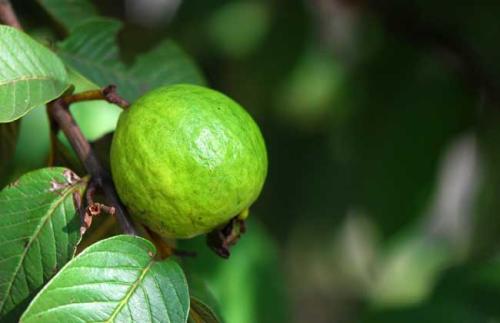
Symptoms: When first infected, the lesions are round and slightly raised, with a rough, cracked surface like a scab, brown in color, with the edges a light brown or earthy yellow hue, about 2 to 4 mm in size. The center of the lesion has small black ring-shaped dots, and the tops of these black dots release black powder or curved columnar structures, which are the pycnidia and pycnidiospores of the pathogen. When the lesion becomes sunken, the epidermis of the edge separates from the tissue of the healthy part, but the lesion does not fall off.
The fruit flesh tissue shows two kinds of symptoms: one is softening of the flesh, water-soaked, with the flesh color turning orange-yellow or purple-yellow; the second is corky yellow-brown flesh that does not soften or become water-soaked, often accompanied by calcium deficiency in the fruit. When calcium is deficient, browning appears on the epidermis near the outer side of the center of the fruit, gradually forming a transverse band area or a ring spot, and the fruit therefore weakens and ages prematurely.
The Thai variety has extremely strong growth vigor, and the fruit tree has no juvenile phase, so it flowers and sets fruit in the first year after planting. Therefore, the upward-growing water sprouts have extremely strong growth vigor, and the fruits borne on water sprouts often show blossom end rot, with symptoms appearing as transverse band browning or browning at the bottom of the fruit, which is closely related to the occurrence and infection of various weak pathogens.
Control methods:
1. Prune branches at the proper time to keep the orchard well ventilated, and avoid planting fruit trees too densely; do not interplant with other fruit trees, so as to reduce intermediate hosts. All of these help in the control of scab.
2. Practice field sanitation by picking out diseased fruits, and burn diseased leaves or branches to eliminate the pathogen.
3. Avoid reusing old packaging bags for bagging. Bagging small fruits for protection has a good control effect, but some fruit growers, out of frugal habits, often reuse the bags, making the fruit susceptible to scab infection.
Now that you have gone through both the symptoms and the control methods, you know what to do now, right?