Damage symptoms of flower leafminer flies and identification of larval morphology
What are the damaging habits of the Liriomyza leafminer, and what does it look like? Do you know? Would you like to learn about it? Let's take a look together.
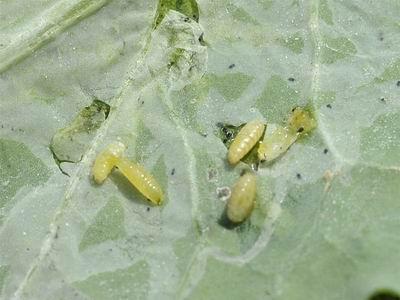
Damaging habits: Adults lay eggs inside the leaf mesophyll, and the larvae first mine and feed beneath the epidermis on the light-facing side of the leaf, creating grayish-white feeding marks on the leaf. When nearly mature, the larvae turn over to the underside of the leaf to mine and feed, and finally pupate beneath the epidermis on the underside of the leaf. The feeding marks of its entire life are concentrated on one small leaf, but can also extend from one small leaf to another. On nearby leaves there are small grayish-white spots, about ten or more at one spot, with the epidermis ruptured; these are wounds caused by adult feeding.
Morphology:
Egg: Oval, gray, slightly transparent.
Larva: Grayish-white to pale yellow, maggot-shaped, about 2 mm long when mature.
Pupa: Oval, grayish-white, about 2 mm long and 1 mm wide.
Adult: About 2 mm long, body blackish-gray, forewings transparent, halteres grayish-white.