-

How serious is the harm caused by soybean sclerotinia stem rot?
What harm does soybean sclerotinia stem rot cause? How do you prevent and control soybean sclerotinia stem rot? Readers, please help share this. Zhongdiwang has compiled the harm caused by soybean sclerotinia stem rot and its prevention and control methods, listed below for readers' reference. Harm caused by soybean sclerotinia stem rot: soybean sclerotinia stem rot mainly infects the stems. It generally begins to develop in late July...
-
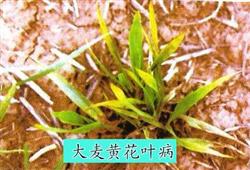
Barley cultivation: What harm does barley yellow mosaic disease cause?
What harm does barley yellow mosaic disease cause? Please let me explain the harm of barley yellow mosaic disease: When the disease occurs at the seedling stage, short chlorotic streaks parallel to the leaf veins first appear on the unexpanded young leaves; later, as the leaves expand, the chlorotic spots merge into irregular chlorotic mosaic patterns; the leaves become stiff and erect, the leaf color turns yellow, and some...
-
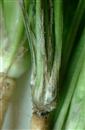
What harm does cilantro sclerotinia rot cause?
What harm does cilantro sclerotinia rot cause? What causes cilantro sclerotinia rot? We also ask experienced netizens to help explain. Zhongdiwang has compiled the harm and causes of cilantro sclerotinia rot, listed below for netizens' reference. Harm of cilantro sclerotinia rot: cilantro sclerotinia rot mainly damages the stem base, followed by...
-
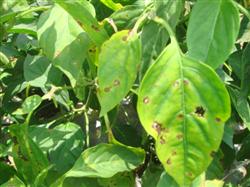
What harm does pepper anthracnose cause? Growers need to know early
What harm does pepper anthracnose cause? How to prevent and control pepper anthracnose? We also ask netizens to help introduce the harm and control methods of pepper anthracnose. The following is compiled by Zhongdiwang for everyone's reference. Harm of pepper anthracnose: Black anthracnose mostly occurs on the fruits and leaves of peppers, especially mature fruits and...
-
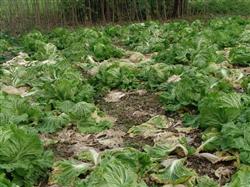
What harm does bacterial soft rot of mustard cause? Growers need to know
What harm does soft rot cause to mustard? What methods can prevent and control bacterial soft rot of mustard? We hope experienced netizens can help explain the harm of soft rot to mustard: bacterial soft rot of mustard is a bacterial disease, generally only starting to occur in the late growth stage of mustard; at the beginning of the disease, the outer leaves of the plant wilt, and can still recover in the morning and evening....
-
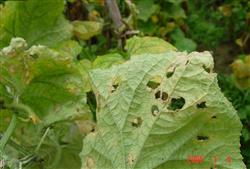
What are the harmful symptoms of cucumber anthracnose?
What harm does cucumber anthracnose cause? What methods can prevent and control cucumber anthracnose? We also ask fellow gardeners to share their guidance. The harm and control methods of cucumber anthracnose can refer to the following introduction: Harm of cucumber anthracnose: Anthracnose can occur at the seedling stage and on mature plants. When it occurs at the cotyledon stage, yellow-brown semicircular lesions appear on the edges of the cotyledons...
-
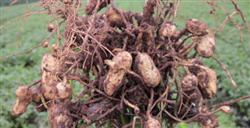
What are the harms of continuous peanut cropping? A detailed guide
What are the harms of continuous peanut cropping? Please note that continuous peanut cropping has the following harms: 1. It causes severe soil nutrient deficiency. Because peanut roots have a large number of rhizobia, they are not very sensitive to nitrogen. Continuous cropping leads to soil nutrient deficiency that cannot meet the nutrients needed by peanuts, thereby affecting the normal growth and development of peanuts. The longer the continuous cropping...
-

Harm and Control Methods of the White-Spotted Flower Chafer on Sunflowers
Damage characteristics: The 1st-2nd instar larvae feed on the tubular flowers; after the 3rd instar they bore along the gaps between the sunflower seeds and feed on the seeds, eating part or all of the seed kernel, resulting in empty shells or bored seed heads. They bore many tunnels in the flower head and spin silk webs on the seeds of the head, binding together insect droppings and debris, forming a felt-like mass. The damaged flower heads mostly rot and become moldy, ...
-
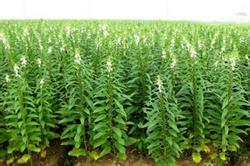
Why Are Sesame Plants Afraid of Continuous Cropping? An Analysis of the Causes of Continuous Cropping Harm
1. The key lies in timely topping. Usually, spring sesame retains the first pair of true leaves, and summer sesame retains the second pair of true leaves. Experiments have shown that this is the best time for topping, inducing a double-stem rate of 100%. The specific timing is: when the second pair of true leaves of spring sesame is half-unfolded, and when the third pair of true leaves of summer sesame is half-unfolded, with an interval of about one week...
-
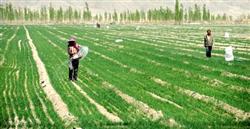
Spring management of wheat: focus on preventing and controlling the four major harms
How to manage the first spring irrigation and fertilization of wheat? The first spring irrigation and spring fertilization have a great impact on wheat yield. For example: if the wheat is too dense, too sparse, or lodging occurs in the later growth stage, it indicates that the timing of the first spring fertilization and irrigation was problematic. Another example: if the wheat stays green and ripens late, and the grains are shriveled and thin, that indicates your spring water and fertilizer use...
条件筛选