What harm does pepper anthracnose cause? Growers need to know early
What harm does pepper anthracnose cause? How to prevent and control pepper anthracnose? We also ask netizens to help introduce the harm and control methods of pepper anthracnose. The following is compiled by Zhongdiwang for everyone's reference. Harm of pepper anthracnose: Black anthracnose mostly occurs on the fruits and leaves of peppers, especially mature fruits and...
 What harm does pepper anthracnose cause? How to prevent and control pepper anthracnose? We also ask netizens to help introduce
The harm and control methods of pepper anthracnose are compiled below by Zhongdiwang for everyone's reference.
Harm of pepper anthracnose:
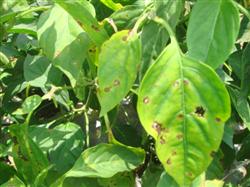
Black anthracnose mostly occurs on the fruits and leaves of peppers, especially mature fruits and old leaves are most susceptible. The lesions on the fruit are brown and water-soaked, and after expansion they become sunken, irregular, with slightly raised concentric rings. The numerous black grains growing on the lesions are the pathogen's acervuli. There is a moist discoloration ring around the edge of the lesion. Diseased fruits dry up and hang on the branches. Leaf lesions are irregular in shape, with brown edges and gray centers.
Red anthracnose mostly occurs on young and mature fruits. The lesions are yellow-brown and water-soaked, and sunken. Dense vermilion dots grow on the lesions, arranged in a slightly concentric pattern, and when humid, a pale red sticky substance oozes from the entire surface of the lesion.
Incidence pattern of pepper anthracnose:
Anthracnose pathogens develop fastest under high temperature and high humidity, often causing a large number of fruits to become diseased within 1-2 days. During storage and transportation, any factor that damages the fruit favors the occurrence of the disease, and the more mature the fruit, the more susceptible it is.
Under continuous cropping, excessive close planting, and biased application of nitrogen fertilizer, the disease occurs more severely. During the fruit harvesting period, continuous autumn rain leads to heavier incidence, and parts of peppers affected by sunscald are prone to the disease.
Control methods for pepper anthracnose:
1. Select disease-free fruits for seed saving, remove diseased plants and diseased fruits after harvest, and implement a 2-3 year rotation for seedlings and fields.
2. Improve cultivation and management measures, plant at appropriate density, plant 4000-5000 holes per mu, 2 plants per hole, apply sufficient base fertilizer, transplant before Grain Rain, and after transplanting pay attention to intertillage weeding, clearing ditches and drainage, avoid biased application of nitrogen fertilizer, and appropriately increase phosphorus and potassium fertilizer to promote vigorous plant growth and enhance disease resistance.
3. Collect diseased fruits and diseased leaves and burn them, and plow the soil deeply in time after harvest.
4. For seed disinfection, soak seeds in 55°C warm water for 10 minutes, dry them, mix with plant ash, and sow.
5. During the fruiting period, when the disease is first found, spray 1:1:500 Bordeaux mixture 2-3 times continuously, once every 7-10 days. You can also use 402 antibacterial agent at 1000 times solution and amobam at 800-1000 times solution, etc.
6. Do a good job of disease prevention during storage and transportation, pack carefully, avoid damage during handling, pay attention to adjusting temperature and humidity when storing in the warehouse, and low-temperature cold storage can reduce losses.
Click to get more pepper planting techniques
Click to get more vegetable planting techniques