-
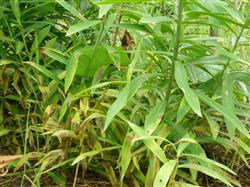
What are the harmful effects of anthracnose in lily cultivation?
What are the harmful effects of lily anthracnose? What methods can be used to deal with lily anthracnose? We also ask fellow growers for guidance. Harmful effects of anthracnose on lilies: anthracnose is also known as brown scale disease and black scale disease. On infected leaves, the lesions are nearly oval and elongated, yellow-brown, slightly sunken, and in severe cases can cause stems and leaves to die. Infected scales...
-
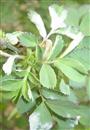
What harm does peony powdery mildew cause? Essential knowledge for peony planting
What harm does peony powdery mildew cause? How do you prevent and control peony powdery mildew? Please advise. The harm of peony powdery mildew: white powdery mold spots appear on the leaves, often expanding and joining together into patches, and can even cover the entire plant's leaves and stems, causing premature aging or death of the plant. Prevention and control methods for peony powdery mildew: 1. Strengthen...
-
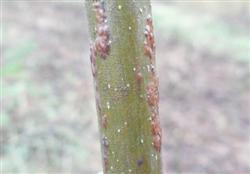
What are the harms and control measures of poplar canker?
Poplar canker is a common and frequently occurring disease, extremely harmful to Populus species as well as willow, elm and other tree species. The disease is a latent infection disease. When adverse conditions such as drought, waterlogging, sunscald, freezing damage occur, or when tree vigor is difficult to restore after seedling transplanting or heavy pruning, the disease develops rapidly, and in mild cases affects tree growth...
-
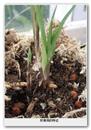
Detailed Explanation of the Harm and Control Methods of Soft Rot in Orchids
Generally speaking, if an orchid grows very robustly and its root system is very well developed, its disease resistance is relatively strong. If the orchid does not grow well and, on top of that, care is not adequate, then it becomes very prone to disease. In the current season, if ventilation is poor, orchids are very likely to develop soft rot. Soft rot is seriously harmful...
-

Magnolia blooms carry deep poetic charm; spring is the perfect time to enjoy the flowers
Gratitude. Magnolia often produces large white blooms amid lush greenery, and its fragrant scent conveys an indescribable elegance, truly fresh and lovely. Because the plant is tall and its flowers bloom at a higher position, they sway in the wind with a spirited grace, like a heavenly maiden scattering flowers, very charming. New poems have grown old and are unbearable to hear; the desolate lodge in Jiangnan is separated by autumn clouds. Ever affectionate, unchanged in color year after year; a timeless fragrant heart ever increases for you.
-
Growing Orchids Is Like Cultivating a Gentleman: The Elegant Charm and Sentiment of Orchid Cultivation
The first person to compare the orchid to a "gentleman" was none other than Confucius. According to the Records of Confucius's Family Sayings, when he was surrounded by rebel soldiers between Chen and Cai with no way out and his followers' morale wavering, Confucius pointed to the orchid as an example: "The iris and orchid grow in the deep forest, yet do not cease to be fragrant because no one is there; the gentleman cultivates the Way and establishes virtue, yet does not change his integrity because of hardship and poverty." This left his followers thoroughly ashamed. That said, Confucius, who was posthumously enfeoffed as a "sage" by later generations, was after all a "man" and not quite a "god." He visited the feudal lords far and wide, hoping to take office, but met with rebuffs everywhere and was treated with contempt. So while he was self-confident, self-restrained, and held himself in high regard, he also repeatedly revealed
-
Harmful Characteristics and Pathogen Analysis of Robinia Mosaic Disease
Robinia mosaic disease is a common disease of black locust (Robinia pseudoacacia). It begins to occur in spring from April to May. Its symptoms manifest as systemic mosaic. The leaf color is uneven, with some leaves showing mottling of intermingled light green and dark green, and presenting blister-like spots. Some leaves are deformed; the leaf shape becomes narrower and longer, and in severe cases becomes linear. In some leaf axils, adventitious buds sprout and produce thin, weak small branches with extremely short internodes, and the leaves are narrow and small; the axillary buds of the small branches sprout again and produce small branches and leaves, and in this way they sprout and grow level by level, forming a clustered branch state with dense branches and leaves. This affects the normal growth of the tree. After young trees are affected, they gradually
-
The Harm and Prevention and Control Methods of Orchid Virus Diseases
Viruses are relatively primitive organisms. They have no cellular structure and can only replicate by parasitizing host cells. Once infected, there is generally no specific drug for treatment, so viral diseases can only be prevented. Prevention can be achieved by improving environmental sanitation and raising cultivation techniques. More than 20 kinds of viruses that can infect orchids have been discovered so far. The more common ones include Cymbidium mosaic virus (CyMV), Cucumber mosaic virus (CMV), Dendrobium mosaic virus (DeMV), Cymbidium ringspot virus (CyRV), and others.
-
The Harm and Control Methods of the Spruce Bark Beetle
The spruce bark beetle (Ips typographus Linnaeus) belongs to the order Coleoptera, family Scolytidae. In China it is distributed in Northeast China, Inner Mongolia, Sichuan, ** and other places, mainly damaging spruce and Korean pine, and is a destructive pest in some spruce forest areas. Damage characteristics: it bores galleries between the phloem and sapwood of pine trees, and the galleries are compound longitudinal galleries. It can also directly attack healthy trees, and often occurs together with other bark beetles, causing trees to die in patches. Morphological characteristics: adult body length 4.0-5.5 mm,
-
How harmful is oleander to goldfish?
Oleander, also known as willow-leaf peach, belongs to the genus Nerium in the family Apocynaceae. It has been introduced into China for a long time and is cultivated in various places; it is a common ornamental flower in gardens. The entire oleander plant is highly toxic, and accidental ingestion by humans or livestock is dangerous. There are numerous instances in which oleander leaves, petals, fruits and small branches falling into goldfish tanks have caused the death of all the young and adult goldfish. The reason is that oleander mainly contains cardiac glycosides such as yellow oleandrin A, yellow oleandrin B, oleandrin A, yellow oleandrin A monoside methyl, yellow oleandrin A monoside ethyl and yellow oleandrin C, which have highly toxic effects on fish and can cause acute
条件筛选