-

What herbicide works well for weed control in cassava fields?
What herbicide is good for weed control in cassava fields? Please give an introduction. Cassava is a plant of the Euphorbiaceae family, with well-developed underground tuberous roots, and has strong tolerance to many herbicides. There are many suitable soil-applied (pre-emergence) herbicides and foliar (post-emergence) herbicides, and appropriate herbicides can be selected according to the weed spectrum. Cassava is propagated by stem segments, and for soil-applied...
-
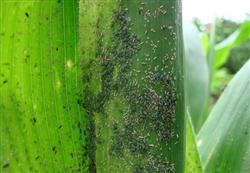
How can aphids in cornfields be controlled effectively?
How to control aphids in cornfields? Please explain the methods. Corn aphids, commonly known as "greasy bugs" or "honey bugs", harm not only corn but also crops such as sorghum and barley. They pierce and suck plant sap. Aphid numbers are very low at the seedling stage, but surge during the ear stage, secreting large amounts of "honeydew", which forms a black mold-like layer on the leaves, affecting photo...
-
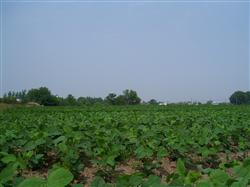
How to Control Weeds in Cotton Fields? A Detailed Guide to Practical Methods
How to control weeds in cotton fields? Please provide methods. When growing cotton, you can refer to the following methods for weed control: (1) Types and occurrence characteristics of cotton field weeds. China is one of the world's major cotton-producing countries, with Shandong, Hebei, Henan, Jiangsu, Hubei, Xinjiang, and Anhui among the main cotton regions. Cotton field weeds mainly include 2...
-
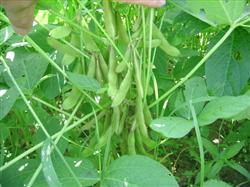
A Complete Guide to Weed Control Methods in Summer Soybean Fields
How to control weeds in summer soybean? Please provide methods. After summer soybean sowing, soil and climatic conditions favor weed germination and growth, and if chemical control is not carried out in time, it can easily lead to a weed infestation. In production, herbicides should be applied early for control based on the weed occurrence characteristics in summer soybean fields and the properties of the herbicides. Soil-incorporated treatment: after land preparation,...
-
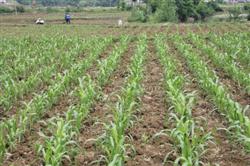
What are the methods for weed control in sorghum fields?
How do you control weeds in sorghum fields? Please explain the methods. Weeds are a major disaster in sorghum production, competing with sorghum for water, nutrients, light and space, causing a decline in sorghum yield and quality. Weed damage is especially severe in low-lying land and saline-alkali land, and it is year-round, that is, weeds cause damage at any time...
-
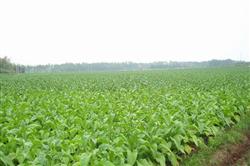
How to correctly use napropamide in tobacco fields?
How should napropamide be used in tobacco fields? Please give guidance. Tobacco seeds are small, and the seedlings grow slowly, so they are often harmed by weeds. The main weeds include: foxtail, Chinese sprangletop, barnyardgrass, goosegrass, shortawn foxtail, cocklebur, flatsedge, cleavers, chickweed, plantain, dandelion, etc. Weed control in tobacco fields can...
-
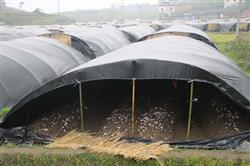
What are the methods for growing button mushrooms in rice fields?
How are button mushrooms grown in rice fields? Please explain. Button mushroom cultivation in rice fields is a planting method that uses rice straw and other materials as the main raw materials, which are composted and fermented to make the growing substrate, utilizes the temperature and light resources of autumn, winter and spring and the idle seasons, and adopts open-field cultivation of button mushrooms in rice fields after the rice harvest. 20...
-
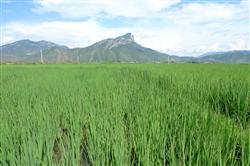
What are the correct methods and precautions for draining and drying rice fields?
How to dry a rice field properly? An introduction. Draining and drying a rice field is an important measure for improving paddy soil structure, promoting rice seedling roots to grow downward, enhancing rice root vigor, increasing rice stalk toughness and lodging resistance, controlling ineffective tillering, raising the percentage of productive tillers, improving the field microclimate, and reducing the occurrence of rice diseases and insect pests. But...
-
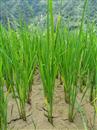
What is the correct method and purpose of draining paddy fields for rice?
How do you drain a paddy field for rice? What does it do? Please explain the field-draining method. Draining paddy fields is one of the main technical measures for increasing rice yields and promoting early ripening. 1. Main purposes of field draining. 1) Control ineffective tillering and consolidate effective tillering. When rice tillering has reached a certain number, that is, once there are enough seedlings, in our province, in terms of time, the effective tillering termination period is around the end of June. Early tillers can form panicles, while tillers after the termination period cannot form panicles or only form small panicles. In production, by draining the field, the young tiller buds at higher positions cannot get water and fertilizer and stop growing, reducing nutrient consumption, so that the main stem and large tillers receive more nutrient supply, laying a foundation for strong stems and large panicles.
-
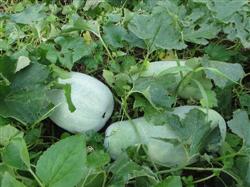
What are the key management techniques for growing winter melon in paddy fields?
How do you manage winter melon grown in paddy fields? What methods can increase yield? Growing winter melon in paddy fields can use the following three methods to increase yield: fertilizer and water management. During the stem and vine growth stage of winter melon, watering is not easy, so a combined "promote" and "control" management approach should be adopted. After watering, cultivate in time to conserve soil moisture and extend the watering interval...
条件筛选