What are the methods for growing button mushrooms in rice fields?
How are button mushrooms grown in rice fields? Please explain. Button mushroom cultivation in rice fields is a planting method that uses rice straw and other materials as the main raw materials, which are composted and fermented to make the growing substrate, utilizes the temperature and light resources of autumn, winter and spring and the idle seasons, and adopts open-field cultivation of button mushrooms in rice fields after the rice harvest. 20...
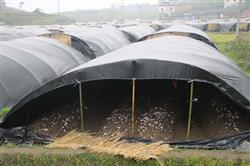
How are button mushrooms grown in rice fields? Please explain.
Button mushroom cultivation in rice fields is a planting method that uses rice straw and other materials as the main raw materials, which are composted and fermented to make the growing substrate, utilizes the temperature and light resources of autumn, winter and spring and the idle seasons, and adopts open-field cultivation of button mushrooms in rice fields after the rice harvest. In 2005, our county used no-till single-crop rice fields in 12 townships (towns) to cultivate 300,000 sq m of button mushrooms, and as of April 15, 2006, the output value was 18.8 yuan per sq m. It is expected that the output value per 667 sq m of mushroom field can reach 8,000 yuan, generating a net profit of more than 5,000 yuan.
The main techniques for cultivating button mushrooms in rice fields are as follows: I. Prepare the mushroom field well and choose a good formula. 1. Selection of the mushroom field. Generally, middle-season rice fields or single-crop rice fields with higher terrain, fertile soil, convenient drainage and irrigation, proximity to a water source, good transportation conditions, and no button mushroom cultivation in the past 3 years should be selected as the mushroom field. When harvesting middle-season rice or single-crop rice, the rice stubble left must not be higher than 10 cm. After the rice harvest is completed, the mushroom field should be dug with perimeter ditches and cross ditches in advance for drainage, ready for use. 2. Selection of mushroom varieties. The button mushroom varieties currently cultivated in our county are mainly "2796" and "Zhenong No. 1", both of which are medium-to-low temperature type varieties with good quality and high yield. 3. Selection of formula. Choosing a reasonable formula helps improve the yield and quality of button mushrooms. The proportion of ingredients is one of the key factors affecting high-quality and high-yield button mushrooms. Most mushroom growers in our county use the following 2 formulas, which can be selected according to local conditions and local materials (calculated based on an actual button mushroom cultivation area of 400 sq m per 667 sq m of rice field). Formula 1: 6,000 kg dry rice straw, 400 kg rapeseed cake, 100 kg phosphate fertilizer, 60 kg urea, 200 kg to 250 kg lime, 150 kg gypsum and 150 kg special fertilizer for button mushrooms. Formula 2: 5,000 kg dry rice straw, 2,000 kg dry cow dung, 40 kg urea, 200 kg lime, 150 kg gypsum and 100 kg special fertilizer for button mushrooms.
II. Prepare the raw materials and build piles for fermentation. Reasonably arranging the production season is an important prerequisite for obtaining high yields of button mushrooms. All localities should determine the suitable cultivation time according to climatic conditions, especially temperature conditions. In our county, growing materials such as dry rice straw, dry cow dung and rapeseed cake are generally prepared before mid-August. Cultivating too early means the temperature is too high, and cultivating after the end of September means the temperature is too low; both are unfavorable for high yields of button mushrooms. 1. Selection and preparation of the growing substrate. The growing substrate must be able to satisfy the various nutrients needed throughout the entire growth and development period of button mushrooms. The growing substrate must have 3 elements: first, carbon-containing substances and nitrogen-containing substances must be sufficient (according to experiments, the carbon-to-nitrogen ratio of the growing substrate is 30:1 before pile fermentation, and after fermentation is completed, the carbon-to-nitrogen ratio must reach 17 to 18:1), and the content of nutrients such as phosphorus, potassium, calcium and sulfur must be appropriate; second, the material of the growing substrate must be loose in texture and elastic, able to hold more air, so as to meet the needs of mycelial respiration and the decomposition of the growing substrate by aerobic microorganisms.
Third, it should have the ability to generate heat, so as to promote fermentation of the growing substrate and use high temperature to kill pathogens and pests. Livestock manure is rich in the nutrients needed by button mushrooms and also has high heat generation, making it a relatively good growing substrate for cultivating button mushrooms. Pig manure has high contents of nitrogen, phosphorus and potassium, but a relatively low content of organic matter. Using pig manure as pile material produces mushrooms quickly, but the mushrooms are dense, small in size and relatively poor in quality, with higher early yield and lower later yield. Cow dung has relatively high contents of organic matter and nitrogen, phosphorus and potassium, and can meet the growth needs of button mushrooms. However, if wet cow dung is used, because wet dung contains much water and has a fine, dense structure, fermentation is slower, the temperature in the pile is lower, and mycelial growth is not ideal. If cow dung is dried in the sun and broken up before piling, fermentation is fast, the temperature in the pile is high, and the button mushrooms produced are plump and firm with good quality and a longer fruiting period. When horse manure is used to cultivate button mushrooms, its yield and quality are about the same as when cow dung is used as the growing substrate. Therefore, pig manure, cow dung and horse manure can all be used as growing substrate, and it is best to mix several kinds of livestock manure for better results. Chicken manure and duck manure are abundant in nutrients, heat up quickly and reach high temperatures, but are strongly alkaline and highly sticky, and can be mixed with livestock manure for piling.
IV. Strengthen fertilizer and water management. Watering principles for button mushrooms: mainly keep the soil layer moist, that is, it can be squeezed flat and rolled round, and it is suitable if it does not stick to the hand; in winter it should be dry rather than wet, and in spring it should be wet rather than dry. The eight taboos of watering button mushrooms: first, do not water at high temperature; second, do not water before picking mushrooms; third, do not water excessively when mycelium is weak; fourth, do not spray high-concentration fertilizer and pesticide water; fifth, do not water excessively during heavy rain; sixth, do not splash water with a ladle; seventh, do not fail to water when the soil turns white; eighth, do not water without ventilation. The amount of water sprayed per sq m of mushroom bed each time should not exceed 1.5 kg. 1. Timely watering. ① Pinhead-forming water. When the mycelium grows to 4/5 of the soil layer (about 10 days after casing), that is, when the fluffy mycelium 1 cm from the soil surface forms lines and twisted small white pinheads appear, spray water heavily once, using 1 kg of water per sq m of mushroom bed, applied in 4 portions with a sprayer. ② Fruiting water. About 3 days after the pinhead-forming water is stopped, that is, about 14 days after casing, when the small white pinheads in the soil layer become fleshy, round and hard small mushroom buds, and these small buds generally grow to the size of mung beans or soybeans, use 0.5 kg of water per sq m of mushroom bed, applied in 4 portions, and cover with straw curtains 5 to 10 minutes after watering. The air temperature must be lower than 18°C when watering. ③ Flush-turning water. After each flush of mushrooms is harvested, use 0.5 kg of water per sq m of mushroom bed (for spring mushrooms, spray 1 kg to 1.5 kg per sq m) applied in 4 portions. 2. Supplementary application of nutrient solution. 10 days after casing, apply Mushroom High-Yield Agent No. 1 once together with the pinhead-forming water. About 14 days after casing, apply Mushroom High-Yield Agent No. 2 once together with the fruiting water. At the stage when mycelium twists and forms buds, apply Mushroom High-Yield Agent No. 3 once, and about 7 days after large-scale fruiting, apply Mushroom High-Yield Agent No. 4 once. For mushroom bed No. 5, apply Mushroom High-Yield Agent once during the resting stage to adjust the pH of the bed surface and maintain mycelial vitality.
Click to get more mushroom cultivation techniques
Click to get more edible fungi cultivation techniques