-
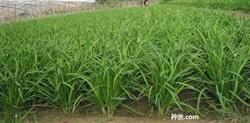
How can herbicides be used effectively in chive fields?
How should herbicides be used in chive fields? When is the best time to apply herbicides when growing chives? We invite experienced netizens to help explain. Chives are a perennial root vegetable with strong adaptability, cold and heat tolerance, and are cultivated everywhere across China. In many areas of the south they can be produced year-round, but weed control in chives is a common headache for growers...
-

What herbicide works well for weed control in cassava fields?
What herbicide is good for weed control in cassava fields? Please give an introduction. Cassava is a plant of the Euphorbiaceae family, with well-developed underground tuberous roots, and has strong tolerance to many herbicides. There are many suitable soil-applied (pre-emergence) herbicides and foliar (post-emergence) herbicides, and appropriate herbicides can be selected according to the weed spectrum. Cassava is propagated by stem segments, and for soil-applied...
-
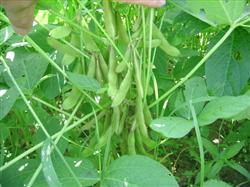
A Complete Guide to Weed Control Methods in Summer Soybean Fields
How to control weeds in summer soybean? Please provide methods. After summer soybean sowing, soil and climatic conditions favor weed germination and growth, and if chemical control is not carried out in time, it can easily lead to a weed infestation. In production, herbicides should be applied early for control based on the weed occurrence characteristics in summer soybean fields and the properties of the herbicides. Soil-incorporated treatment: after land preparation,...
-
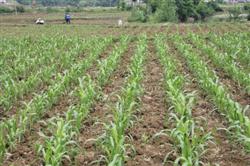
What are the methods for weed control in sorghum fields?
How do you control weeds in sorghum fields? Please explain the methods. Weeds are a major disaster in sorghum production, competing with sorghum for water, nutrients, light and space, causing a decline in sorghum yield and quality. Weed damage is especially severe in low-lying land and saline-alkali land, and it is year-round, that is, weeds cause damage at any time...
-
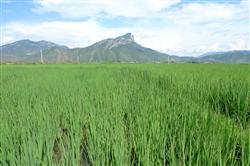
What are the correct methods and precautions for draining and drying rice fields?
How to dry a rice field properly? An introduction. Draining and drying a rice field is an important measure for improving paddy soil structure, promoting rice seedling roots to grow downward, enhancing rice root vigor, increasing rice stalk toughness and lodging resistance, controlling ineffective tillering, raising the percentage of productive tillers, improving the field microclimate, and reducing the occurrence of rice diseases and insect pests. But...
-
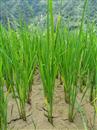
What is the correct method and purpose of draining paddy fields for rice?
How do you drain a paddy field for rice? What does it do? Please explain the field-draining method. Draining paddy fields is one of the main technical measures for increasing rice yields and promoting early ripening. 1. Main purposes of field draining. 1) Control ineffective tillering and consolidate effective tillering. When rice tillering has reached a certain number, that is, once there are enough seedlings, in our province, in terms of time, the effective tillering termination period is around the end of June. Early tillers can form panicles, while tillers after the termination period cannot form panicles or only form small panicles. In production, by draining the field, the young tiller buds at higher positions cannot get water and fertilizer and stop growing, reducing nutrient consumption, so that the main stem and large tillers receive more nutrient supply, laying a foundation for strong stems and large panicles.
-
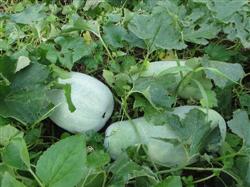
What are the key management techniques for growing winter melon in paddy fields?
How do you manage winter melon grown in paddy fields? What methods can increase yield? Growing winter melon in paddy fields can use the following three methods to increase yield: fertilizer and water management. During the stem and vine growth stage of winter melon, watering is not easy, so a combined "promote" and "control" management approach should be adopted. After watering, cultivate in time to conserve soil moisture and extend the watering interval...
-
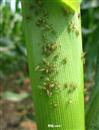
How to control aphids in cornfields? These methods are very practical
How to control aphids in cornfields? The methods for controlling aphids in cornfields are as follows: (1) Chemical control: use 5% phorate granules at 200 g per 667 sq m, mix with 1.5 kg of fine sand or soil, apply the pesticide every other ridge, and fumigate to kill the aphids; spray 0.5% dimethoate powder at 1.5-2.0 kg per 667 sq m, or 50% dimethoate...
-
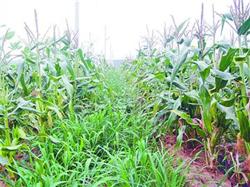
How to remove weeds in summer corn fields? A detailed guide to practical control methods
How to remove weeds in summer corn fields? Please explain the methods. Summer corn and weeds both grow quickly and in concentrated flushes. Corn seedlings suffer the most severe weed damage during the seedling stage; in the mid-to-late stage, corn can form a tall, dense canopy, and weed emergence and growth are suppressed, with little impact on yield. Weed control in corn fields should focus on the two key periods after sowing before seedling emergence and early post-emergence. The integrated weed control plans for the different periods are as follows:
-
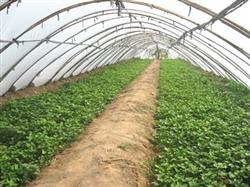
How can weeds in sweet potato fields be effectively cleared during cultivation?
How do you remove weeds when growing sweet potatoes? Please give guidance. Sweet potato fields can be weeded as follows: 1. Caochangmie (Rekela) 70% wettable powder, 200-250 grams per mu mixed with 450-600 liters of water, applied before planting sweet potatoes or immediately after planting. It mainly controls Alopecurus aequalis, Digitaria sanguinalis, Echinochloa crus-galli, Setaria viridis, Lolium perenne, Chenopodium album, Polygonum, ...
条件筛选