-
Spring peanut planting should emphasize increased phosphate fertilizer application
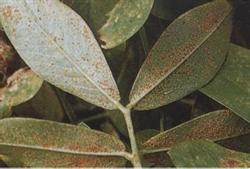
After spring peanut planting this year, there has been more rain, many overcast and rainy days, and high field humidity, which is favorable for the reproduction of peanut rust pathogen. Damage has already begun to occur. If measures are not taken in time to prevent and control it, peanut yield will be seriously affected. Peanut rust mainly damages leaves, but also damages stems, pod stalks and pod shells. Generally...
-
Identification and Control Methods for Common Cherry Diseases and Pests
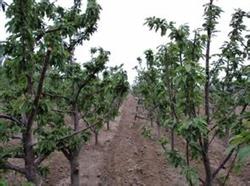
Many of the diseases and pests affecting cherries are the same as those of other stone fruit trees, so their control methods can be used for reference. The main diseases harming cherries are shot hole disease, crown and root collar rot, and gummosis. Crown and root collar rot mostly occurs on trees in their first fruiting stage, causing the crown and root collar to decay. Control methods: mainly avoid piling soil around the root collar for long periods, and control underground pests that gnaw and wound the bark. At the same time, check frequently; when diseased plants are found, scrape and treat them promptly, and after scraping, disinfect with Bordeaux mixture or lime sulfur mixture. For severe crown and root collar rot, the aboveground growth can also be restored through spring bridge grafting. The main pests harming cherries include the red-necked longhorn beetle, the golden-line jewel beetle, the small clearwing moth, the spherical scale insect, and the phalera caterpillar. The small clearwing moth has one generation per year, and its larvae cause damage within the cortex of large branches. Control measures mainly include spraying during the peak emergence period of adults, whitewashing the branches and trunk to prevent egg laying, and promptly spraying or digging out larvae when their frass is found in the field.
-
What chemicals should be used to control tomato leaf curl disease?
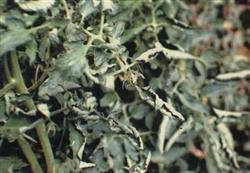
For physiological leaf curl, the control measures are timely watering and fertilizing after fruit set, and covering with a shade net: cover it during the day on sunny days, uncover it at night, and do not cover it on cloudy days. The symptoms of damage by the broad mite (Polyphagotarsonemus latus) are leaves becoming narrower, stiff and upright, shrunken or distorted and deformed, and finally the growing tip becoming bare. For chemical control, 1.8% Abamectin can be sprayed at a 3000-fold dilution. Hormone...
-
Sweet Cherry Pest and Disease Control Methods and Techniques
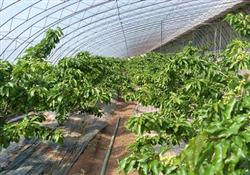
(1) Main diseases 1. Cherry brown spot disease: also known as leaf shot hole disease, it is the most important leaf disease of sweet cherry. (1) Symptoms: At the early stage of the disease, small purple spots the size of a needle tip form, then enlarge, and some join together to form round brown lesions, on which small black dots appear, namely conidia masses and perithecia. ...
-
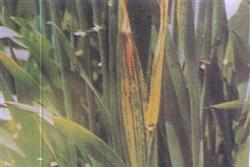
What are the methods for identifying the symptoms of barley stripe disease?
How do you identify the symptoms of barley stripe disease? Barley stripe disease is a disease caused by systemic infection from seed-borne bacteria. Seedlings can develop the disease as soon as the 1st to 2nd young leaves emerge. Initially, there are pale yellow spots or short small stripes, and later the lesions gradually expand. By the tillering stage, slender stripes parallel to the leaf veins form from the leaf base all the way to the leaf tip, and the color changes from...
-
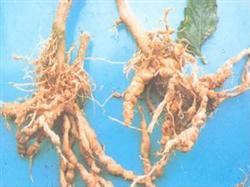
What chemical agents should be used to control tomato root-knot nematode disease?
In recent years, the occurrence of tomato root-knot nematode disease has shown an upward trend, especially in dry sandy loam soil where the disease is severe, causing great losses. Root-knot nematodes have a wide range of hosts; besides damaging tomatoes, cucumbers, sweet peppers and others also suffer severely. Root-knot nematodes often overwinter in the soil as eggs or second-stage larvae with galls, root knots, and diseased plant residues...
-
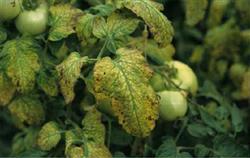
What pesticide is good for preventing Tomato spotted wilt virus disease?
After seedlings are infected with this disease, the young leaves curl and turn a copper-purple color, the leaves have many black spots, the veins on the underside of the leaves turn purple and lose their green color, and the stems develop faded streaky spots. The diseased plants grow slowly or become stunted, drop their leaves, wilt, and shrivel, and yield declines. In severe cases, the plants wilt and die directly. This symptom is easily confused with streak virus. When tomato is at the fru...
-
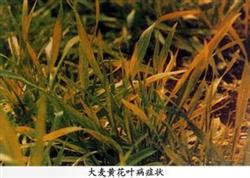
Occurrence Patterns and Control Methods of Barley Yellow Mosaic Disease
Barley yellow mosaic disease occurs mainly in the lower Yangtze River basin, in the provinces and municipalities of Hubei, Zhejiang, Jiangsu, Shanghai and Anhui, among which Jiangsu, Zhejiang and Shanghai are the most severely affected. Diseased plants die off prematurely, leading to a lower rate of productive tillers in barley, a marked reduction in seed-setting rate, lower thousand-grain weight, lower flour yield and reduced quality. When barley develops...
-
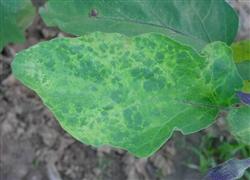
January eggplant pest and disease control and management technical points
For eggplants raised as seedlings in early spring, the main focus is controlling soil-borne diseases: damping-off, Rhizoctonia rot and sclerotinia rot. To disinfect the seedbed soil, mix 50 kg of seedbed soil with 20 g of 68% Jinlei water-dispersible granules and 10 ml of 2.5% Shileshi suspension concentrate, sieve and blend the soil, then fill nutrient pots with it, or spread it over the seedling bed. During the seedling stage, spray 0.1%-0.2% monopotassium phosphate, ...
-
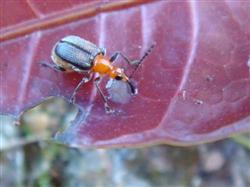
How to control mango weevil disease? Detailed explanation of control methods
1. The mango leaf-cutting weevil is widely distributed. Adults feed on young mango leaves, causing the leaves to dry up; or females lay eggs on young leaves and bite the young leaves off from the base, affecting plant growth. Control methods: ① During the growth period of young shoots, pick up the bitten-off fallen leaves from affected plants once every 3 days, dry them in the sun and burn them to kill the lar...
条件筛选