-
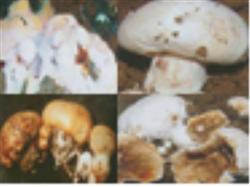
How to prevent and control wet bubble disease in button mushrooms
Disease symptoms: Wet bubble disease is also known as brown rot, white rot, wet bubble, blister disease, etc. The disease is caused by a fungus called Mycogone perniciosa. Mycogone perniciosa is a soil fungus. In button mushroom cultivation, Mycogone perniciosa is mainly introduced into the mushroom house with the casing soil, and it mostly occurs in mushroom sheds with high temperature, high humidity and poor ventilation. Temperatures above 17°C are suitable for this disease to occur.
-
Detailed Explanation of Common Pest and Disease Control Methods for Winter Melon
Cultivation Method of Ground-Trailing Winter Melon The cultivation method of ground-trailing winter melon is: the plants grow by trailing on the ground, with relatively wide spacing between plants and rows, generally about 300 plants per mu. Management is relatively extensive, and the stems and vines are basically left to grow freely or the side vines are removed before fruiting, then allowed to grow at will after fruiting. Its advantages are less labor required and relatively low cost. The disadvantages are poor melon shape, and...
-
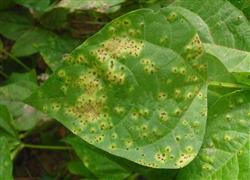
Methods and Key Technical Points for Pest and Disease Control in Oil Beans
Main symptoms: Beans can be infected by pathogens throughout the entire growth period, but resistance weakens and susceptibility increases from the beginning of flowering to the fruiting stage. The disease mainly attacks leaves. In the early stage of the disease, chlorotic yellowish-white spots appear on the leaves, and the spots gradually increase until they densely cover the entire leaf. Plants are stunted, pods are few and small, and the growth period is shortened...
-
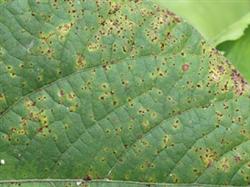
What are the main symptoms of rust disease in yardlong beans?
Yardlong beans can be infected by the pathogen throughout the entire growing period, but resistance weakens and susceptibility increases from the beginning of flowering to the podding stage. The disease mainly attacks the leaves. In the early stage of the disease, scattered chlorotic yellowish-white spots appear on the underside of the leaves, and the spots gradually multiply until they densely cover the entire leaf. On the corresponding reverse side of the lesions, yellowish-brown...
-
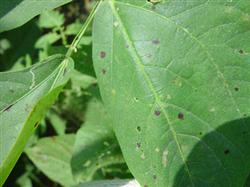
A Detailed Guide to the Main Diseases of Yardlong Beans and Their Control Methods
The main diseases of yardlong beans are leaf spot, fusarium wilt, phytophthora blight, root rot and rust; the insect pests include the legume pod borer, cutworm, thrips, leafminer and mites, and integrated pest management techniques should be used for control. The main methods for preventing and controlling diseases and pests are: choose fields that have not grown legume crops for more than two years for planting; clear weeds around the field...
-
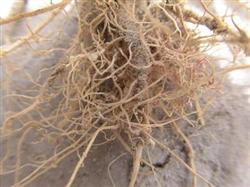
What are the technical measures for soybean pest and disease control
Soybean cyst nematode disease, commonly known as "fire dragon seedling," is a soil-borne, devastating soybean disease. The western part of our province is a severely affected area of this disease. In mild cases, yield is reduced by about 10%; in severe years, yield can be reduced by 30%-50%, and in serious cases, there may even be total crop failure. Soybean cyst nematode mainly damages soybean roots. Affected plants are stunted and poorly developed, and at the seedling stage are susceptible...
-
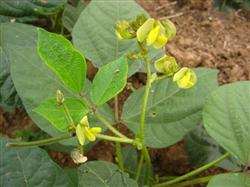
Mung bean diseases are frequent during the flowering period, and growers need to control them promptly
At present, mung beans have entered the flowering and pod-setting stage, and diseases and pests have been found in some fields, among which mung bean leaf spot, viral disease, damping-off, and soybean aphids cause relatively serious damage to mung beans. 1. Mung bean leaf spot: mainly damages leaves, with light brown or dark brown lesions appearing on the leaves, and obvious yellow halos at the edges,...
-
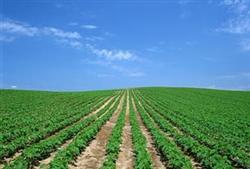
What are the main diseases of mung bean? Detailed explanation of control methods
When planting mung bean, chemical fertilizers cannot be used as fertilizer, and nitrogen-containing fertilizers should be avoided even more. Moreover, sowing cannot be done before rain, and when sowing, the seedlings should be even, so that balanced nutrition can be ensured. The field should be inspected in time, and areas with missing seedlings should be replanted in time, with seedlings thinned at the 4-leaf stage. In poor plots, during the seedling stage every...
-
How to prevent and control ginger pests and diseases? A full analysis of practical techniques
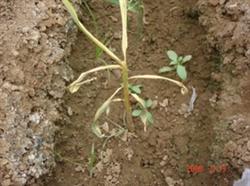
(1) Ginger blast 1. Pathogen: a bacterial disease, Ralstonia solanacearum. 2. Symptoms of diseased plants: leaves first droop and lose their luster, then turn withered yellow from bottom to top, and finally die. The stem first becomes water-soaked at the base, turns yellow, dies, and breaks off at the base and falls over. The rhizome is water-soaked, turns brown and rots, and when squeezed a white juice flows out with a foul odor.
-
Control Methods and Precautions for Mung Bean Leaf Spot Disease
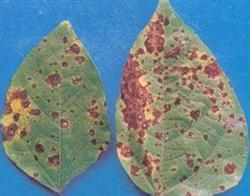
Mung bean leaf spot disease is a serious disease harming mung beans, causing the leaves to dry up, quality to decline, and yield to decrease. Below is an introduction to the symptoms, transmission routes, conditions for onset, and control methods of mung bean leaf spot disease. Symptoms: Mung bean leaf spot disease mainly harms mung beans, with the affected part being the leaves. ...
条件筛选