Common Poplar Pest Control Methods and Technical Key Points
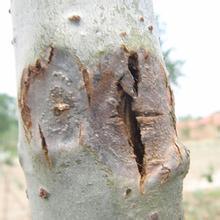
In recent years, poplar canker disease has occurred widely, with incidence rates reaching over 30% in severely affected plots. Canker disease severely weakens tree vigor and inhibits growth. If not controlled in time, it will inevitably cause significant economic losses to growers. Disease symptoms: Canker disease mainly affects the trunk and is a chronic disease. In the early stage, on the bark...
 The main pests of poplar trees include leaf-eating pests, sap-sucking pests and wood-boring pests. The control methods for the main poplar pests in our region are introduced as follows:
1. Leaf-eating pests. These are mainly Clostera anachoreta (poplar prominent moth), Micromelalopha troglodyta (small poplar prominent moth), and Monema flavescens (commonly known as the stinging caterpillar), etc. Poplars from the seedling stage to the timber stage are all harmed by the above pests, causing leaf loss or complete defoliation. When young trees (1 to 4 years old) are harmed, it has a relatively large impact on growth and survival. Control methods: 1. Manual control. Combined with tending and management measures such as pruning, trimming and weeding of the trees, manually kill the pupae and nests. The adults have phototaxis (from May to October), and light traps can be used to trap and kill them. 2. Chemical control. During the larval damage period (from June to September), dimethoate or 80% dichlorvos 1000-fold solution is generally used for spray control, or trunk injection of "Baolin No. 3" can also be used for control.
2. Sap-sucking pests. These are mainly Drosicha corpulenta (the giant mealybug). In early spring, Drosicha corpulenta climbs up the trees and sucks the sap of tender buds and twigs, causing the entire tree to die. Therefore, control of Drosicha corpulenta should be carried out in early spring before the nymphs climb up the trees. Control methods: 1. Manual control. Tie plastic cloth or wrap plastic tape around the base of the trunk to block them from climbing up. Before the nymphs climb up the trees (early to mid-February), use two thin ropes to tie plastic cloth about 20 cm wide (new plastic cloth is best) around the base of the trunk, or wrap tape around the base of the trunk; the blocking rate can reach over 98%. Supplemented by manual killing, the effect is more obvious. 2. Chemical control. Below 1 meter on the trunk, use used engine oil mixed with organophosphorus pesticide to make a 10 cm wide pesticide ring, in order to prevent Drosicha corpulenta from climbing up the tree or to kill them on contact with the pesticide. If they have already climbed up the tree, 50% dichlorvos or dimethoate and other pesticides at 1000-fold dilution can be sprayed for control.
3. Wood-boring pests. These are mainly Apriona germari (mulberry longhorn beetle), Anoplophora glabripennis (Asian longhorn beetle), and Batocera lineolata (cloud-spotted longhorn beetle), etc. During the larval stage, obvious excretion holes can be seen on the main trunk, with wood shavings exposed. Control methods: 1. Silvicultural measures. This is a preventive measure that avoids forest disasters by adjusting the forest species structure. For example, poplar must not be planted mixed with mulberry, otherwise poplar is prone to Apriona germari. 2. Quarantine measures. Quarantine is an effective means of preventing the spread of longhorn beetles. All seedlings, timber and packing boxes, etc. from epidemic areas must be quarantined before transport. 3. Manual control. Cut down severely infested trees, prune the large branches withered due to pest damage, and carry out pest removal treatment in time. During the peak egg-laying period of adults, inspect the notches on the trunk (mostly at branch clusters and branch forks), and use a small hammer to kill the eggs or larvae above the notches. During the adult occurrence period, shake the trunk to dislodge the adults and kill them. 4. Chemical control. Find the freshest excretion hole, inject a mixture of undiluted dichlorvos and diesel oil into the bore hole, and seal the bore hole with wet mud. Zinc phosphide poison sticks can also be inserted into the first hole at the base of the trunk and one hole above, and the other bore holes sealed with wet mud.