What are the control methods for poplar canker?
Canker, also known as rot disease, is mainly distributed in northeast, northwest, north China and other regions of our country. It mainly damages the branches and trunks of trees, is extremely contagious, and once the disease becomes epidemic, it often causes large-scale death of forest trees, resulting in great losses. In recent years, due to large-scale planting of poplars, this disease has occurred from time to time in various places, and planting a single poplar variety...
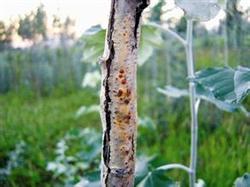
Canker, also known as rot disease, is mainly distributed in northeast, northwest, north China and other regions of our country. It mainly damages the branches and trunks of trees, is extremely contagious, and once the disease becomes epidemic, it often causes large-scale death of forest trees, resulting in great losses. In recent years, due to large-scale planting of poplars, this disease has occurred from time to time in various places, and planting a single poplar variety will create conditions for a major outbreak of this disease. If strict prevention and control are not applied, a major outbreak is possible.
Prevention and control methods:
1. Plant multiple tree varieties within a region. If only poplar varieties are developed exclusively, it is not conducive to disease prevention and control. Planting more mixed forests (such as poplar and black locust mixed forests) is not conducive to the spread of the disease.
2. For relatively large contiguous poplar forests, set up isolation forest belts of black locust or elm at regular intervals (such as about 400 m), which has the effect of hindering the spread of pathogens. Once disease occurs, regional control can be carried out so that not all trees are infected. If the poplar forest patch is relatively small, isolation forest belts can also be set up around it.
3. When planting trees, attention should be paid to matching species to site, selecting disease-resistant varieties, and using proven sterile high-quality seedlings. Reduce root damage when lifting seedlings, avoid dehydration and wounds during transport, and protect seedlings during planting to reduce damage. Strengthen tending and management of young forests, such as weeding, loosening soil, bud removal, timely drainage and irrigation, prohibiting grazing, and controlling pests and diseases. Pruning should be carried out in winter, and pruning in the rainy season should be avoided as much as possible.
4. In late autumn or early spring, whitewash the tree trunks to prevent frost cracking, sunscald, disease, and insects.
5. Forestry authorities in areas with the capacity to do so or where a major disease outbreak is possible should uniformly organize the removal of diseased source branches and diseased trees in autumn and winter. The removed diseased trees and diseased branches must all be burned to eliminate the source of inoculum. In spring and summer, forest owners should conduct self-inspection and self-examination at any time, and when diseased plants or branches are found, remove and destroy them promptly. In this way, with prevention as the priority, losses can be kept within a relatively small range.
6. Old nurseries of many years or nurseries converted from protected vegetable land are prone to this disease. If this disease is found, the land should be rotated, and other varieties besides poplar and willow should be planted on this plot. If there is really no land available for rotation, soil disinfection and poplar cutting disinfection should be carried out before raising seedlings.
7. For disease occurring on the trunks of young trees, if no pathogen is found in the roots, stumping treatment can be carried out and fungicide disinfection can be applied (such as 50% carbendazim). When treating the diseased parts of mature trees, first use a knife to dig out all the diseased spots, exposing the xylem, then disinfect with fungicide, applying 10% alkaline water or 25-fold carbendazim or thiophanate-methyl.