Symptom Identification and Control Methods of Poplar Canker
Distribution and Damage Poplar canker, also known as poplar rot disease. It occurs in all poplar cultivation areas in China, but is mainly distributed in the Northeast, Northwest, North China and other regions. It is a common and frequently occurring disease of poplars in parks, green spaces, street trees and nurseries, often causing mass death of street trees, and newly transplanted poplars are especially severely affected. Symptoms...
Distribution and Damage
Poplar canker, also known as poplar rot disease. It occurs in all poplar cultivation areas in China, but is mainly distributed in the Northeast, Northwest, North China and other regions. It is a common and frequently occurring disease of poplars in parks, green spaces, street trees and nurseries, often causing mass death of street trees, and newly transplanted poplars are especially severely affected.
Symptoms
Canker mainly occurs on the trunk and branches of poplars, manifesting as two symptom types: trunk rot and shoot blight.
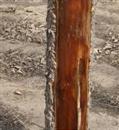
The trunk rot type mainly occurs on the trunk and lateral branches. In the early stage of the disease, brown water-soaked lesions appear, and the affected cortex rots and softens, then dehydrates and sinks, sometimes developing cracks, and the lesion margins are distinctly dark brown. In the later stage, many needle-head-like small protrusions form on the lesions, the affected cortex rots, and the fibrous tissue separates like hemp, peeling off easily from the xylem. Sometimes the rot reaches deep into the xylem, causing discoloration of the sapwood. Under suitable conditions, the lesions continuously expand, and when the affected area expands laterally to encircle the trunk completely, the branches above the affected area die.
The shoot blight type mainly occurs on small branches. After infection, small branches die rapidly, but without obvious canker symptoms, and the disease can only be detected when orange-red curly thread-like conidial tendrils emerge from cracks in the cortex of the branches.
Pathogen
The pathogen can grow within the range of 4 to 35°C, but grows most suitably at 25°C. The most suitable pH for mycelial growth is 4. The optimum temperature for germination of both conidia and ascospores is 25 to 30°C.
Disease Development Pattern
The pathogen overwinters in diseased tissues as mycelium, pycnidia and perithecia. In the following spring, the overwintered spores are spread by wind, rain, insects and other vectors, and invade the host through various wounds or dead tissues. The incubation period is generally 6 to 10 days.
Canker begins to occur from March to April each year, with the peak period from May to June. Due to different climatic conditions in various regions, the onset of the disease differs slightly in time; in the Beijing and Tianjin areas, the disease begins activity in mid-to-late March each year, while in the Northeast it is somewhat later.
The occurrence and epidemic of poplar canker are closely related to climatic conditions, host growth status, cultivation and management measures, and soil conditions.
Control Measures
Implementing reasonable cultivation and management measures to promote tree growth, strengthen tree vigor and improve disease resistance is an effective means of controlling this disease. Select poplar strains with strong adaptability for greening and afforestation according to local conditions; pruning should be moderate, and the cut surfaces should be coated with medicine for protection; for landscape forests and street trees, whitewash the trunks in spring and autumn to prevent sunscald and freezing injury, which also enhances ornamental value.
Promptly remove diseased and dead branches and plants, and in combination with pruning, remove other dead branches or weak-growing plants and branches.
In the early stage of the disease, carbendazim or thiophanate-methyl at 200 times dilution, 50 units of neiliangsu, 843 recovery agent or 723 Shennong liquid can be applied to the lesions, all with good results. Before applying the medicine, if the diseased tissue is cut open with a small knife or the old bark of the lesion is scraped off before applying the medicine, the control effect can be improved. Five days after applying the medicine, apply 50 to 100 times gibberellin around the lesion to promote the formation of callus tissue and prevent recurrence of the lesion.