What are the control methods for gummosis in apricot trees?
How to control gummosis in apricot trees? What causes gummosis in apricot trees? What methods can control it? Please explain. Gummosis in apricot trees is a non-infectious disease that can affect both the trunk and the fruit. When it occurs, a soft gummy substance oozes from the bark of branches and trunks or from cracks in wounds, and after contact with air and drying, it forms a hard amber...
How to control gummosis in apricot trees? What causes gummosis in apricot trees? What methods can control it? Please explain.
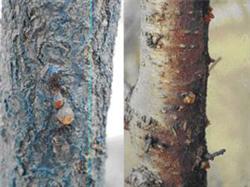
Gummosis in apricot trees is a non-infectious disease that can affect both the trunk and the fruit. When it occurs, a soft gummy substance oozes from the bark of branches and trunks or from cracks in wounds, and after contact with air and drying, it forms a hard amber-like gum block.
Poor soil and fertilizer management, waterlogged and compacted soil, and severe pests and diseases that weaken the tree will aggravate the occurrence of the disease. Therefore, applying basal fertilizer deeply in early autumn after fruit harvest, breaking up soil compaction, draining water promptly, and coordinating fertilizer, water, air, and temperature to nourish the tree and strengthen the roots are the fundamental measures to prevent this disease. The basal fertilizer should be mainly high-quality farmyard manure, mixed with crop straw and a small amount of quick-acting nitrogen fertilizer to promote its decomposition. In addition, covering the tree basin with grass can also increase soil organic matter content, improve soil aeration, and create a soil environment favorable for root activity. In orchards without grass cover, the tree basin should be shallow-hoed during the growing season to strictly prevent weeds from growing. For diseased trees, a copper sulfate (blue vitriol) aqueous solution can be poured. Use 100 grams of copper sulfate per tree, dissolve it in 20 kg of water, dig a small pit 30 cm deep 1 m from the main trunk and apply it, then cover with soil immediately, once a month for 2 to 3 consecutive times, with good control effect. In addition, whitewashing the branches and trunks in winter and spring can prevent freezing injury and sunscald, and the gumming areas should be scraped off, disinfected with 5-degree lime sulfur mixture, and then coated with wax or coal tar for protection.
Click to get more apricot tree cultivation techniques
Click to get more fruit cultivation techniques