Pecan Pest and Disease Control Methods and Key Technical Points
How do you control pests and diseases in pecans? Please provide guidance. The methods for controlling pecan pests and diseases can refer to the following: Pecan seedlings have many pests and diseases. Common pests include aphids, scarab beetle larvae, and cutworm larvae, while the main disease is root rot. In controlling pests and diseases, grasp the principle of "prevention is more important than cure, with prevention as the priority"...
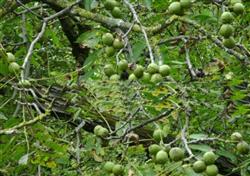
How do you control pests and diseases in pecans? Please provide guidance
The methods for controlling pecan pests and diseases can refer to the following:
Pecan seedlings have many pests and diseases. Common pests include aphids, scarab beetle larvae, and cutworm larvae, while the main disease is root rot. In controlling pests and diseases, grasp the principle of "prevention is more important than cure, with prevention as the priority." When aphids occur, spray with 50% dimethoate emulsifiable concentrate at 1000-2000 times dilution to kill them. Scarab beetle larvae (white grubs that damage pecan seedling roots) and white grubs can be manually captured when plowing the soil before sowing, or the pesticide methyl parathion 1605 (powder) can be spread in the sowing furrow to poison the larvae. The scarab beetle has one generation per year, and the adult stage lasts a relatively long time, with a certain gregariousness in activity in the nursery site, so it can be manually captured. For cutworms (which damage seedling root bark), grass can be piled in drainage ditches to trap and kill them, and they can be manually captured in the early morning. For pecan root rot, in addition to timely drainage, once seedlings have grown taller than 20 cm, spray once a week with 0.5-1.0% Bordeaux mixture on sunny days for prevention.
Pecan seedling cultivation is a production activity with high input, high output, and risk. In recent years, very few have succeeded in producing seedlings ready for out-planting in the same year. The above technical measures must be comprehensively mastered and closely linked at every step, none can be omitted. Pre-sowing sprouting and applying sufficient base fertilizer are especially important. With scientific seedling cultivation and careful nurturing, annual pecan seedlings can reach a height of over 50 cm, with a root collar diameter of 0.5-0.8 cm, and a seedling yield of about 10,000 plants per mu.
Click to get more walnut cultivation techniques
Click to get more fruit cultivation techniques