-
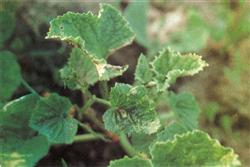
What to Do When Open-Field Melons Get Mosaic Virus Disease? Symptom Identification and Control Methods
Symptoms: In the early stage of the disease, the leaves show mosaic mottling interwoven with yellow-green and dark green, the leaves become smaller, and the leaf surface is wrinkled, uneven, and curled. The main vine is distorted and stunted, the plant is dwarfed, the melons are small, and the fruit surface has mottled patches of alternating light and dark, or slight bump-like protrusions. Causes: The incidence of mosaic virus disease has been relatively high in recent years...
-
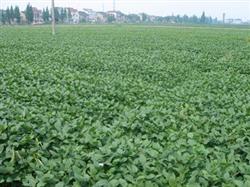
Integrated control methods for three pests of spring soybean
I. Cutworms. The main pest damaging local crops is the yellow cutworm (Agrotis segetum). 1. Damage characteristics: The larvae mostly bite off seedlings at ground level, causing missing plants and broken rows. After the main stem becomes lignified, they feed on the epidermis of the roots near the ground surface, causing root damage that affects the root's ability to absorb water, causing the plant to gradually wilt and die. ...
-
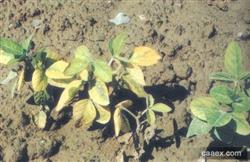
Identification and Control Methods of Soybean Cyst Nematode Disease
Soybean cyst nematode disease, also called "huolongyangzi" disease, is caused by nematodes parasitizing the roots of soybean. Diseased plants have poorly developed root systems, with a marked reduction in lateral roots, slow growth, stunted plants, yellowing stems and leaves, small pods with shriveled seeds, or no seed set, and even death of the entire plant. When diseased plants are pulled up and examined, many needle...
-
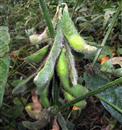
How to prevent and control soybean downy mildew? Detailed explanation of control methods
[Distribution and damage] It occurs in all major soybean-producing areas across the country, and is especially common in the cold-temperate Northeast and North China regions. This disease is caused by infection with the fungus Peronospora manshurica (Naum.) Jyd. et Gaum. It generally reduces yield by 6%-15%, with about 10% of seeds damaged. In addition to harming large...
-
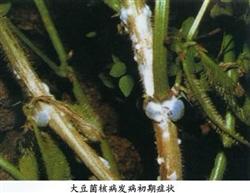
Occurrence Patterns and Control Methods of Soybean Sclerotinia Stem Rot
Soybean Sclerotinia stem rot is a common disease on soybean crops, mainly causing stalk rot, with pale white lesions, hollow stems containing black sclerotia, and easy breakage. In the past two years, soybean Sclerotinia stem rot has shown a trend of increasing severity year by year. Causes and characteristics: 1. Large number of sclerotia in the field. The pathogen of soybean Sclerotinia stem rot is a fungus...
-
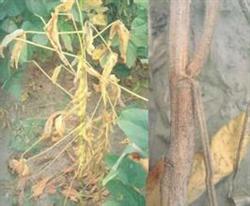
Occurrence and Control Methods of Soybean Rhizoctonia Damping-off
Soybean Rhizoctonia damping-off is commonly known as "dead seedling," "damping-off," or "black root disease." In years with severe disease, the rate of dead plants in lightly affected fields is 5%-10%, while in heavily affected fields the rate of dead plants reaches over 30%, and individual plots may even die off entirely, resulting in total crop loss. 1. Field symptoms: Soybean Rhizoctonia damping-off occurs only at the seedling stage, affecting the main root...
-
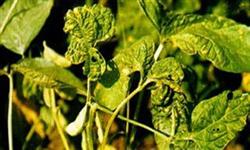
How to prevent and control soybean bud blight? A full breakdown of practical methods
Soybean bud blight, also called bud rot, is one of the soybean viral diseases with a relatively large impact on yield. Depending on the stage at which it occurs, losses range from 25% to 100%. In 1962 in China, similar symptoms appeared on foreign varieties introduced in Shandong Province, and afterward the disease occurred in Hebei, Beijing, Liaoning, Jilin, Heilongjiang and other places...
-
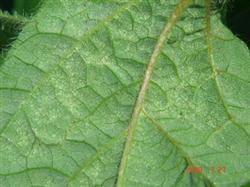
Occurrence Patterns and Control Methods of Soybean Red Spider Mites
Red spider mites is the collective name for red leaf mites, a composite population of several leaf mite species belonging to the family Tetranychidae. In Huachuan County, they occur to varying degrees every year, though these are generally light occurrence years. However, according to this year's surveys, due to the effects of recent high temperatures and drought, the damage caused by red spider mites to soybeans in Huachuan County has risen from a secondary position to a primary...
-
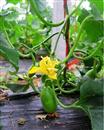
Causes and Control Methods of Deformed Melon Fruits
For melons raised in greenhouses and grown with double-film cultivation, the fruit-setting rate is not high, and flower and fruit drop is very serious. According to surveys, some drop rates reach as high as over 70%, especially for thick-skinned melons, where the drop rate is even higher. This affects both yield and quality, delays the melon's time to market, and reduces profits. The reasons are: first, too much base fertilizer was applied...
-
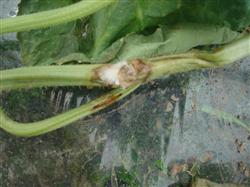
What to Do About Potassium Deficiency in Melons? Detailed Prevention and Control Methods
While inspecting the growth of watermelons and melons, a few melon plants at the flowering and fruiting stage were found to be affected by sclerotinia rot. This disease generally occurs sporadically and has no obvious impact on melon production. In a few greenhouses, however, the incidence was more severe, causing dead vines and rotten melons and affecting yield. Prevention and control methods: (1) Pay attention to ventilation and dehumidification, and promptly remove old leaves at the base during the growing period...
条件筛选