Causes and Control Methods of Deformed Melon Fruits
For melons raised in greenhouses and grown with double-film cultivation, the fruit-setting rate is not high, and flower and fruit drop is very serious. According to surveys, some drop rates reach as high as over 70%, especially for thick-skinned melons, where the drop rate is even higher. This affects both yield and quality, delays the melon's time to market, and reduces profits. The reasons are: first, too much base fertilizer was applied...
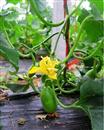 In melon production, unsuitable environmental conditions, improper water and fertilizer management, and other poor management practices can all lead to abnormal fruit development and the formation of deformed fruits. Flat fruit: fruits whose transverse diameter is noticeably greater than their longitudinal diameter, most prominent in round or nearly round varieties.
Causes: The young fruit fails to develop fully in the longitudinal direction during the early stage; the plant's vegetative growth is weak, the leaves are small, and leaf area is insufficient, so fruit growth is hindered because it cannot obtain enough assimilated nutrients; the fruiting node is low, and fruit development occurs at a relatively low temperature; flat fruits also form easily under high summer temperatures; restricting water during flowering to promote fruit setting, then heavily irrigating and fertilizing later to promote fruit enlargement, makes flat fruits even more likely to form.
Control methods: 1) Adjust the cultivation season and improve the light and temperature conditions of protected cultivation so that fruit development occurs at normal temperatures. The suitable temperature for the early stage is 23--24°C, and the ideal temperature during the fruit enlargement stage is 27--30°C. 2) Control the fruiting position so that fruit sets at a suitable node, ensuring the fruit receives sufficient assimilated nutrients during development. 3) For plants with poor vigor, fruit setting can be delayed; if necessary, remove the young fruit at the node to promote vegetative growth, and then promote fruit setting afterward. 4) Pay attention to water supply during flowering and fruit setting; water restriction should not be too severe.
Long fruit: the opposite of flat fruit, with the fruit's longitudinal diameter noticeably greater than its transverse diameter, most prominent in round, oval, and similar varieties. It has a relatively large impact on appearance, and most such fruits have thinner flesh and lower sugar content.
Causes: Fruit sets at a high node, functional leaves are large, and the initial growth rate is fast, so longitudinal development is full. However, in the late fruit-enlargement stage, due to premature plant senescence or pests and diseases on the leaves, the functional leaf area drops sharply and nutrient supply becomes poor, resulting in poor transverse development and the formation of long fruit.
Control methods: 1) Appropriately lower the fruit-setting node. 2) Strengthen fertilizer and water management after fruit setting to prevent premature plant senescence. 3) Strengthen control of leaf pests and diseases to maintain leaf function. 4) Pruning control should not be too strict; always retain 1--2 growing points on the whole plant to encourage continuous formation of new leaves and prevent leaves from aging too early.
Small fruit: normally developed fruits do not differ much in size, but in actual production some unusually small fruits often appear. Any fruit weighing less than 200 grams is called a small fruit.
Causes: The plant grows too weakly; fruits set early at low nodes cannot develop normally because functional leaves are insufficient and the fruit cannot obtain enough assimilated nutrients; with uncontrolled growth, the plant sets too many fruits, nutrients are dispersed, and fruit size becomes smaller; the plant's vegetative growth is too vigorous and it fails to set fruit in time, after which fruits set at high nodes become small fruits due to insufficient nutrition.
Control methods: 1) Strengthen fertilizer management in the early stage to promote vegetative growth. 2) According to variety characteristics and cultivation methods, prune rationally and control the fruiting position. Generally, leave 1--2 fruits per vine. 3) When plant vigor is weak, remove young fruits to promote vegetative growth and delay fruit setting. 4) For vigorously growing plants, artificial pollination should be used to promote fruit setting. From 6--8 a.m. each day, use male flowers that open that day to pollinate female flowers that open that day, gently touching them twice to carry out artificial pollination.
Fruit cracking: large, deep cracks form on the fruit surface. The cracks are difficult to heal and seriously affect quality.
Causes: Fruit cracking occurs when the fruit surface hardens and then undergoes intense internal development. The occurrence of cracking is affected by the degree of skin hardening and water content. When the weather is clear and sunlight is strong, the skin hardens; if too much water is applied on cloudy and rainy days, the plant absorbs water and fruit cracking is triggered. In protected cultivation, when ventilation is carried out, the skin is also prone to hardening when exposed to cold air, causing fruit cracking.
Control methods: 1) First use varieties with less pre-harvest fruit cracking. 2) Irrigate rationally, paying attention to irrigation timing and amount; irrigate less during the enlargement stage, and in rainy areas during the late fruit growth stage, strengthen drainage, avoid waterlogging in the field, and control water supply after the fruit enlargement stage. 3) Keep the leaves near the fruit intact to prevent the fruit from being directly exposed to sunlight. Grass or leaves can be placed over the fruit to prevent the skin from hardening prematurely.