What to Do About Potassium Deficiency in Melons? Detailed Prevention and Control Methods
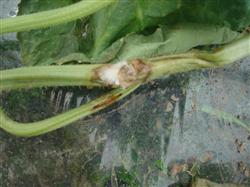
While inspecting the growth of watermelons and melons, a few melon plants at the flowering and fruiting stage were found to be affected by sclerotinia rot. This disease generally occurs sporadically and has no obvious impact on melon production. In a few greenhouses, however, the incidence was more severe, causing dead vines and rotten melons and affecting yield. Prevention and control methods: (1) Pay attention to ventilation and dehumidification, and promptly remove old leaves at the base during the growing period...
 In the early stage of melon growth, slight yellowing appears at the leaf margins. In order, the leaf margins turn yellow first, followed by yellowing between the veins, and the sequence is very obvious; in the middle and late stages of growth, symptoms identical to those above appear near the middle leaves; the leaf margins die, and as the leaves continue to grow, the leaves curl outward; symptom differences among varieties are significant.
Pay attention to the position of the leaves where symptoms appear. If symptoms appear on the lower and middle leaves, it may be potassium deficiency; in the early growth stage, when temperatures are low and covered cultivation is used (double-layer covering), gas damage can cause similar symptoms; if the same symptoms appear on the upper leaves, it may be calcium deficiency; potassium deficiency is relatively rare in the early growth stage and appears only under extreme potassium deficiency; observe the initial symptoms carefully. When the leaf margins turn yellow, it is mostly potassium deficiency, while when the leaf margins still retain green, it is very likely magnesium deficiency.
Apply sufficient potassium fertilizer, especially in the middle and late stages of growth, and be careful not to let potassium become deficient; the average potassium uptake of a melon plant is 7 grams per plant, basically the same as its nitrogen uptake, and fertilizer application rates should take this into account; apply sufficient organic fertilizers such as compost; if potassium is insufficient, potassium sulfate can be applied as a single topdressing at an average of 3-4.5 kg per mu.