-
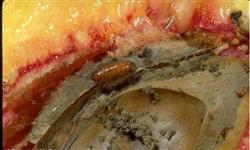
Spring Pest and Disease Control Methods for Protected Plum Trees
1. Mound soil at the base of the trunk. Before overwintering adults emerge from the soil (mid to late May), build a 10 cm thick mound of soil around the tree basin and tamp it down firmly so that emerging adults cannot come out of the soil. 2. Apply pesticide to the ground. Before overwintering adults emerge (after petal fall), spray the tree basin with 75% phoxim emulsifiable concentrate at 0.5 kg/mu, or 40...
-
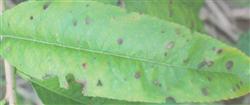
A Detailed Guide to Common Pests and Diseases of Plum Trees and Their Control Methods
After the first pinching of plum trees, pinch the new secondary shoots when they reach 20 cm, and pinch the developing branches when they reach 60-80 cm. If there are many branches, some can be thinned out; if the branches are not too dense, thin as little as possible and rely more on control. Before mid-July, clear all weeds from the orchard. 1. Bacterial shot hole disease, can use carbendazim...
-
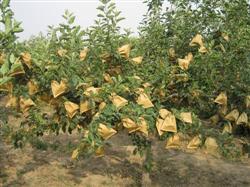
Pest and Disease Control Methods for Pear Trees Before Bagging in Early Spring
The period before and after bud break in early spring is when diseases and pests begin their activity, and once the pear orchard is bagged, spraying becomes considerably more difficult. Therefore, pest and disease control before bagging is the key to pest and disease management in bagged pear orchards. During this period, the focus should be on strengthening control of the pear psylla (Psylla pyrisuga), pear aphid, and red spider mite, among others. (1) Strengthen soil, fertilizer, and water...
-
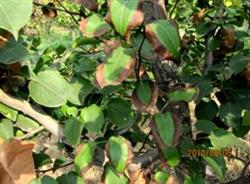
What are the control methods for potassium deficiency in pear trees
Villagers reported that in a pear orchard in a mountain village, some pear tree branches were found to have shortened internodes, smaller leaves that were yellow-green in color, with leaf margins curling upward, browning, and scorching; in severe cases, the entire tree's leaves were like this, resembling fire damage, and it was even more severe on trees in poor, thin soil with exposed roots, affecting tree vigor and yield. Many fruit growers could not figure out...
-
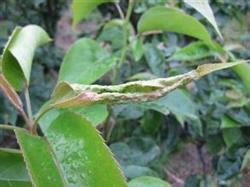
Control Methods for Pear Aphid Pests on Pear Trees
Pear aphid, also known as pear two-branched aphid or pear leaf-curling aphid, commonly called "greasy bug," occurs in pear-growing areas throughout the country and is one of the major pests of pear trees. When damage is severe, it causes early defoliation, affecting both the current year's yield and flower bud differentiation. This insect belongs to the order Homoptera, family Aphididae. 1. Damage symptoms: Adults and nymphs gather in colonies on buds, leaves, and tender shoots to suck...
-
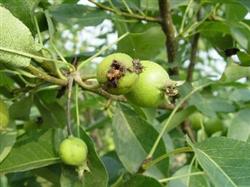
Chemical control methods for the pear fruit moth
Sex pheromone lures can be hung in the orchard, and the number of trapped moths checked daily; generally, 1 lure per 15 mu of orchard is sufficient. When the number of trapped adults increases sharply, check for egg-infested fruit once every 3 days. When the rate of egg-infested fruit reaches 0.5%-1%, chemical control can be carried out. The main chemicals are: 1. 20% diflubenzuron suspension concentrate or 25% diflubenzuron wettable...
-
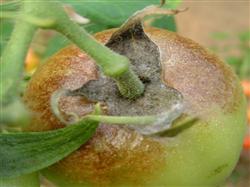
Identification and Control Methods of Tomato Late Blight
Tomato late blight, which vegetable growers call persimmon blight, is a devastating disease of tomatoes. - Symptom identification: The disease can occur in both seedlings and adult plants. When seedlings are affected, dark green water-soaked lesions appear on the leaves and quickly spread to the petioles and stems, making them thinner and dark brown, causing the whole plant to wilt or break at the stem. When humidity is high, the diseased area...
-
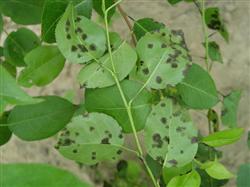
Detailed Explanation of Control Methods and Technical Key Points for Pear Scab
In the early stage of fruit infection, pale yellow spots appear; after the lesions expand, they become slightly sunken and develop black mold, after which the lesions become corky and cracking appears. Control measures: in the early stage of fruit infection by pear scab, the pesticides to spray include 1:2:200 Bordeaux mixture; 70% thiophanate-methyl wettable powder at 800-1000 times dilution; 50% carbendazim wettable...
-
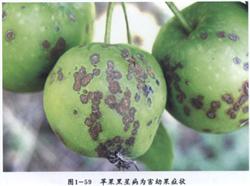
What are the control methods for pear scab?
1. Strengthen orchard management. Pear trees that grow weakly are easily infected by the pathogen. Therefore, applying more fertilizer, especially organic fertilizer, can strengthen the tree vigor and improve disease resistance. 2. Chemical control. Spray once just before the pear trees approach flowering and once when about 70% of the flowers have fallen, to protect the inflorescences, young shoots and new leaves. After that, according to rainfall conditions...
-
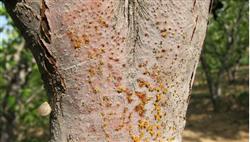
How to prevent and control pear tree canker? Mastering these methods is enough
1. Strengthen the tree to prevent disease: (1) Reasonable load: According to the tree's growth condition and fertilization level, determine an appropriate fruit load. Do not let the tree bear too heavy a load, and even less should you adopt excessive measures such as branch bending and girdling to increase fruit production for short-term gain. Properly thin flowers and fruits so that both fruiting and tree growth are achieved. (2...
条件筛选