-
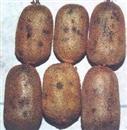
Occurrence Patterns and Control Methods of Kiwifruit Gray Mold
Kiwifruit gray mold mainly occurs during the flowering stage, young fruit stage and storage period of kiwifruit. In severe years, the incidence rate in orchards and during storage can reach more than 50%. Kiwifruit gray mold has become one of the main diseases affecting the healthy development of the kiwifruit industry. 1. Symptoms When young fruit (late May to early June) is affected, residual stamens and petals are densely covered with gray spores. At the initial stage, the fuzz on young fruit turns brown, the skin is infected, and in severe cases it can cause fruit drop. Contaminated stamens and petals attach to leaves and form concentric ring lesions centered on them; the lesions expand and leaves drop. If rain occurs, the disease develops more severely. After fruit is affected, gray-brown mycelium and spores form on the surface, followed by black sclerotia. During storage, fruit is easily infected by diseased fruit.
-
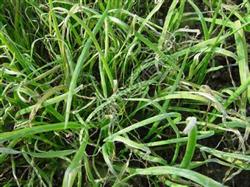
Control Methods and Technical Key Points for Gray Mold in Greenhouse Chinese Chives
When humidity inside a greenhouse for Chinese chives is high, gray mold is likely to occur. After the disease develops, pale grayish-brown to white spots gradually appear on the leaves from the tip downward, on both the upper and lower surfaces; after expanding, they become elliptical or spindle-shaped lesions and merge with each other into large dead patches. When air humidity is above 85% and the temperature is 15°C~20°C, warm and humid conditions favor the occurrence of this disease.
-
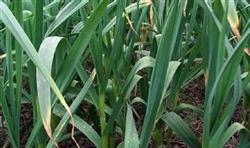
How to Control Onion Maggots in Garlic in Winter? A Full Breakdown of Practical Methods
Thoroughly remove plant residues. Onion maggots have a strong attraction to diseased and dead plant residues, especially rotting garlic plants, so at garlic harvest the garlic residues in the field, at the field edges and along roadsides should be completely removed and destroyed, to reduce the food source for the maggots and at the same time reduce the number of insects remaining in the field. Regulate water and fertilizer and the sowing schedule to disrupt...
-
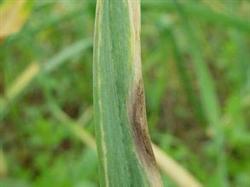
Characteristics and Control Methods of Garlic Gray Leaf Spot
(1) Symptom characteristics: It mainly affects the leaves. The lesions are long elliptical, initially light brown, later turning grayish white. On both sides of the leaves, the lesions produce fine grayish-black mold-like growth. In severe cases, the lesions merge, causing localized death of the leaves. The disease is severe in weather with warm days and cool nights, heavy fog, and heavy dew. (2) Control methods: ① Promptly remove damaged leaves...
-
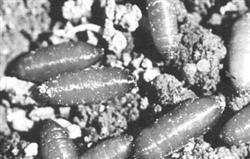
A Detailed Explanation of the Occurrence Patterns and Control Methods of Garlic Root Maggots
Root maggots is the collective term for the larval stage of Diptera pests that damage garlic and other crops. In recent years, the occurrence of garlic root maggots has shown a trend of increasing year by year. Root maggot damage can cause garlic yield reduction and has a major impact on garlic quality, with severe damage leading to serious economic losses. Garlic root maggots (larvae) generally gather on garlic roots and...
-
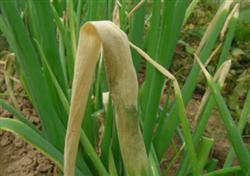
Identification and Control Methods for Dry Tips on Welsh Onions
Welsh onion dry tips fall into two types: physiological dry tips and pathological dry tips, and among the latter, "white dry" and "green dry" often leave onion farmers unable to tell them apart, making it hard to target the right treatment, which leads to missing the best window for control. Here, a brief explanation of the causes and control measures for the two symptoms. White dry is caused by late blight, occurring under high temperature and high humidity conditions...
-
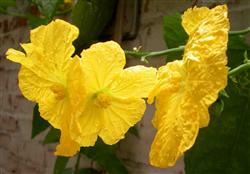
What are the causes of loofah flower rot? Detailed explanation of prevention and control methods
Preparation ratio of flower-dipping solution: The flower-dipping agent generally uses zuogualing, naphthaleneacetic acid (NAA) and 2,4-D as the main agents, plus an appropriate amount of nutrient solution and a fungicide for controlling gray mold for flower dipping, and the effect is very ideal. Smoke fumigation method for controlling flower rot: Smoke fumigation is one method for controlling loofah flower rot. Usually 3-4 days after flower dipping is the...
-
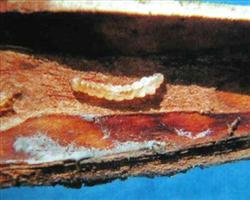
5 Control Methods for the Apple Flatheaded Borer
Nursery stock quarantine: The apple flatheaded borer is a quarantine pest and can be spread to new areas with nursery stock. Therefore, quarantine work at the time of nursery stock shipment must be strictly strengthened to prevent its spread. Protecting natural enemies: During the mature larval and pupal stages, the apple flatheaded borer has two species of parasitic wasps and one species of parasitic fly; in orchards that are not frequently sprayed with pesticides, the parasitism rate can reach 36...
-
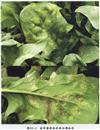
Comprehensive Management and Control Methods for Spinach Downy Mildew
Comprehensive management of spinach downy mildew means integrated management of spinach downy mildew. 1. Fertilizer and water management. Spinach prefers fertile, moist, cool conditions and dislikes drought and waterlogging; it is a fast-growing vegetable. Therefore, during the growing period, sufficient fertilizer and water must be supplied in a timely manner. From sowing to full emergence, the soil must be kept moist to ensure full emergence. At the 3-leaf stage, cultivate and weed, ...
-
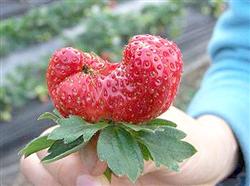
Causes and Control Methods of Deformed Strawberry Fruit in Greenhouses
During the cultivation of greenhouse strawberries, fruits often appear overly fat or overly thin, with deformed shapes such as cockscomb-like or flat forms. Such fruits not only affect strawberry quality but also reduce their commercial value. In order to reduce or even avoid the formation of such deformed fruits, the author now introduces the causes and control methods as follows:...
条件筛选