-
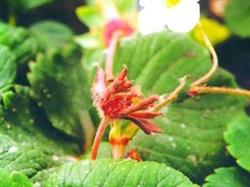
Symptom Identification and Integrated Control Methods for Strawberry Bud Blight
Strawberry bud blight is a soilborne fungal disease with a worldwide distribution. It is strongly saprophytic in soil and is an important root disease of many crops. In addition to strawberry, it also affects more than 160 species of cultivated and wild plants, including cotton, soybean and vegetables. On strawberry, it mainly damages buds, new shoots, stipules and the bases of leaf petioles, causing seedling-stage damping-off...
-
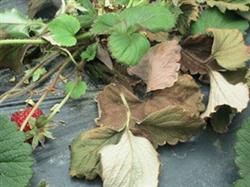
The Harm of Strawberry Verticillium Wilt and Its Comprehensive Control Methods
Strawberry Verticillium wilt is a soil-borne disease. It has been an important factor affecting and troubling the expansion of strawberry production in recent years. Because strawberry is a perennial plant, continuous cropping in the same field for many years causes a large accumulation of pathogens in the soil, and combined with factors such as declining varietal disease resistance and poor field management, it leads to strawberry...
-
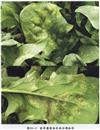
How to prevent and control downy mildew in spinach? Detailed explanation of prevention and integrated treatment methods
The disease is caused by a fungus called spinach downy mildew. It mainly affects the upper surface of the leaves; the lesions are pale yellow, irregular in shape and varied in size, with a diameter of 3-17 mm and indistinct edges. After the lesions expand, they join together into patches, and in the later stage they turn brown and the leaves die; on the underside of the leaves, a grayish-purple mold layer forms on the lesions. The disease spreads from the outer leaves...
-
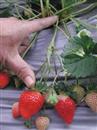
What are the control methods for black heart in strawberries?
Symptoms of strawberry black heart disease: the first inflorescence grows deformed, the inflorescence, heart leaves, fruit stalks and leaf stalks are extremely short and cannot emerge, the flowers do not open normally at the base, and the edges of new leaves dry up and turn black. In severe cases, the entire first inflorescence and all new leaves dry up and turn black, which farmers call "black heart disease". Control measures: 1. Reduce chemical fertilizer...
-
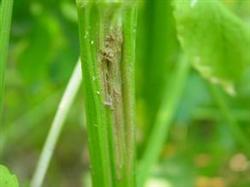
Cause analysis and control methods for celery petiole cracking
Celery petiole cracking mainly shows as the stem base splitting open together with the petiole. The first cause of cracking is boron deficiency; the second is growth being hindered under low temperature and drought conditions. In addition, sudden high temperature and high humidity, with the plant absorbing too much water, cause the tissue to fill with water rapidly, which can also cause cracking. Control methods: first, apply...
-
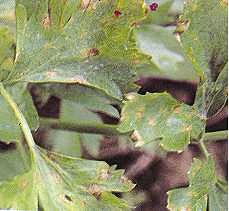
Control Methods for Late Blight in Greenhouse Celery
Celery late blight, also known as leaf spot disease and leaf blight, is a common disease in celery. Late blight in greenhouse-grown celery is more severe than in open-field celery and has a great impact on celery yield and quality. Occurrence characteristics: Celery late blight is a fungal disease, and the pathogen can overwinter on seeds and diseased plant residues. Sowing...
-
Control methods for acute seedling death in greenhouse cucumbers
In the process of off-season cucumber cultivation under plastic film-covered greenhouses, when cucumbers enter the flowering and fruiting stage, cucumbers that were growing well earlier often suddenly show acute seedling death within a few days. This acute wilt disease of cucumber develops rapidly and is difficult to control. Its causes: weather...
-
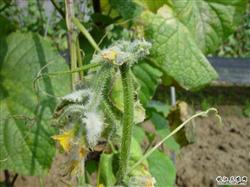
Detailed Guide to Symptom Identification and Control Methods for Cucumber Phytophthora Blight
Cucumber phytophthora blight occurs in all regions. It is one of the important diseases of cucurbit crops. It can harm many kinds of cucurbit crops. 1. Pathogen Cucumber phytophthora blight is a disease caused by fungal infection. 2. Symptom identification 2.1 Leaf lesions appear as light brown, nearly circular large spots. 2.2 Stem base...
-
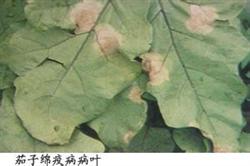
How to treat eggplant Phytophthora fruit rot? A detailed explanation of prevention and control methods
The pathogen of eggplant Phytophthora fruit rot is Phytophthora melonis, and the disease is severe under conditions of high temperature and high humidity. When seedlings and older plants are infected at the stem base, the initial stage shows water-soaked lesions, which later turn dark green or purplish brown, and the diseased part becomes constricted. Prevention and control techniques: adopt measures such as selecting disease-resistant varieties, hot water seed treatment, ridge planting, and humidity control for prevention. In the early stage of the disease, use 50...
-
A Complete Guide to Succulent Pest and Disease Prevention and Control Methods and Techniques
Text and images: Internet Although succulents are easy to grow and care for, pests and diseases can still occur under certain conditions. For succulents that follow a refined aesthetic, even a tiny pest or disease problem can leave "a flaw in fine jade," greatly reducing their ornamental value....
条件筛选