-
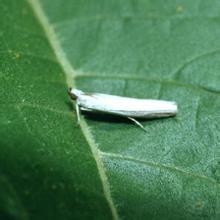
Damage Caused by the Sunflower Moth Borer and Its Control Methods
Damage characteristics: The 1st-2nd instar larvae gnaw on the tubular florets; after the 3rd instar they bore along the gaps between the arranged sunflower seeds to feed on the seeds, eating part or all of the kernel, resulting in empty shells or bored heads, tunneling the flower head into many galleries, and spinning silk webs on the seeds of the head that bind frass and debris, appearing like a felt of silk. The damaged heads mostly rot and grow moldy,...
-
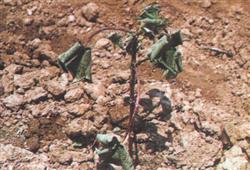
How to prevent and control cotton damping-off? These methods you need to know
Cotton damping-off, also known as root rot and black root disease, is caused by Rhizoctonia solani. Infection before seed germination can cause seed rot, and infection after germination but before emergence can cause sprout rot. When cotton seedlings are affected after emergence, yellow-brown lesions initially appear on the base near the soil surface, and the lesions gradually expand to encircle the entire base. Senior agricultural...
-

What causes white heads in wheat? Detailed explanation of causes and control methods
Causes of white heads in wheat and control methods
-
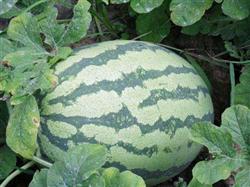
What are the control methods for stiff fruit in spring watermelons?
The causes of stiff fruit fall into the following categories: 1. Dry soil and insufficient fertilizer and water: if fertilizer and water are insufficient during the fruit enlargement period, stiff fruit is easily formed. Therefore, the melon field should be irrigated, with the amount of water increasing from small to large, and the water should not cover the bed surface. The water should not remain in the field for too long, and irrigation should be done in the evening or at night to avoid burning the roots at high temperatures...
-
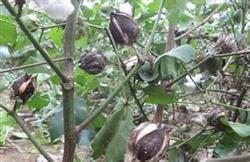
What are the control methods for cotton boll rot?
1. Clear the ditches. Before and after rain, promptly clean the drainage ditches in the cotton field. The ditches must be unobstructed to ensure there is no standing water in the cotton field when it rains and no blockage in the ditches, so that surface water can be drained quickly after rain and the groundwater level in the cotton field can be effectively lowered. 2. Prune branches and remove leaves. Pruning branches and removing leaves in the late growth stage of cotton can not only reduce nutrient consumption and save nutrients...
-
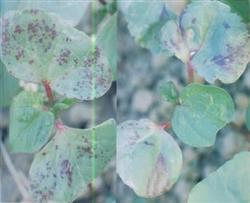
What are the control methods for cotton bacterial angular leaf spot?
I. Agricultural measures. 1. Prepare the soil carefully, apply sufficient base fertilizer, ensure adequate pre-planting soil moisture, and select disease-resistant varieties. 2. Practice rational crop rotation, deep plowing and winter irrigation to promote the decomposition of diseased plant residues. 3. During the seedling stage, strengthen intertillage, reduce soil moisture, apply less nitrogen fertilizer, apply more phosphorus and potassium fertilizer, and cultivate strong seedlings. 4. Strengthen cotton field management, drain promptly after rain...
-
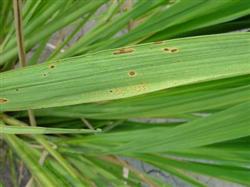
Symptom Identification and Control Methods of Rice Blast Leaf Spot on Water Bamboo
Rice blast leaf spot is a major disease of water bamboo, widely distributed and commonly occurring, found in all water bamboo growing areas, with more severe incidence in summer and autumn, diseased plants often reaching 80%-100%, significantly affecting water bamboo production. [Symptoms] This disease mainly affects the leaves. The lesions initially appear as small brown necrotic spots, which later develop into nearly oval to spindle-shaped...
-
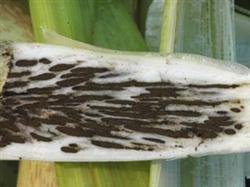
Occurrence and Integrated Control Methods of Water Bamboo Smut
Water bamboo smut is a major disease of water bamboo (Zizania latifolia), mainly affecting the leaf sheaths and the edible swollen stems, leading to reduced yield and quality of water bamboo. The main symptoms and integrated control methods of this disease are briefly described below: 1. Main symptoms: In the early stage of leaf sheath infection, the lesions appear as small dark green round spots, which later develop into oval tumor-like protrusions; in the later stage, the leaf sheaths are filled with black spore masses, causing the leaf sheaths to turn black. When the edible swollen stem is infected, the smut fungus fills the water bamboo tissue, causing the middle to swell and protrude, the edible stem strips to become shorter, and the outer surface to have many longitudinal grooves. It becomes rough, and in severe cases the edible stem is unfit for consumption.
-
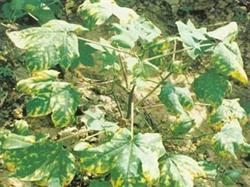
Scientific prevention and control methods for cotton Fusarium wilt and Verticillium wilt
Cotton Fusarium wilt and Verticillium wilt are the main diseases affecting high yield and high efficiency of cotton. Only by correctly identifying the symptoms and taking corresponding measures can yield and quality be improved and benefits increased. I. Cotton Fusarium wilt: This disease can occur at the cotyledon stage, with the first peak of incidence appearing at the squaring stage. At the seedling stage, the symptoms of Fusarium wilt are complex and varied...
-
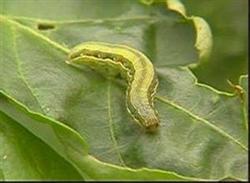
Control Methods and Technical Key Points for the Cabbage Moth
The cabbage moth, also known as the cabbage cutworm and vegetable armyworm, has the Latin scientific name Mamestra brassicae Linnaeus and belongs to the order Lepidoptera, family Noctuidae. The cabbage moth has an extremely diverse diet, with known hosts reaching over 100 species across 45 families. Among vegetables, its main hosts include cabbage, cauliflower, Chinese cabbage, radish, rapeseed, solanaceous and fruiting vegetables, legumes,...
条件筛选