-
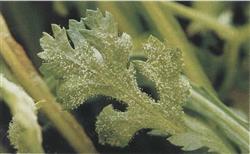
Integrated control methods for downy mildew in autumn garland chrysanthemum
Downy mildew in garland chrysanthemum mainly damages the leaves. In the early stage of the disease, pale yellow nearly round or polygonal lesions appear on the old leaves in the lower part of the plant, gradually spreading to the middle and upper parts of the plant; in the later stage the lesions become yellowish brown, and when the disease is severe the lesions merge into one patch and the leaves turn yellow and die. When humidity is high, white mold develops on the underside of the lesions. The pathogen infects...
-

Detailed Explanation of the Causes of Excessive Vegetative Growth in Cotton and the Control Methods
Causes of Excessive Vegetative Growth in Cotton and the Control Methods
-

What are the control methods for tomato viral disease?
How to prevent and control tomato viral disease
-
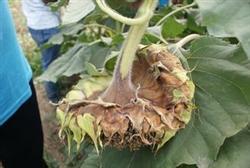
How to prevent and control sunflower sclerotinia? A detailed guide to practical methods
To prevent and control sunflower sclerotinia, the first thing to pay attention to is practicing crop rotation and removing diseased plant residues. Sunflower should be rotated with grass-family crops such as broomcorn millet, foxtail millet and corn, and continuous cropping with legumes and solanaceous crops should be avoided. The rotation period should be at least 3 to 5 years. At autumn harvest, remove the stalks as much as possible, dig out the root stubble and plow deeper than 10 cm. Next is...
-
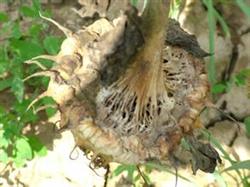
Occurrence patterns and control methods of sunflower sclerotinia rot
As the pace of planting structure adjustment accelerates, market demand for confectionery-type sunflower seeds is increasing day by day. Sunflower is an economical crop that is easy to manage and saves labor and effort. Because field management is too extensive and because of years of continuous cropping on the same land, many diseases have occurred and spread and have worsened year by year, directly causing sunflower yields to decline...
-

What to do about premature senescence in wheat? The causes and control methods are all here
Causes of and control methods for premature senescence in wheat
-

What causes stunted cotton seedlings? A detailed guide to prevention and control methods
Causes of stunted cotton seedlings and prevention and control methods
-
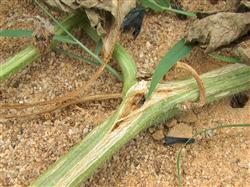
What are the control methods for watermelon fruit hardening in spring
In recent years, protected cultivation of watermelon has developed rapidly in the Jiangsu area. Due to the many rainy days during the growing period, favorable conditions have been provided for the occurrence of watermelon gummy stem blight, and the disease has worsened year by year. Watermelon gummy stem blight mainly damages the stems and vines, and also damages leaves and fruits. When the vines are affected, the disease mostly occurs at the stem nodes near the ground, first appearing as dark green...
-
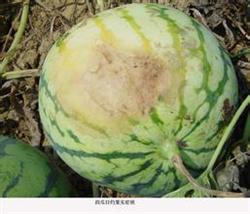
Control Methods for Sunscald in Spring Watermelons
Symptoms: Watermelon fruits exposed to the blazing sun have a very high surface temperature, and the fruit tissue is scorched and necrotic, forming a dry scar. Causes: Sunscald is related to variety; varieties with dark rind color are prone to it. Secondly, in hilly areas the soil is relatively poor, plant vegetative growth is weak, there are few vines and leaves, and it occurs more often when the fruit is exposed...
-
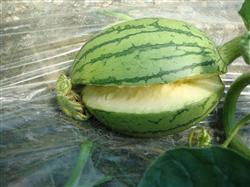
Effective Prevention and Control Methods for Watermelon Fruit Cracking in Spring
Watermelon fruit cracking can be divided into field cracking and harvest cracking. Field cracking is the bursting of the rind under static conditions, mainly caused by sudden changes in soil conditions. For example, if soil moisture is low during a certain stage of fruit development, fruit development is hindered; if rain or heavy irrigation suddenly occurs, soil moisture increases sharply, causing the fruit to expand rapidly and crack,...
条件筛选