-
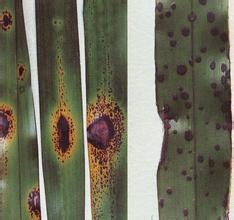
What are the symptoms of orchid round leaf spot? The prevention and control methods explained in one article
Leaf spot is a common leaf disease of orchids, found in Fujian, Jiangsu, Zhejiang, Shanghai, Nanjing and other places. Symptoms: The disease mainly affects the leaves. In the early stage, small brown spots appear on the leaves and rapidly expand into round patches, relatively wide, with a light brown center, and yellow small protrusions growing on both the front and back sides, occurring on the upper...
-
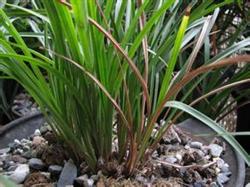
How to prevent and control anthracnose in orchids? Detailed explanation of prevention and control methods
Anthracnose is one of the main diseases in orchid cultivation. It occurs relatively commonly in China and is a serious disease harming orchids. Besides orchids, it also harms poinsettia, jasmine, glossy privet, finger citron, hibiscus, and others. 1. Symptom characteristics: In the early stage of the disease, small reddish-brown spots appear on the leaves, which later expand into large grayish-brown to grayish-white spots...
-
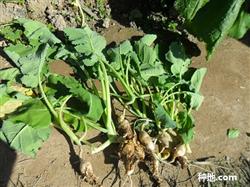
Control Methods and Technical Key Points for Clubroot of Rapeseed
How to control clubroot of rapeseed? Please explain. Clubroot of rapeseed occurs on the roots. The pathogen generally invades through root hairs or young roots, forming galls on the main root or lateral roots. It is commonly known as "big head disease." In the early stage, the surface is smooth and white; later it turns brown, rough and cracked. It is easily infected by other pathogens and rots...
-
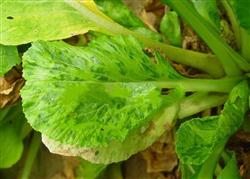
What are the control methods for rapeseed viral disease?
How to control rapeseed viral disease? Please advise. Rapeseed viral disease symptoms occur in all rapeseed production areas nationwide, with especially severe incidence in the winter rapeseed areas of North China, Southwest China, and Central China. The symptoms of this disease vary slightly depending on the type of rapeseed. Brassica rapa and Brassica juncea mainly develop chlorosis along both sides of the leaf veins, with leaves showing a yellow-green mosaic pattern, and the veins appearing translucent; in severe cases, the leaves shrink, curl, or become deformed, and diseased plants are markedly stunted, mostly dying before or at the bolting stage. Plants with mild infection and late onset may still bolt, but the flowering stems are curved or stunted, flowers and pods are densely packed, pods are shrunken and thin, and maturity is advanced. Brassica napus, by contrast, develops systemic necrotic spots, with symptoms appearing early and conspicuously on old leaves, then spreading to newly emerged leaves. At the initial stage of infection, needle-tip-sized transparent spots appear, which later expand into nearly round 2-4 mm yellow spots with dark brown necrotic centers, and the necrotic spots are surrounded by an oil-soaked appearance. On the stems and bolts, purplish-black spindle-shaped to elongated lesions appear, spreading from the middle-lower part toward the branches and fruit stalks; in the later stage, the stem lesions mostly split longitudinally or transversely, and the flowers and pods tend to wilt or die. The pods develop black necrotic spots and are mostly deformed.
-
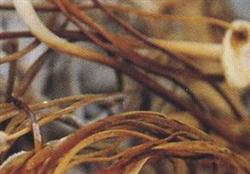
Control Methods and Technical Key Points for Enoki Mushroom Basal Rot
Symptoms: During the growth and development stage of the fruiting bodies, the base of the stipe turns dark brown to black and becomes rotten; after the base rots, the fruiting bodies topple over. Although young mushroom clusters affected by the disease do not topple over, they cannot continue to grow and develop upward; in severe cases, the needle-like young mushrooms turn black and rot in clusters. Pathogen: Penicillium claviforme, belonging to Deuteromycotina, ...
-
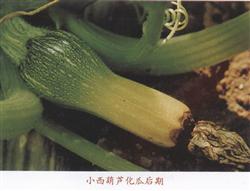
What are the control methods for zucchini fruit abortion?
How do you prevent and control fruit abortion in zucchini? What methods are truly effective? For zucchini fruit abortion, you can refer to the following methods for prevention and control: 1. Controlled cultivation. Keep the growing temperature for zucchini at around 25°C during the day and around 15°C at night, which favors the production, transport and accumulation of carbohydrates, and can greatly reduce fruit abortion....
-
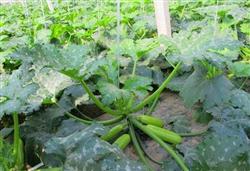
What to Do When Zucchini Grows Too Vigorously? A Detailed Guide to Practical Control Methods
What should you do when zucchini grows too vigorously? What methods can be used to control it? Zucchini can be controlled for excessive vigor using the following methods: 1. Temperature control management in the early stage. Temperature is the first factor in controlling excessive vigor. In the early fruiting stage of zucchini, the suitable daytime temperature for growth and development is 18-22°C, and the nighttime temperature is 8-10°C. If the daytime temperature is above 25°C, photosynthesis...
-
Detailed Explanation of the Harm and Control Methods of Soft Rot in Orchids
Generally speaking, if an orchid grows very robustly and its root system is very well developed, its disease resistance is relatively strong. If the orchid does not grow well and, on top of that, care is not adequate, then it becomes very prone to disease. In the current season, if ventilation is poor, orchids are very likely to develop soft rot. Soft rot is seriously harmful...
-
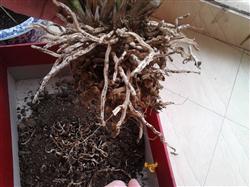
How to control ants on orchids? Introduction to practical methods
Some beginner orchid growers often do not understand orchid habits well and find it hard to grow orchids successfully; the leaf tips burn and the plants collapse, and after one or two years only a few withered stumps are left. The cause is mostly orchid root rot. As the saying goes, to grow orchids, first grow the roots. Good roots, vigorous leaves, fragrant flowers. To cultivate a good pot of orchids...
-
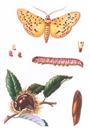
What are the control methods for the peach pyralid moth on Chinese chestnut?
How do you control the peach pyralid moth on Chinese chestnut? Please give guidance. The peach pyralid moth belongs to the order Lepidoptera, family Pyralidae. The larvae bore into and feed on the chestnut kernels, filling the seeds with frass and making them unfit to eat, and causing fruit drop, greatly affecting yield and quality. Its hosts also include peach, plum, and pear fruits, sunflower heads, corn stalks, and so on. Morphology...
条件筛选