How to prevent and control anthracnose in orchids? Detailed explanation of prevention and control methods
Anthracnose is one of the main diseases in orchid cultivation. It occurs relatively commonly in China and is a serious disease harming orchids. Besides orchids, it also harms poinsettia, jasmine, glossy privet, finger citron, hibiscus, and others. 1. Symptom characteristics: In the early stage of the disease, small reddish-brown spots appear on the leaves, which later expand into large grayish-brown to grayish-white spots...
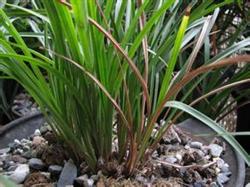
Anthracnose is one of the main diseases in orchid cultivation. It occurs relatively commonly in China and is a serious disease harming orchids. Besides orchids, it also harms poinsettia, jasmine, glossy privet, finger citron, hibiscus, and others.
1. Symptom characteristics: In the early stage of the disease, small reddish-brown spots appear on the leaves, which later expand into large grayish-brown to grayish-white spots. The lesions on the leaves are semicircular, circular, oval, diamond-shaped, and even irregular in various forms, varying in size. The lesions are 0.5 to 1.2 cm long and 0.3 to 0.5 cm wide. Some of the lesions merge with each other into large patches or gradually die from the leaf tip downward. The lesions are dark brown, or grayish-white in the center, and some lesions have a yellow-green halo around them. In the later stage, needle-head-sized small black dots (fungal acervuli) are scattered on the lesions, and the diseased spots easily rupture, causing the leaves to wither and die in segments, reducing ornamental value.
2. Pathogen and occurrence pattern: The pathogen is Colletotrichum gloeosporioides of the Deuteromycotina. The fungus overwinters as mycelium and acervuli on diseased leaves or diseased residues fallen in the soil. The following year, it produces conidia, which are spread by rain and insects and invade through stomata and wounds. The optimum temperature for conidial germination is 20 to 25°C, and the relative humidity is above 80%. In the Guangzhou area, the overwintering period is not obvious. When temperature and humidity are suitable in early spring, infection can occur. In particular, the disease is most prevalent in the high-temperature, rainy season from May to June and during continuous rainy weather, or in years with more autumn rain from September to October or more typhoons. Especially under high humidity and muggy heat, alternating sunshine and rain (or showers) weather, poor fertilizer and water management, overly dense pot placement, leaf rubbing and scratching, and plant frost damage can all worsen the disease. In northern greenhouses or household potted orchids, it also occurs year-round, and plants being too dense, overhead watering, frost damage, overly sticky potting soil, and poor drainage make the disease more likely.
3. Prevention and control methods
① Strengthen orchid care and management: For example, do not plant too densely, pay attention to avoiding frost damage and cold damage, and try not to injure the plants during care. It is not advisable to use porcelain pots for planting, and for watering, choose irrigation rather than overhead watering as much as possible. Indoors, ensure ventilation and light transmission. Fertilize reasonably, apply more phosphorus and potassium fertilizer, and enhance the disease resistance of orchids.
② Eliminate the pathogen: In winter and spring, prune diseased leaves, promptly remove fallen leaves, and pull out diseased and residual leaves, then burn them in a centralized manner to reduce sources of infection. Then spray the ground, pot surface, and plants comprehensively with 0.5% to 1% Bordeaux mixture 1 to 2 times.
③ Chemical control: In the early stage of the disease, spray with Bijunsha 800-1000 times dilution, 50% Carbendazim-plus-Thiram wettable powder 500 times dilution, or 30% Triflumizole wettable powder 2000 times dilution, once every 10 days, for 3 to 4 consecutive times, and the disease can be controlled. In the severe stage of the disease, spray with Penkejun 2000-3000 times dilution. During the disease period, use 50% compound Thiophanate wettable powder 800 times dilution, or 50% Hunshaliu suspension concentrate 700 times dilution, 25% Yingde suspension concentrate 1000 to 1500 times dilution, 50% Shibaoli wettable powder 1000 times dilution, or 69% Anke Mancozeb + 75% Chlorothalonil wettable powder (1:1) 1000 to 1500 times dilution, 65% Duokejun wettable powder 800 times dilution, 75% Chlorothalonil wettable powder + 70% Daigaole wettable powder 800 to 1000 times dilution, or 25% Tanteling 500 times dilution, spraying once every 7 to 10 days, alternating for 3 to 4 times, with obvious control effects.
④ Regularly spray chemicals to protect new leaves: You can use Bijunsha 800-1000 times dilution, 1% Bordeaux mixture, 75% Chlorothalonil + 70% Thiophanate (1:1) 800 times dilution, 80% Carbendazim-plus-Thiram 600 times dilution, 50% Benlate wettable powder 800 times dilution, or 20% Tricyclazole 800 times dilution, spraying once every 7 to 10 days, for 3 to 4 consecutive times, with good control effects.