What are the control methods for rapeseed viral disease?
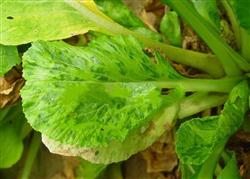
How to control rapeseed viral disease? Please advise. Rapeseed viral disease symptoms occur in all rapeseed production areas nationwide, with especially severe incidence in the winter rapeseed areas of North China, Southwest China, and Central China. The symptoms of this disease vary slightly depending on the type of rapeseed. Brassica rapa and Brassica juncea mainly develop chlorosis along both sides of the leaf veins, with leaves showing a yellow-green mosaic pattern, and the veins appearing translucent; in severe cases, the leaves shrink, curl, or become deformed, and diseased plants are markedly stunted, mostly dying before or at the bolting stage. Plants with mild infection and late onset may still bolt, but the flowering stems are curved or stunted, flowers and pods are densely packed, pods are shrunken and thin, and maturity is advanced. Brassica napus, by contrast, develops systemic necrotic spots, with symptoms appearing early and conspicuously on old leaves, then spreading to newly emerged leaves. At the initial stage of infection, needle-tip-sized transparent spots appear, which later expand into nearly round 2-4 mm yellow spots with dark brown necrotic centers, and the necrotic spots are surrounded by an oil-soaked appearance. On the stems and bolts, purplish-black spindle-shaped to elongated lesions appear, spreading from the middle-lower part toward the branches and fruit stalks; in the later stage, the stem lesions mostly split longitudinally or transversely, and the flowers and pods tend to wilt or die. The pods develop black necrotic spots and are mostly deformed.
How to control rapeseed viral disease? Please advise.
Rapeseed viral disease symptoms occur in all rapeseed production areas nationwide, with especially severe incidence in the winter rapeseed areas of North China, Southwest China, and Central China. The symptoms of this disease vary slightly depending on the type of rapeseed. Brassica rapa and Brassica juncea mainly develop chlorosis along both sides of the leaf veins, with leaves showing a yellow-green mosaic pattern, and the veins appearing translucent; in severe cases, the leaves shrink, curl, or become deformed, and diseased plants are markedly stunted, mostly dying before or at the bolting stage. Plants with mild infection and late onset may still bolt, but the flowering stems are curved or stunted, flowers and pods are densely packed, pods are shrunken and thin, and maturity is advanced. Brassica napus, by contrast, develops systemic necrotic spots, with symptoms appearing early and conspicuously on old leaves, then spreading to newly emerged leaves. At the initial stage of infection, needle-tip-sized transparent spots appear, which later expand into nearly round 2-4 mm yellow spots with dark brown necrotic centers, and the necrotic spots are surrounded by an oil-soaked appearance. On the stems and bolts, purplish-black spindle-shaped to elongated lesions appear, spreading from the middle-lower part toward the branches and fruit stalks; in the later stage, the stem lesions mostly split longitudinally or transversely, and the flowers and pods tend to wilt or die. The pods develop black necrotic spots and are mostly deformed.
The viral pathogens of viral diseases in rapeseed and other cruciferous vegetables are caused by infection from three groups: Turnip mosaic virus, abbreviated TuMV, known as turnip mosaic virus; Cucumber mosaic virus, abbreviated CMV, known as cucumber mosaic virus; and Tobacco mosaic virus, abbreviated TMV, known as tobacco mosaic virus. Among these, turnip mosaic virus is the main one, often causing rapeseed yield reductions of 52%-63%. According to surveys by Li Lili and others in 12 counties and cities across 7 provinces - Hubei, Hunan, Sichuan, Guizhou, Guangxi, Anhui, and Jiangsu - turnip mosaic virus accounted for 83.1%, cucumber mosaic virus for 19.39%, tobacco mosaic virus for 8.62%, and other viruses for 0.31%. Generally, the single infection rate of turnip mosaic virus is 50%-76%, while in Guangxi it is 24.32%. In production, mixed infection of TuMV and CMV is more common, accounting for 70.27%, while the single infection rate of CMV is only 5.4%. Turnip
mosaic virus particles are filamentous, measuring 700-800 x 12-18 (nm), with a thermal inactivation point of 55-60 degrees C for 10 minutes, a dilution endpoint of 1000 times, and an in vitro longevity of 48-72 hours. It is transmitted by aphids or sap contact, and under natural field conditions it is mainly transmitted by aphids. Besides cruciferous plants, it can also infect spinach, garland chrysanthemum, mustard, and others. Several strains are currently known to have differentiated. In addition, Youcai mosaic virus, abbreviated YMV, known as rapeseed mosaic virus, has been found in Shanghai, Zhejiang, Sichuan, Jiangsu, and Guangdong, and may be a member of the tobacco mosaic virus group. It causes mosaic symptoms in rapeseed, shriveling and deformation of new leaves, and stunted plants, with severely diseased plants mostly dying before bolting. YMV virus particles are spherical, with a diameter of 38 nm.
Transmission routes and disease conditions In China, the winter rapeseed virus overwinters in host bodies, and in the following spring it is transmitted by aphids such as the green peach aphid, cabbage aphid, cotton aphid, and cabbage aphid, among which the green peach aphid and cabbage aphid are very common in rapeseed fields. In winter rapeseed areas, because rapeseed, spring cabbage, green vegetables, pak choi, shepherd's purse, and other cruciferous vegetables and weeds grow year-round, they become an important virus source for autumn rapeseed. In addition, weeds such as plantain and horseradish, as well as solanaceous and leguminous crops, are also summer hosts of the virus. In spring rapeseed areas, the virus can also overwinter on seed-bearing plants of rapeseed and other cruciferous vegetables cultivated in greenhouses, plastic sheds, and cold frames. Winged aphids acquire the virus on summer hosts and then migrate to rapeseed fields to transmit it, causing primary infection. After disease occurs in rapeseed fields, aphids migrate and spread it further, causing secondary infection of the disease. In areas where cruciferous vegetables are not planted in winter, the virus overwinters on stored Chinese cabbage, cabbage, and radish; in the following spring after disease develops, it is transmitted to rapeseed by the aforementioned aphids, and in autumn the virus source is again transmitted to autumn vegetables, repeating this cycle endlessly. In addition, sap contact can also transmit the virus. Recent research indicates that in addition to aphid transmission, naturally occurring non-aphid-transmitted strains of TuMV and CMV have also been found, bringing difficulties to control. However, this has also opened a new field for the study of plant viruses. In rapeseed cultivation areas, dry autumn and spring with little rain and high temperatures favor major aphid outbreaks and winged aphid migration, making the disease prone to occurrence and epidemic. Rapeseed sown or transplanted early in autumn and sown late in spring is susceptible to the disease. Brassica rapa and Brassica juncea are more severely affected than Brassica napus.
Control methods (1) Select rapeseed varieties resistant to viral disease according to local conditions. For example, varieties resistant to turnip mosaic virus include: Ningyou No. 7, Dacang 8001, 8007, 81-23, Dangyou No. 3, Ganyou No. 5, 71-8, 730, Xinan 302, Chongyou 202, Chuanyou Huaye, Xindu No. 4, Guoqing 25, Hongyou No. 1, Wanyou 12, 13, Heza No. 2, Xiangzayou No. 1, Qianyoushuangdi No. 2, Liangyou 586 Rongyou No. 3, Ganbai Rapeseed, Jiangyan No. 1, Chuyou No. 4, Yuyou No. 2, Zhongshuang No. 4, and other virus-resistant varieties. (2) Adjust the sowing date. Determine the sowing date based on the September-October rainfall forecast for that year; if rain is scarce and the weather is dry, sowing should be appropriately delayed, and in rainy years it may be appropriately advanced. (3) Keep rapeseed fields as far away as possible from cruciferous vegetable plots. (4) Use 25% seed coating agent No. 2 at 1:50 or Weifu at 1:100 to coat rapeseed; within 30 days this can control aphids and underground pests and is effective against viral disease. (5) Control aphids in the field. Planting tall-stemmed crops around the seedbed is recommended to prevent aphid migration and virus transmission; laying silver-gray plastic film or ordinary agricultural film and window screen coated with silver-gray paint flat around the seedbed can repel aphids; use yellow boards to trap aphids, using 6-8 boards per 667 sq m, utilizing the aphid's attraction to yellow to trap and kill them. The focus should be on summer weeds and early-sown cruciferous vegetables to prevent them from transmitting the virus to rapeseed. Controlling aphids at the 3-6 leaf stage of rapeseed is very important; promptly spray 40% dimethoate emulsifiable concentrate at 1000-1500 times dilution, or 50% malathion emulsifiable concentrate at 1000-1500 times dilution, 50% mieyajing at 4000 times dilution, or 20% cypermethrin-malathion emulsifiable concentrate at 6000 times dilution. (6) At the early stage of disease, spray 0.5% Kangdufeng mushroom polysaccharide aqueous solution at 300 times dilution, or 10% Bingduwang wettable powder at 500 times dilution, or 1.5% Zhibingling emulsifiable concentrate at 1000 times dilution, or 83 Zeng Kang Ji at 100 times dilution, once every 10 days, for 2-3 consecutive applications.
Click to get more rapeseed cultivation techniques
Click to get more food crop cultivation techniques