-
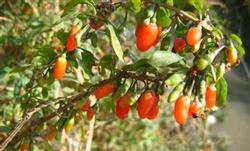
How to prevent and control wolfberry black fruit disease? These methods are very practical
Wolfberry black fruit disease damages the green fruit, flowers and buds of wolfberry, and also damages young shoots and leaves. From the early fruiting stage in early May to the late fruiting stage in mid-October, wolfberry can be infected by this disease. From May to June, when the daily average temperature is above 17°C, the relative humidity is around 60%, and there are 2~3 rainy days per ten-day period, the disease can occur in the field. From July to September, when the daily average temper...
-
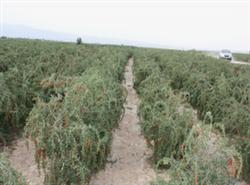
Control Methods and Key Technical Points for Black Fruit Disease of Goji (Lycium barbarum)
Goji root rot is widespread and causes serious damage. Plants killed by the disease account for 3%-5% each year, causing great losses to goji production. According to research by Lu Zhankui and others at the Ningxia Academy of Agriculture and Forestry Sciences, root rot symptoms fall into the following two types: (1) Root decay type. Roots or the root crown show varying degrees of decay and peeling, and the stem...
-
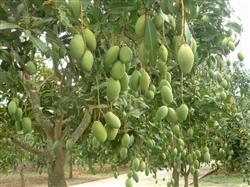
How to prevent and control mango powdery mildew? A detailed guide to practical methods
How to prevent and control powdery mildew when growing mangoes? Please explain the methods. Powdery mildew is an important disease of mango during the flowering period, affecting flower panicles, young fruit and tender leaves. It occurs in producing areas in Guangdong, Hainan, Yunnan, Guangxi and other parts of China. It has also been reported in India, Pakistan, Brazil, South Africa, Australia, Sri Lanka and other countries abroad...
-
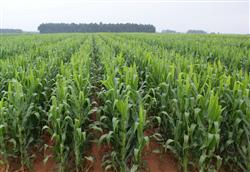
What are the chemical weed control methods for summer corn?
How is chemical weed control used in summer corn planting? Please note that the following methods can be referenced for weed control in summer corn planting: 1. Target weeds. According to a survey by the county plant protection station, the main weeds occurring in summer corn fields in our county include: field bindweed, goosegrass, purple nutsedge, crabgrass, purslane, foxtail, creeping thistle, volunteer wheat, etc. ...
-
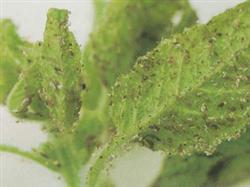
Control Methods for Major Sesame Pests and Diseases
How should the major sesame pests and diseases be controlled? Please give guidance. The major sesame pests and diseases include the following: 1. Sesame hawk moth: before the larvae reach the 3rd instar, when there are an average of 2 larvae per 100 leaves on the plants, pesticide should be applied for control. Commonly used pesticides: 2.5% trichlorfon powder or 5% carbaryl powder sprayed at 1.5-2.5 kg per mu; 90% crystalline trichlorfon or 80%...
-
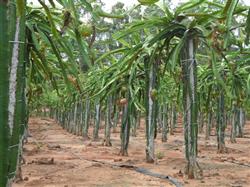
What are the common pest and disease control methods for dragon fruit?
What pests and diseases need to be controlled when growing dragon fruit? Please provide an introduction and guidance. To control pests and diseases when growing dragon fruit, you can refer to the following methods: (1) Pests and diseases. Because dragon fruit is a wild plant and has not been domesticated for long, it has no specific pests and diseases. To date, no fatal insect pests have been found. As for diseases, after transplanting or injury, its resistance weakens and it may be infected by bacteria or viruses, but no local or widespread infectious diseases have been found. As for insect pests, during the branch growth period, the tender shoots will be gnawed by pests, but because the plant produces many tender shoots in a very short time and they grow rapidly (more than 2 cm per day), the amount gnawed by pests is extremely limited and will not affect branch growth.
-
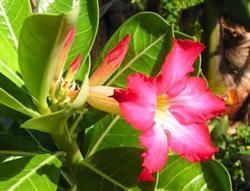
What are the control methods for soft rot in desert rose?
Desert rose soft rot is a major disease affecting desert rose. The desert rose has gorgeous flowers, blooms profusely, and is a short, sturdy plant; especially the root and stem portions have an ancient, vigorous posture, making it an excellent succulent plant for tropical regions. It has been introduced into our country for more than 10 years and grows well, but the occurrence and damage of its soft rot often causes the entire plant...
-
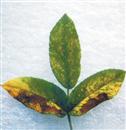
How to prevent and control rose rust? These methods you need to master
I. Symptoms Rose rust is a major disease of roses, common throughout southwest China, and more severe in areas with warm weather year-round and rainy, foggy winters. According to the author's surveys over many years, the incidence rate in some areas of our province is as high as 80%. White-flowered and purple-flowered roses are both infected, causing leaf drop, affecting growth and flowering, and it also...
-
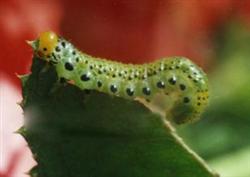
What to Do When Roses Have Pest Problems? A Detailed Guide to Prevention and Control Methods
Common pests that harm roses include leafcutter bees, stem sawflies, rose middle noctuid moths, cottony cushion scale, and red spider mites. Main control methods: 1. Leafcutter bees. They mainly damage the tender leaves of plants, and when they occur in large numbers they can bite complete leaves into ragged, incomplete ones within a short period. Mainly use manual capture of adults or spray 50%...
-
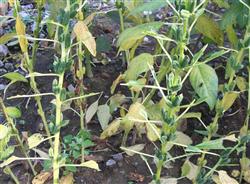
How to prevent and control sesame mosaic virus disease? Detailed control methods
How to prevent and control sesame mosaic virus disease? Please advise. Distribution and damage of sesame mosaic virus disease: It mainly occurs in sesame-producing areas of Henan, Hubei, Jiangxi, Anhui and other provinces. There are two types: common mosaic type and crinkled mosaic type. It is caused by single or mixed infection of Turnip mosaic virus (TuMV) and a spherical virus (CMV)....
条件筛选