-
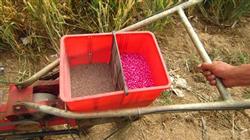
Which fertilizers are unsuitable as seed fertilizers? Understand before applying fertilizer
Three types of chemical fertilizers are unsuitable as seed fertilizers. Fertilizers containing harmful ions: ammonium chloride and potassium chloride fertilizers contain large amounts of harmful chloride ions. After being applied to the soil, they produce water-soluble compounds that burn seeds and seedlings; fertilizers such as ammonium nitrate and potassium nitrate contain nitrate ions, which seriously affect seed germination, so they are unsuitable as seed fertilizers....
-
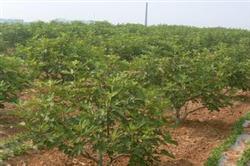
What are the key points to keep in mind when applying organic fertilizer to fruit trees?
1. Organic fertilizer should be applied in combination with chemical fertilizer. Currently, more than 90% of the organic fertilizer used in orchards is farmyard manure. These fertilizers contain large amounts of nitrogen, phosphorus and potassium as well as a certain amount of secondary elements (calcium, magnesium), trace elements (iron, boron, manganese, zinc, copper, etc.) and biologically active substances. They not only provide comprehensive nutrition for fruit trees...
-
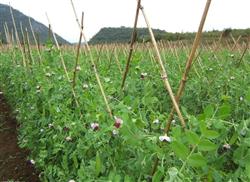
Applying organic fertilizer to vegetables has its rules; more is not always better
Traditional agriculture holds that vegetable fields should be given large amounts of organic fertilizer, and some even believe that the more organic fertilizer, the better. But according to the results of many trials in various places in recent years, appropriately increasing the application of organic fertilizer can effectively control excessive nitrate in vegetables, while blindly increasing organic fertilizer will cause excessive nitrate in vegetables. The nitrate contained in vegetables...
-
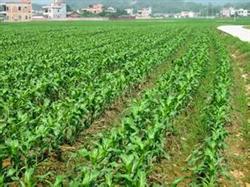
What effect does applying organic fertilizer to corn have on its growth
Manure, green manure, and decomposed straw can all be called organic fertilizer. Organic fertilizer is rich in organic matter and various nutrients, and is the most complete natural compound fertilizer in terms of nutrients. It can not only directly provide nutrients to crops, but can also activate potential nutrients in the soil and increase the content of available nutrients in the soil. Organic fertilizer...
-
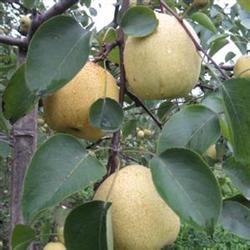
Methods and Key Technical Points for Applying Phosphate Fertilizer in Orchards
In spring and summer, the periods before and after flowering of fruit trees are stages prone to various diseases (physiological diseases and pathogen toxin diseases). At this stage, in addition to necessary chemical prevention, timely application of phosphorus and potassium fertilizers is also a good choice. However, many fruit growers tend to apply only nitrogen fertilizers (such as urea, high-nitrogen...
-
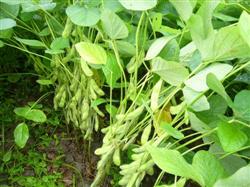
What are the precautions for applying diammonium phosphate?
Phosphorus promotes soybean root growth and is beneficial for the formation of root nodules. When the supply of phosphorus in the soil is insufficient, although soybean rhizobia can invade the roots, they do not form nodules. Molybdenum fertilizer is an essential trace element for nitrogen fixation in root nodules, and when the soil is deficient in phosphorus, applying molybdenum fertilizer alone actually reduces the number of root nodules. Phosphorus's effect on the amino... in root nodules
-
Methods and Techniques for Scientifically Applying Phosphate Fertilizer to Wheat
Wheat is a crop with a relatively high phosphorus requirement, and scientifically applying phosphate fertilizer is one of the key measures to improve phosphate fertilizer efficiency, reduce fertilization costs, and promote high-quality and high-yield wheat. 1. Apply after mixing and composting with organic fertilizer. Organic fertilizer is rich in organic matter, phosphoric acid, and various organic weak acids, which can turn insoluble phosphorus into soluble phosphorus...
-
Why is the seedling stage the key period for applying phosphate fertilizer to rapeseed?
Rapeseed is a crop with a relatively high boron requirement. When boron is deficient at the seedling stage, the root system stops growing, there are no root hairs or no lateral roots, and the growing point turns from brown to scorched and dies; applying rapeseed boron fertilizer in a timely manner plays an important role in achieving high yield and good quality in rapeseed. The specific method is: boron fertilizer applied as a base fertilizer is applied directly into the soil, and can be applied to rapeseed...
-
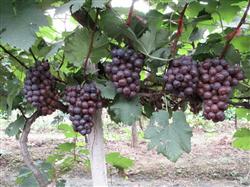
Applying potassium fertilizer to grapes makes the fruit sweeter and larger
During the grape growing season, potassium fertilizer is mainly applied as a foliar spray, because it has many advantages such as rapid absorption, good fertilizer efficiency, and timely supply. Foliar potassium spraying can be carried out together with pest and disease control, which saves labor. Grapes are a potassium-loving fruit tree; under potassium-deficient conditions, applying potassium gives higher yield and higher sugar content than not applying it...
-
Five precautions for applying trace element fertilizers
The production of green food also imposes various restrictions on the fertilizers used. So what fertilizers are allowed? 1. Farmyard manure. Refers to fertilizers containing large amounts of biological matter, animal and plant residues, excreta, biological waste, and other substances. 1. Compost. Made from various types of straw, fallen leaves, human and livestock manure...
条件筛选