-

Does applying chlorsulfuron to wheat fields affect cotton?
Chlorsulfuron is a sulfonylurea herbicide with high herbicidal activity, mainly used in wheat and flax fields to control annual monocotyledonous and dicotyledonous weeds. In China, it is currently restricted to use only in wheat fields in the wheat-rice rotation areas of the Yangtze River basin. It is not easily decomposed in soil, and its residual effect lasts up to 6 months. Crops such as cotton, peanut, soybean and vegetables are sensitive to this herbicide. When chlorsulfuron is applied to wheat fields and sensitive crops such as cotton are planted in the following crop, phytotoxicity of varying degrees will occur. In wheat fields where chlorsulfuron has been applied, it is best not to transplant cotton; other crops with strong tolerance can be planted instead.
-
Detailed Explanation of Key Technical Points for Applying Soybean Rhizobia
The use of rhizobia in soybean production is a mature and widely used technology that can substantially enhance the soybean plant's own nitrogen-fixing capacity during the growing period, supplying sufficient nitrogen for soybean production needs. Soybean rhizobia come in two formulations: liquid and solid. Solid rhizobia are applied by seed dressing or soil application. Liquid rhizobia are used by seed soaking. Soybean rhizobia inoculant can also be added during seed coating, but care must be taken that the coating agent and the rhizobia inoculant are compatible with each other, and that the activity of the rhizobia is not inhibited by the efficacy of the seed coating agent. One
-
Key Technical Points and Correct Methods for Applying Boron to Cotton
In recent years, statistics from cotton boron fertilizer trials in various regions show that on boron-deficient soils (soil available boron below 0.5 mg/kg) and potentially boron-deficient soils (soil available boron below 0.8 mg/kg), applying boron fertilizer to cotton can achieve good yield increases. 1. Base fertilizer: Apply before cotton sowing or before transplanting nutrient (pot) seedlings, incorporated during land preparation. Apply about 0.5 kg of borax per mu, which can be mixed evenly with fertilizers such as nitrogen, phosphorus and potassium and applied together, or mixed with fine dry soil before application. 2. Seed fertilizer: At cotton
-
Preliminary Report on the Effects of Applying Kebao Plant Super-Vitamin to Cotton
1 Materials and Methods 1.1 Test material Kebao Plant Super-Vitamin, produced and supplied by Zhejiang Kebao Biotechnology Co., Ltd.; the test variety was Xiangza Cotton No. 2. 1.2 Test site Dasha Lake Farm, Honghu City, Hubei Province. The soil texture was sandy loam; spring plowing and spring irrigation were carried out, and before land preparation, 300 kg/hm2 of 52% diammonium phosphate and 75 kg/hm2 of 46% urea were broadcast.
-
Applying boll fertilizer to cotton pays off, and this investment account must be calculated clearly
This year, due to early drought followed by flooding and the recent hot, high temperatures, cotton development progress has been very uneven. In particular, the number of bolls set on cotton varies greatly. In cotton fields planted earlier and managed better, the average number of early summer bolls per cotton plant has already reached 8 to 10, and for high-yield cultivation farmers, the early summer bolls on cotton can be as many as more than 20, while in general fields the early summer bolls on cotton are only 4 to 6. From the perspective of cotton's growth process, field cotton has now generally entered the boll-setting stage. The period when cotton concentrates on setting bolls is precisely the period of greatest fertilizer demand. From the stages divided by cotton boll setting,
-
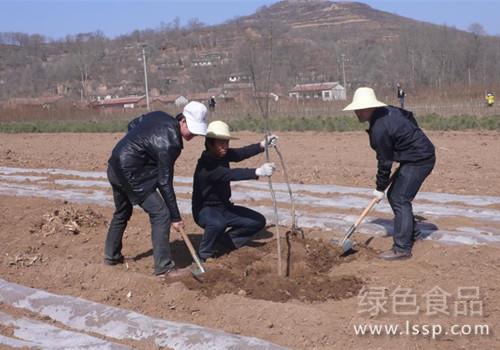
Eight key points for walnut cultivation; only by applying techniques according to the specific conditions can you achieve high yields
Only by applying techniques according to the specific conditions can you achieve high yields. Eight key points to note in walnut cultivation
-
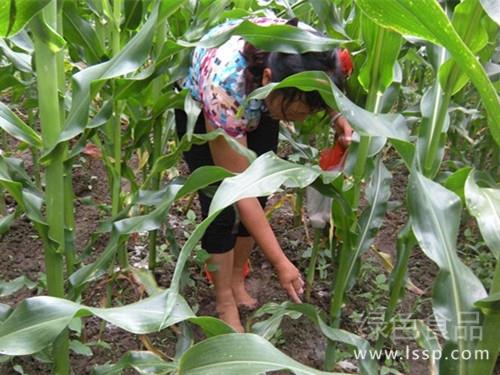
Corn with potassium deficiency loses water and wilts; applying potassium fertilizer can ensure high yield
Potassium deficiency causes water loss and wilting; for high corn yield, apply potassium fertilizer
-
Methods for Skillfully Applying Foliar Fertilizer to Tea Plants to Improve Quality
If famous tea is contaminated, especially export products, its output value and reputation will suffer serious damage. To improve tea quality and yield, in addition to measures such as growing green manure in tea gardens, mulching to retain moisture, applying sufficient farmyard manure after each harvest, and improving tea-making techniques, foliar fertilizer should also be used skillfully. This is a good method that uses a small amount of fertilizer, takes effect quickly, and yields high returns, generally increasing yield by 20%-30% or more. The techniques are: Fertilization timing. When the new shoots of each round of tea in spring, summer, and autumn sprout and grow to the stage of one bud and one initial leaf, choose a windless sunny day at early morning, evening, or on a cloudy day for spraying, once a week for 2-3 consecutive sprays. Spray until water drips from the leaf surface. Fertilizer ratio. Mainly nitrogen, phosphorus, and potassium, supplemented by micronutrient fertilizers, with a ratio of 4:1:1. Micronutrient fertilizers are proportioned according to the principle of supplementing whatever the tea plant lacks. Fertilization concentration. The fertilization concentration is related to the fertilizer variety and weather conditions. According to experiments, urea is 0.5%, superphosphate 1%, potassium sulfate 0.5%, zinc sulfate 50-100 ppm, and ferric molybdate 20-50 ppm. If the concentration is too high, fertilizer damage is likely to occur; otherwise, it will not be effective. Combination with multiple substances. It can be combined with pest control, sprinkler irrigation, and plant growth regulators, saving labor and making mechanized operation easier to achieve. Chemical properties of fertilizers and pesticides. Acidic fertilizers should be combined with acidic pesticides, and alkaline fertilizers with alkaline pesticides, so as not to produce chemical reactions or precipitates, preventing mutual cancellation of fertilizer and pesticide efficacy. Use biological pesticides to control pests and diseases. Using biological pesticides to control tea plant pests and diseases is the best choice, as it is safe, reliable, pollution-free, and harmless, with low cost and high control efficacy, such as Bt emulsion, Bacillus thuringiensis, Beauveria bassiana, agricultural antibiotics, and plant antibiotics.
-
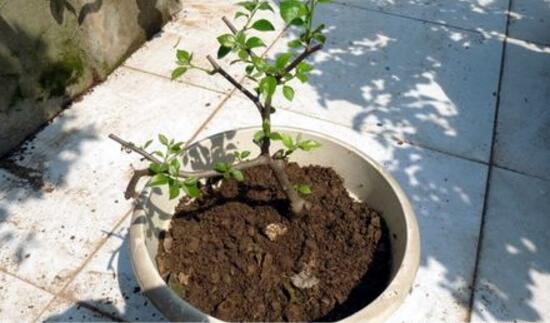
How do you fertilize Bougainvillea? Applying organic fertilizer once every half month is best
Bougainvillea has a long blooming period and brilliant flower colors. It is a highly ornamental plant, and many flower lovers grow it in pots at home. For experienced growers, caring for Bougainvillea is very simple, just a matter of hands-on work; but for beginners, it is a bit difficult to grow, especially how to fertilize Bougainvillea, which has stumped many people. In response
-
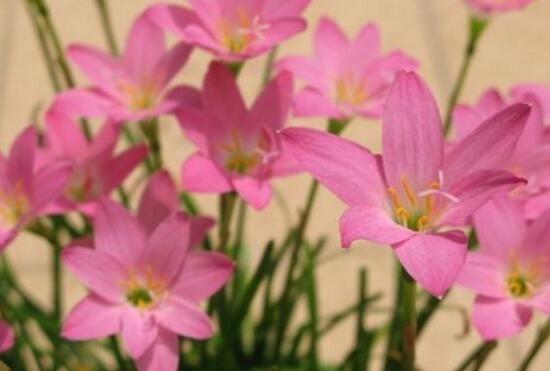
What to do if the rain lily does not bloom? Adjusting temperature, increasing light and applying fertilizer in moderation are key
The benefits of the rain lily are mostly seen in its ornamental value, and its ornamental value is mainly shown in its beautiful flowers. So once the rain lily does not bloom, its ornamental value will be seriously affected, and by then flower lovers must be very anxious! So what should be done if the rain lily does not bloom? For this, the editor has summarized 3 reasons
条件筛选