-

Technical Key Points for Applying Seaweed Microbial Fertilizer to Potatoes
The application of seaweed microbial fertilizer in crop cultivation has already attracted widespread attention from growers. It performs especially well on vegetables. So how should seaweed microbial fertilizer be used when growing potatoes? What are the effects after use? Below, taking the outstanding product among microbial fertilizers - Jinbaobei Seaweed Microbial Fertilizer - as an example, we briefly introduce its application methods on potatoes. Jinbaobei Seaweed Microbial Fertilizer is imported in original packaging from Australia. It is made using the latest international microbial engineering technology and processes, separated and purified from marine organisms, and finely developed into the newest generation of pure
-
Applying enzyme bacterial fertilizer to rice can improve planting efficiency
Enzyme bacterial fertilizer is a fertilizer that can improve the economic benefits of rice, as shown by its trial report. (1) Fertilizers tested: enzyme bacterial fertilizer, other compound fertilizer I, other compound fertilizer II, ordinary mixed fertilizer. (2) Trial situation: The trial site was set up at the trial base of Guangdong Sanren Company. The trial land area was 80 sq m, divided into 4 plots, each with an area of 20 sq m. The soil texture was newly reclaimed red soil, with low fertility. (3) Trial method: All four tested fertilizers were used as base fertilizer. The four
-
For garlic to yield high, applying four types of fertilizer well is key
Seedling fertilizer: For garlic, after all seedlings have emerged, at the 2-3 leaf stage, apply 40-50 dan of decomposed dilute liquid manure per mu, or 20-25 kg of ammonium bicarbonate. Winter fertilizer: mainly organic fertilizer, applied in shallow furrows 10-15 cm deep between the rows, with 1500-2000 kg of pig and sheep manure and 15-20 kg of ammonium bicarbonate per mu, then cover with soil to prevent fertilizer volatilization; this fertilizer should generally be fully applied before "Winter Solstice." Green-up fertilizer: after Start of Spring, when the rain season begins, apply about 10 kg of urea per mu
-
Applying microbial fertilizer to garlic at the seedling stage gives remarkable results
Jinxiang County in Shandong Province is the nationally famous "hometown of garlic." In Jinxiang, the year-round garlic planting area exceeds 33,000 hectares, ranking first among all counties (cities) and districts in China, and it is known as the "Chinese garlic capital." Thanks to the superior local natural conditions, the average garlic yield per 667 sq m reaches more than 1,200 kg, with the highest reaching 3,000 kg. Jinxiang garlic accounts for 70% of China's total garlic exports, and there is a saying that "to see the world's garlic, look to China; to see China's garlic, look to Jinxiang." The people of Jinxiang have also relied on growing gar
-
Why does applying biofertilizer to garlic increase yield?
When growing garlic, yellowing leaf tips and drooping leaves easily occur, weakening the growth vigor, making the leaves thin and the stems slender, and causing a marked drop in yield. If during the growth and development of garlic you pay attention to applying more biofertilizer, using the beneficial microorganisms in the biofertilizer to decompose toxic and harmful substances in the soil and nutrient elements fixed in the soil, and secreting growth hormones to stimulate garlic growth, the garlic will not develop yellowing, will have green stems and leaves, and its yield will increase markedly. The specific method is as follows: during the growth and development of garlic, every 15-20 days at the roots
-
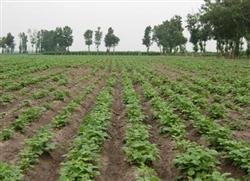
Methods and key technical points for applying sufficient basal fertilizer to mung beans
Although mung bean rhizobia have nitrogen-fixing ability, applying additional farmyard manure and phosphorus and potassium fertilizers has a clear yield-increasing effect. Before sowing, apply 2500 kg of farmyard manure, 20 kg of phosphate fertilizer and 1 kg of biological potassium fertilizer per mu as basal fertilizer. For fields where there is not enough time to apply basal fertilizer, during the early growth stage, that is, the branching and early flowering stage, apply 7.5 kg of ternary compound fertilizer per mu as topdressing...
-
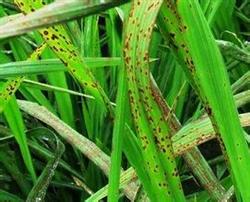
Identifying Zinc Deficiency Symptoms in Rice and Techniques for Skillfully Applying Zinc Fertilizer in Paddy Fields
Zinc is one of the essential trace elements for the growth and development of rice. Zinc deficiency in rice shows obvious symptoms. When rice is deficient in zinc, chlorotic yellow-white spots first appear in the midrib area of the lower leaves, with reddish-brown spots and irregular patches forming on them, which then gradually expand into reddish-brown streaks, turning reddish-brown and drying from the leaf tip downward, and from...
-
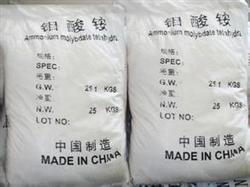
Key Technical Points and Methods for Applying Molybdenum Fertilizer to Soybeans
Molybdenum is a trace element essential for nitrogen metabolism in crops, and especially essential for the process by which nitrogen-fixing bacteria fix atmospheric nitrogen, so the effect of applying molybdenum fertilizer to legume crops is consistent. Xiao County has about 300,000 mu of soybeans planted year-round, and according to tests by the Suzhou City Soil and Fertilizer Station, 95% of the soil in Xiao County is deficient in molybdenum. In response to this situation, the Xiao County Soil and Fertilizer Station...
-
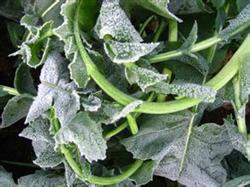
How to prevent frost damage in rapeseed? Applying to the soil and spraying on the leaves works well
Rapeseed is a winter crop. If the variety is chosen improperly, sowing or transplanting is too late, or fertilization is improper, frost damage is likely to occur. To prevent frost damage in rapeseed, in addition to selecting cold-resistant and hardy varieties, sowing at the right time, and raising strong seedlings for transplanting, the following technical measures should also be emphasized: increasing the application of phosphorus and potassium fertilizers. Phosphorus can promote the development of the rapeseed root system and enhance the...
-
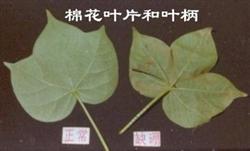
Applying microbial fertilizer to cotton can prevent disease occurrence
Boron deficiency at the seedling stage: Boron deficiency symptoms can appear in cotton right after emergence, manifesting as thickened and enlarged cotyledons with a darker color, fragile young shoots that break easily, and wilting and drooping in a "" shape (normal leaves stand upright in a "Y" shape); the terminal bud's development stalls, and in severe cases no true leaves emerge, ultimately leading to seedling death. With boron deficiency at the seedling stage, because the terminal bud's growth...
条件筛选