How to use growth regulators on cherry tomatoes? Application differs by type
Cherry tomato varieties fall broadly into two types: one is the indeterminate type, whose top does not terminate and which can keep growing continuously; the other is the determinate type, which automatically terminates after growing a few leaves and continues growing upward via side branches. The management of these two types differs little, but there is a considerable difference in growth regulator application....
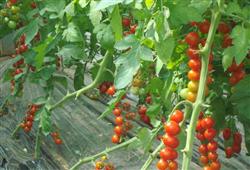
Cherry tomato varieties fall broadly into two types: one is the indeterminate type, whose top does not terminate and which can keep growing continuously; the other is the determinate type, which automatically terminates after growing a few leaves and continues growing upward via side branches. The management of these two types differs little, but there is a considerable difference in growth regulator application.
Determinate cherry tomatoes are relatively sensitive to growth regulators, because their plants have low levels of growth hormones such as gibberellin and tend to terminate growth at the top. After growth regulators are applied, the growth and development of the top and side branches stall and are difficult to restore. To regulate vigor, determinate types should mainly rely on measures such as lowering the temperature, controlling watering and reducing nitrogen fertilizer application.
Indeterminate cherry tomatoes grow vigorously, have high levels of growth hormones such as gibberellin in their plants, grow quickly and are more prone to excessive vegetative growth, so applying growth regulators to regulate vigor works relatively well. Therefore, when applying growth regulators to regulate the vigor of cherry tomatoes, it is essential to distinguish indeterminate from determinate types and not use them indiscriminately.