Timely application of regulators to wheat boosts stress resistance and yield
1. Paclobutrazol. At the wheat jointing stage; spray 50 kg of a 200 ppm paclobutrazol solution per mu, which can dwarf the plants, enhance lodging resistance and drought resistance. It can also control powdery mildew and improve the plant's absorption and utilization of nitrogen. 2. Chlormequat. For wheat fields with large populations and vigorous growth, at the wheat jointing stage, use 40-50 kg of a 40-50 ppm solution made from 5% chlormequat aqueous solution per mu...
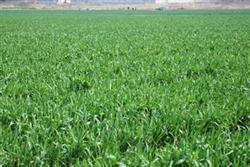
I. Paclobutrazol. At the wheat jointing stage; spray 50 kg of a 200 ppm paclobutrazol solution per mu, which can dwarf the plants, enhance lodging resistance and drought resistance. It can also control powdery mildew and improve the plant's absorption and utilization of nitrogen.
II. Chlormequat. For wheat fields with large populations and vigorous growth, at the wheat jointing stage, use 40-50 kg of a 40-50 ppm solution made from 5% chlormequat aqueous solution per mu for spraying, to control internode elongation, inhibit the vegetative growth of wheat, promote reproductive growth, make the plants stout, thicken the leaves, and enhance their lodging resistance. If mixed with 2,4-D, it can also control broadleaf weeds in wheat fields.
III. Auxin. At the wheat jointing stage, use 15-20 ml of auxin per mu, dilute with 50 kg of water, and spray on the leaves, which can inhibit internode elongation, prevent lodging later, and increase yield by 20%.
IV. Ethephon. From the booting stage to the grain-filling stage of wheat, spray 50 kg of a 100-300 ppm ethephon solution on the leaves, which can increase the seed-setting rate and promote full grains.
V. Naphthaleneacetic acid. Before the wheat jointing stage, spray once with 25 ppm naphthaleneacetic acid, and 7 days after flowering, spray again with 20 ppm naphthaleneacetic acid, focusing on the ears, which can increase the seed-setting rate, promote full grains, and increase yield by 15% per mu.