Application Methods and Technical Key Points of Botanical Insecticides
Chemical fertilizers, pesticides and hormones are major means of agricultural production and play an important role in ensuring increased agricultural output and higher farmer incomes. With social development, in order to improve labor efficiency and increase economic returns, farmers often mix two or more of chemical fertilizers, pesticides and hormones when applying them in production. Scientific and rational...
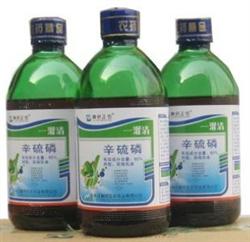 Common chemical agents cause varying degrees of phytotoxicity to vegetables and fruits. For example, omethoate should not be used within 30 days before harvest; malathion causes phytotoxicity to melons and peaches; fenitrothion causes phytotoxicity to cruciferous plants; and they should not be used within 15 days before harvesting fruits and vegetables. Dichlorvos should not be used within one week before harvesting fruit trees and vegetables. Therefore, pesticides are prohibited during the flowering period of fruit trees and vegetables, and botanical insecticides should be vigorously promoted. The relevant botanical insecticides are introduced below:
I. Purslane (Portulaca oleracea)
Also known as purslane vegetable, etc. Annual succulent herb. Stems prostrate or ascending, branching from the base, cylindrical, up to 30 cm long, pale green, often reddish-brown on the sunny side, smooth and hairless. Leaves alternate, sometimes opposite, petiole very short, leaf blade thick and fleshy, obovate, entire, 1-3 cm long, 5-14 mm wide, stipules small, dry and membranous, flowers bisexual. A 5-fold water decoction of purslane gives a kill rate of 46.9% against soybean aphids.
II. Cimicifuga (Cimicifuga spp.)
Also known as kulong yagen, etc. Perennial herb. Rhizome thick and large, curved, with several stem scars on it, commonly called "kulong" (holes), surface black, cross-section grayish-white; stem erect, single, 1-1.5 m tall; lower stem leaves have long petioles, base slightly expanded into a sheath, large, 2-3 times ternately compound or 2 times ternately compound; leaflets ovate, gradually acuminate, terminal leaflet often 3-lobed with pinnate incisions, lateral leaflets with irregular coarsely serrate margins, often with pinnate incisions or shallow lobes; upper leaves smaller. Using 14 g of the whole herb mixed with 300 mL of water, boil for 1 hour, filter and spray on vegetable aphids; the insecticidal effect is 57%.
III. Chinese Pulsatilla (Pulsatilla chinensis)
Perennial herb. Up to 50 cm tall, the whole plant densely covered with white soft hairs; root conical, thick and straight. Basal leaves numerous, ternate, with long petioles; leaf blade broadly ovate, central segment stalked, 3-parted, the lobes again 2-3-parted. Soak 500 g of Chinese pulsatilla in 5 kg of water, boil or soak for 1 day, filter, and it can be used to control cutworms, aphids and other soft-bodied pests.
IV. Greater Celandine (Chelidonium majus)
Also known as mountain coptis, changduancao, etc. Perennial herb. 30-80 cm tall; main root slender, much branched, earth-yellow or dark brown, densely covered with fibrous roots; stem erect, much branched, with slender white soft hairs, containing red-yellow sap; leaves alternate, 1-2 times pinnately parted; basal leaves 10-15 cm long, leaflets 5-8 pairs, gradually smaller from top to bottom, terminal leaflet broadly obovate, apex obtuse, margin with irregular incisions. (1) To control imported cabbageworm, use 1.5 kg of greater celandine, 0.5 kg of lime, add 3 kg of water and boil for 1 hour to make a thick liquid, spray it, and the kill rate reaches 70%. (2) Cut the whole herb at flowering stage, dry it in the shade, rub it into powder, and scatter it in the vegetable plot; it has a special effect on flea beetles. (3) Soak 800 g of dried whole herb, chopped, in 5 kg of hot water for 1-2 days; it is effective against aphids and beetles.
V. Agrimony (Agrimonia pilosa)
Also known as xianhecao, etc. Perennial herb. Up to 30-70 cm tall, the whole plant with white long hairs and glandular hairs. Rhizome spreading, with slender fibrous roots; in late autumn a conical, upward-curving white bud grows from the apex. Stem erect, angular, branched above. Odd-pinnately compound leaves, alternate, with basal leaves; apex acute or long acuminate, base cuneate, margin coarsely serrate. Mash the whole herb, add 21 kg of water, filter out the residue and spray to control aphids with an effect of 70%.
Besides the above plants, those that can be used as botanical insecticides also include pubescent angelica (Angelica pubescens), pinellia (Pinellia ternata), garden balsam (Impatiens balsamina), northeast mint (Mentha sachalinensis), northeast gentian (Gentiana manshurica), eggleaf peony (Paeonia obovata), cocklebur (Xanthium sibiricum), summer cypress (Kochia scoparia) and other wild plants commonly found in forests. They are rich in resources, widely distributed, easy to use, pollution-free and free of phytotoxicity, and are well worth vigorous promotion.