Technical Guidance on the Application of Commercial Organic Fertilizer for Solanaceous Fruit Vegetables
Solanaceous fruit vegetables include tomatoes, eggplants, peppers and other vegetables whose harvested fruit is the product; they are warm-loving, fertilizer-tolerant vegetables. According to the growth stage, methods such as broadcast application of base fertilizer, strip trench application of topdressing, hole application of transplanting fertilizer, and root dipping are generally used. The application rate of commercial organic fertilizer should be scientifically determined according to the needs of different vegetables and soil nut...
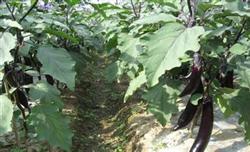
Solanaceous fruit vegetables include tomatoes, eggplants, peppers and other vegetables whose harvested fruit is the product; they are warm-loving, fertilizer-tolerant vegetables. According to the growth stage, methods such as broadcast application of base fertilizer, strip trench application of topdressing, hole application of transplanting fertilizer, and root dipping are generally used. The application rate of commercial organic fertilizer should be scientifically determined according to the needs of different vegetables and soil nutrient conditions, so as to achieve the goal of increasing yield and income.
1. Method and rate of applying commercial organic fertilizer to tomatoes. Tomatoes have a relatively developed root system and a high fertilizer requirement, so loamy soil that is fertile and has strong water- and fertilizer-retention capacity should be selected for planting. Apply as base fertilizer before land preparation and plowing, at 200-250 kg of commercial organic fertilizer per mu, together with 40-50 kg of superphosphate and 15 kg of potassium sulfate. Early-maturing varieties have a short growth period; after the first truss has set fruit, apply a single concentrated topdressing of 40-50 kg of commercial organic fertilizer per mu, generally by opening a shallow trench between the plant rows, applying the fertilizer, and then covering with soil; for mid- and late-maturing varieties, apply 40 kg of commercial organic fertilizer per mu at the fruit-swelling stage of the first truss, combined with one watering after topdressing. Thereafter, at the fruit-setting stages of the second, third and fourth trusses, apply 8-10 kg of urea per mu in turn, and water after fertilizing. Entering the full fruit-bearing stage, spray 0.4% monopotassium phosphate on the leaves on a sunny afternoon.
2. Method and rate of applying commercial organic fertilizer to eggplants. Eggplant is a fertilizer-loving crop, and soil conditions and fertilization levels have a relatively large effect on the fruit-setting rate of eggplants. When nutritional conditions are good, there is less flower drop. Poor nutrition will increase the number of short-styled flowers and cause poor development of floral organs, making fruit setting unsuitable. Before transplanting, apply 200-250 kg of commercial organic fertilizer per mu, together with 25-35 kg of superphosphate and 15-20 kg of potassium sulfate, broadcasting on the soil surface and evenly raking it into the plow layer in combination with plowing. When the first fruit reaches the eye-opening stage and the fruit begins to grow rapidly, carry out the first topdressing, applying 20-30 kg of commercial organic fertilizer per mu. When the second-layer fruit swells, carry out the second topdressing. When the third-layer fruit begins to develop, which is the peak period of fertilizer demand for eggplant, carry out the third topdressing. These three topdressings use the same amount, and later topdressing amounts can be halved.
3. Method and rate of applying commercial organic fertilizer to peppers. At each stage of pepper growth and development, different types and amounts of fertilizer should be applied additionally according to its nutrient requirements, and scientific topdressing should be carried out. Achieve one control, two promotions, three guarantees, and four avoidances. One control: control fertilization during the flowering period to avoid flower drop, leaf drop and fruit drop; two promotions: timely topdressing during the young fruit stage and harvest stage to promote rapid swelling of young fruit; three guarantees: ensure no fertilizer deficiency, no excessive vegetative growth, and no fertilizer damage; four avoidances: avoid high-concentration fertilizer, avoid topdressing on wet soil, avoid topdressing at high temperatures, and avoid overly concentrated topdressing. The role of base fertilizer is to promote faster growth after seedling recovery, advance row closure, and achieve high pepper yields. Before plowing, broadcast or trench-apply 200-400 kg of commercial organic fertilizer per mu, together with 10 kg of potassium sulfate. Entering the young fruit stage, carry out the first topdressing, applying 1500 kg of decomposed manure water per mu. During the harvest period, topdress vigorously and promote vigorously; on sunny days, every 5-6 days in the early morning or evening, apply 700 kg of decomposed manure water per mu once, and watering combined with topdressing is better.
In the process of applying commercial organic fertilizer, it should also be noted that it must not be mixed with nitrate-nitrogen-containing chemical fertilizers such as ammonium nitrate, alkaline fertilizers such as ammonium bicarbonate, or physiologically alkaline fertilizers such as sodium nitrate. Otherwise, nitrogen will volatilize and be lost, affecting the use effects of commercial organic fertilizer and chemical fertilizer.
Through the use of commercial organic fertilizer, the nutritional quality of vegetables can be effectively improved, soil nutrients activated, soil improved, soil fertility cultivated, the water- and fertilizer-retention capacity of the soil enhanced, and vegetable growth promoted.