-
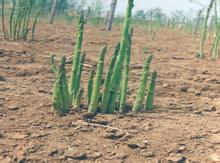
Full Analysis of Key Techniques for Spring Asparagus Seedling Cultivation
Asparagus production generally uses seedling raising followed by transplanting. Centralized seedling raising and transplanting gives a high emergence rate, can save seeds, reduce costs, facilitate centralized management, and helps with pest and disease control and the cultivation of strong seedlings; it can extend the growing period in the planting year and increase the yield in the second year; during cultivation, seedlings can be planted in a directional orientation according to the growth direction of asparagus, which facilitates ridge building, spear harvesting and management operations.
-
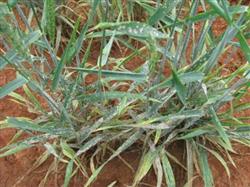
A Complete Analysis of the Harm and Control Measures of Wheat Powdery Mildew
The disease can attack all aboveground organs of the wheat plant, but mainly the leaves and leaf sheaths; in severe cases, the glumes and awns can also be affected. At the initial stage of the disease, white mildew spots of 1-2mm appear on the leaf surface, which then gradually expand into nearly circular to oval white mildew patches. The surface of the mildew patches has a layer of white powder that disperses immediately upon external force or vibration. This...
-
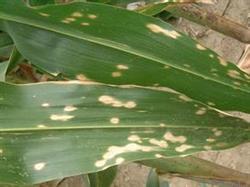
How to prevent and control corn gray leaf spot? A full analysis of the technical key points
Corn gray leaf spot can occur throughout the entire growth period, but the disease is most severe at the tasseling and grain-filling stages. In the early stage of the disease, water-soaked light brown spots appear. These streaks extend parallel to the leaf veins, are often rectangular, and are more obvious when held up to the light. The center of the lesion is gray, and the edge has a brown line. The lesion size is 2-4 x 10-24 (mm), and...
-
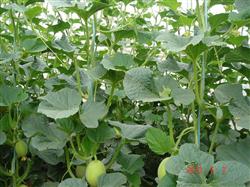
Analysis of Why Melons Fail to Set Fruit and Effective Measures to Overcome It
1. Promoting flowers and preserving fruit: At the early flowering stage, young fruit stage and fruit swelling stage, spray the Zhuangguadi Ling solution once each time. This can thicken the fruit stalk, strengthen the targeted nutrient supply, promote rapid fruit development, produce attractive fruit shape with abundant juice and good flavor; during the growth cycle there will be no flower drop, no fruit drop, no split fruit, and no deformed fruit. At the same time, strengthen field fertilization and irrigation...
-
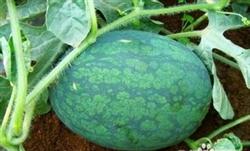
What to Do About Stunted Watermelons in Spring? Cause Analysis and Control Measures
1. Over-vigorous vine growth: the nutrients produced are mostly consumed by stem and leaf growth and cannot meet the needs of fruit enlargement, resulting in a rampant growth state. Strong seedlings should be raised to lay a good foundation for normal fruit development. Before and after fruit set, the amount and timing of the fruit-swelling fertilizer should be adjusted according to the size of new leaves, the thickness of the vines, the length of the internodes, and the length from the vine tip to the node of the opened female flower...
-
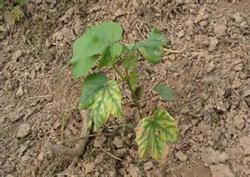
What to Do When Insect-Resistant Cotton Gets "Cancer"? A Full Analysis of Mitigation Methods
Cotton fusarium wilt is what farmers habitually call "cancer." In any field where this disease has appeared, planting cotton again often easily brings the "cancer" back, and it may even become more severe year after year. This is because once such pathogens lurk in the soil, they are difficult to eradicate, and when suitable climatic conditions occur, they easily flare up again....
-
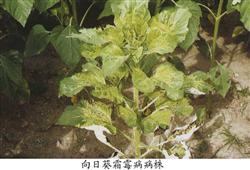
How to fertilize sunflowers properly? A full analysis of methods and key points
Symptoms The disease can occur at the seedling stage and the adult plant stage. It causes plant dwarfing, failure to form heads, or death. When infected at the seedling stage, symptoms begin to appear at 2-3 true leaves. After the leaves are affected, chlorotic patches begin to appear along the leaf veins on the leaf surface, and a white downy mold layer, namely the pathogen's sporangiophores and sporangia, can be seen on the underside of the leaves. Diseased plants grow slowly or remain stunted and do not grow....
-
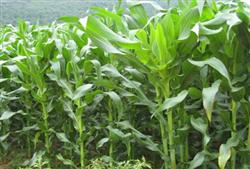
Full Analysis of Key Points for Spring Corn Cultivation Techniques
Adapt to local conditions and select improved varieties. In plains and hilly areas, promote Yedan 13 and Xiyu 3, paired with Huayu 4, Zhongdan 32, Chenghai 1, and Yuanzheng 808; for interplanting in cotton fields, select the short-stalked, short-growth-period Yedan 22 and Yedan 51; in suburban areas, where fresh eating is the main purpose, waxy corn (2319, -21.00, -0.90%) such as Zhongnuo 1 can be planted....
-
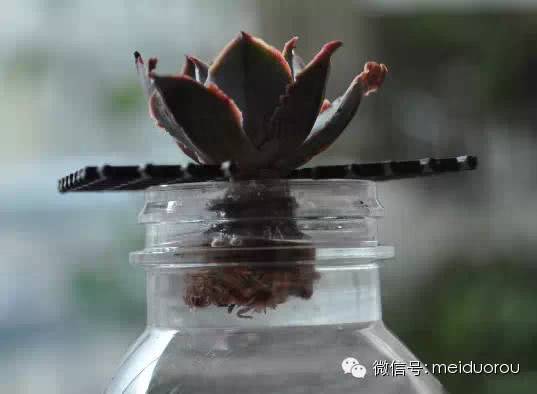
An Analysis of Several Common Problems During the Root Recovery Period of Succulents
A Brief Discussion of Several Problems Encountered When Succulents Are Recovering Roots. Recently many gardening friends have asked Paopao on WeChat what to do when the leaves of the succulents they just bought home have wrinkled, or what to do when they have not recovered in their pots for a long time. Today Paopao will briefly talk about...
-
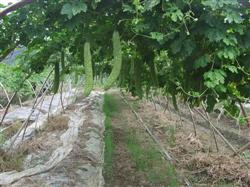
Why is it not advisable to apply topdressing to bitter melon along with irrigation water? An analysis of the reasons
At present, the topdressing method commonly used by vegetable growers who grow bitter melon is flushing application with irrigation water. Although this is very convenient and can distribute the fertilizer evenly into the soil, it is not advisable to use this method for topdressing bitter melon. The reason is that bitter melon is planted at a relatively low density per mu, only 200-300 plants per mu, and only 3-6 plants per row. If...
条件筛选