What to Do When Insect-Resistant Cotton Gets "Cancer"? A Full Analysis of Mitigation Methods
Cotton fusarium wilt is what farmers habitually call "cancer." In any field where this disease has appeared, planting cotton again often easily brings the "cancer" back, and it may even become more severe year after year. This is because once such pathogens lurk in the soil, they are difficult to eradicate, and when suitable climatic conditions occur, they easily flare up again....
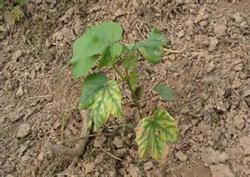
Cotton fusarium wilt is what farmers habitually call "cancer." In any field where this disease has appeared, planting cotton again often easily brings the "cancer" back, and it may even become more severe year after year. This is because once such pathogens lurk in the soil, they are difficult to eradicate, and when suitable climatic conditions occur, they easily flare up again.
In recent years, China has successively introduced and bred a number of insect-resistant cotton varieties, and most of them are quite good in insect resistance and high yield. In years with normal climate, insect-resistant cotton varieties also show a very significant yield-increasing advantage. However, the weakness of insect-resistant cotton is that its disease resistance is somewhat insufficient. When unfavorable weather with continuous rain occurs from early June to early July, some insect-resistant cotton can even become severely infected. Among them, some insect-resistant cotton varieties have a disease incidence rate of about 40%, and although they resist insects, yield reduction can still occur. At the same time, most insect-resistant cotton varieties set bolls relatively concentratedly and are prone to premature senescence in the later stage, which also deserves special attention in production.
For cotton "cancer," in addition to selecting disease-resistant varieties to enhance disease resistance, based on my experience summarized from many years of multi-site investigations, improving water system facilities and improving fertilization techniques can enhance disease resistance.
1. Apply more organic fertilizers of various types. I once applied bio-organic compound fertilizer in several cotton fields where about 20% of cotton plants had fusarium wilt, and in that same year the diseased plants dropped to within 5%, about 15 percentage points lower than the infected plants in adjacent cotton fields of the same type where bio-organic compound fertilizer was not applied. This is because the secretions of bio-organic fertilizer can inhibit the reproduction and invasion of pathogens. Therefore, first, 3000-4000 kg of farm-made organic fertilizer can be applied per mu; second, bio-organic compound fertilizer with different bacterial strains can be applied, about 75 kg per mu; third, high-energy organic compound fertilizer can be applied, about 100 kg per mu. Each locality can flexibly choose according to local actual conditions.
2. Increase the amount of potassium fertilizer. Many years of cotton production practice have shown that conventional cotton requires relatively less potassium fertilizer than insect-resistant cotton. At present, insect-resistant cotton occupies a large market share, and its potassium fertilizer requirement is more than double that of conventional cotton. Potassium deficiency is relatively common in fields planted with insect-resistant cotton. Increasing potassium fertilizer can not only enhance defense against fusarium wilt, but also prevent physiological diseases caused by potassium deficiency (dieback disease) and red-leaf stem blight, which often breaks out after sustained high temperatures and heavy rain, and can also avoid premature senescence. Generally, no less than 30 kg of potassium fertilizer is applied per mu.
3. Heavily and broadly apply flowering and boll fertilizer and boll fertilizer. When cotton enters the flowering and boll stage, it is at the peak of fertilizer demand. About 20 kg of high-content multi-element compound fertilizer should be applied per mu. When a single plant has about 3 mature bolls, about 15 kg of urea should also be applied per mu. At the same time, foliar spraying of monopotassium phosphate, Sulianbor, etc. can effectively prevent premature senescence and stalk collapse in cotton.
4. Improve water system facilities. In years when fusarium wilt occurs severely, we often see in field investigations that in the same cotton field prone to fusarium wilt, the disease incidence rate is much higher in sections with a high groundwater table than in sections with a low groundwater table, indicating that cotton with poorly developed roots has weakened resistance to invasion by fusarium wilt pathogens. When cotton develops seedlings, it first develops roots. The quality of the cotton field water system facilities is related to whether the cotton root system is strong or weak, and cotton with good root development can also enhance resistance to fusarium wilt. Therefore, in high-yield cotton fields, large drainage ditches, field ditches, and waist ditches should be connected, so that a heavy rain of 100 mm per day can be drained, lowered, and filtered, and the field dries once the rain stops.