How to fertilize sunflowers properly? A full analysis of methods and key points
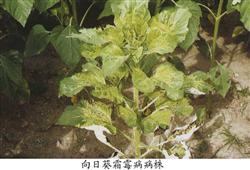
Symptoms The disease can occur at the seedling stage and the adult plant stage. It causes plant dwarfing, failure to form heads, or death. When infected at the seedling stage, symptoms begin to appear at 2-3 true leaves. After the leaves are affected, chlorotic patches begin to appear along the leaf veins on the leaf surface, and a white downy mold layer, namely the pathogen's sporangiophores and sporangia, can be seen on the underside of the leaves. Diseased plants grow slowly or remain stunted and do not grow....
 Sunflower fertilization technology: for every 100 kg of sunflower seeds produced, it is necessary to absorb 4.59-6 kg of nitrogen (N), 2.6-3.04 kg of phosphorus (P2O5), and 18.630 kg of potassium (K2O) from the soil. Phosphate and potassium fertilizers are mostly applied as base fertilizer or seed fertilizer, while nitrogen fertilizer is applied as topdressing, or 1/3 as base fertilizer and 2/3 as topdressing. The fertilization principle is to apply sufficient base fertilizer, apply seed fertilizer heavily, and topdress at the appropriate time.
The plowing depth is generally 13-25 cm. Within this range, the deeper the plowing, the greater the yield increase; for plots that cannot be plowed, three-plow penetration land preparation and fertilization should be carried out. Generally, 25 cubic meters of farmyard manure per hectare, 100-150 kg of diammonium phosphate as base fertilizer, 100 kg of urea, and 50 kg of potassium sulfate, or other fertilizers with equivalent nutrients, are applied. When the seedlings have 2-3 pairs of true leaves, thin them in time. Around budding, in combination with intertillage, topdress with urea at 100 kg of urea per hectare. The fertilization depth is 8-10 cm, and soil should be hilled up to the base of the plants to meet the nitrogen supply during the peak nitrogen uptake period of the plants.