An Analysis of Several Common Problems During the Root Recovery Period of Succulents
A Brief Discussion of Several Problems Encountered When Succulents Are Recovering Roots
Recently many gardening friends have asked Paopao on WeChat what to do when the leaves of the succulents they just bought home have wrinkled, or what to do when they have not recovered in their pots for a long time. Today Paopao will briefly talk here about several problems encountered when succulents are recovering roots. Of course, these are just the situations Paopao often encounters in day-to-day succulent growing, and there are certainly many omissions and shortcomings. I hope the experts among you can point them out~
1. How rootless succulents recover roots:
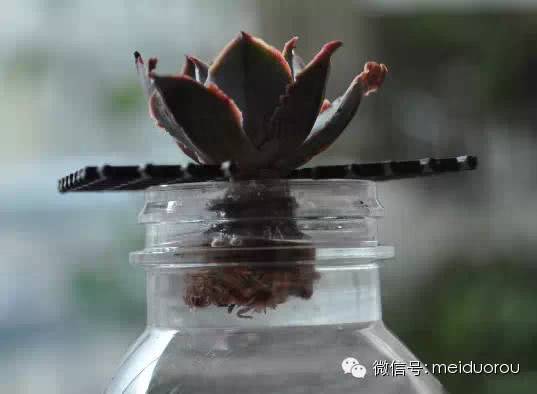
When sellers sell succulents, they generally label them as rooted or as rootless cuttings, so everyone can buy according to their own needs. If you bought a cutting succulent, such as the friends who bought Paopao's cutting succulent gift pack a few days ago, you can use the water-induced rooting method. This method is simple and quick, and basically will not cause the succulent to rot. (You can send"water-induced"to this official account to look it up) Or you can just plant it directly into moist soil, and it will root very quickly too~ In winter, for example, you can also put a transparent plastic bag over the pot to create a small greenhouse environment to increase temperature and humidity, which can also prompt the succulent to root quickly.
2. How rooted succulents recover roots:
Rooted succulents recovering roots must be divided into several situations. If the time in transit by express delivery was too long, it is recommended to first trim the roots and then let them dry slightly before planting, because a long journey will cause the succulent's roots to lose water and dry out. At this time, if you plant them directly into soil, they are very prone to black rot and turning to mush. At this time, cutting off the dried roots is beneficial for the succulent to recover roots. If you are worried it is not safe enough, you can also mix a little rooting powder and chlorothalonil into the soil mix, which can prevent infection and speed up rooting. Succulents bought directly from greenhouses or flower markets also need proper root trimming and a short period of drying when being repotted, because the roots will also be damaged during the repotting process.
3. What to do if the leaves wrinkle or dry up during root recovery:
Generally, for succulents that are rootless or have relatively few roots, the leaves will wrinkle during the pot recovery process because they cannot absorb water. Because the roots cannot absorb water and the air humidity is not enough, the lower leaves will slowly wrinkle and dry up. This is a normal phenomenon; after new roots grow and can absorb water, they will return to a plump state. But if the succulent has not recovered roots for a long time and receives too much sunlight, the whole plant may become dry and wrinkled, and at this point you must pay some attention. If the roots are rotting, it is best to cut off the roots and re-root them; if it is only caused by lack of water, it is best to replenish water in time, then place it in a semi-shaded spot for care, and after the plant returns to plumpness, resume normal care. Of course, you should also consider whether the dry wrinkling is caused by pests, disease, or unsuitable soil. When encountering this situation, do not panic. First determine the specific cause, then deal with it!
4. What to do if succulents that have already recovered roots are still shriveled and wrinkled:
Succulents that have already recovered roots but are still wrinkled are generally like that because of extreme lack of water. As long as the potting soil is not waterlogged, try to water thoroughly after the soil dries out. During the dormant period, you can water a little along the pot wall. Do not let the succulent remain in an extremely dry state all the time. As for succulents like Monanthes polyphylla and Monanthes laxiflora, you need to raise the air humidity. In seasons when the air is relatively dry, you can choose to spray a small amount of water at night or put a transparent plastic bag over them for closed cultivation, then remove it after they return to plumpness. (Haworthia can also use this closed cultivation method to make them plump)
5. What to do if the succulent develops black rot or turns to mush during root recovery:
Generally, cut succulents have a relatively low chance of black rot and turning to mush, while those that develop black rot and turn to mush are mostly rooted succulents. When encountering this situation, first determine how far the black rot and mushiness have progressed. If only the lower leaves or part of the stem are black-rotted and turning to mush, hurry and cut off the diseased parts. Be sure to cut them off cleanly! Then apply chlorothalonil dry powder to the wound. (The reason carbendazim is not recommended is that chlorothalonil has good adhesion, so applying chlorothalonil to the wound is more suitable.) If the rot has already reached the center of the leaf rosette, then there is basically no way to save it. It is recommended to promptly dispose of the dead succulent, then replace the potting soil and do not continue using it.
Okay.. These are temporarily the only situations Paopao can think of~ These are just experiences Paopao has summarized in daily growing. If there are any mistakes, everyone is welcome to point them out.
,
Long-press the QR code on the right
Go to the Toutiao app to see succulents