-

How to Prevent and Control Grape Leaf Blight? A Full Analysis of Practical Methods
Grape leaf blight starts on the lower leaves of the plant and gradually spreads upward. It can occur from June to November, with July to September being the peak period. It is severe in rainy years and in poorly managed vineyards. Prevention and control methods: 1. After autumn, thoroughly clear away fallen leaves in the vineyard to reduce or eliminate the overwintering source of the disease. During the grape growing season...
-
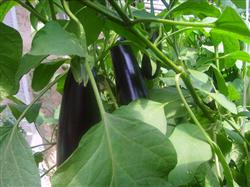
Why can't old shoots be used for grafting eggplant? Cause analysis
After eggplant flowers and sets fruit heavily, the root system's absorption function gradually declines. At this time, management should be strengthened to delay plant senescence, promote continued flowering and fruiting, and extend the harvest period. Fertilize in time, applying fertilizer once every 15-20 days, each time 10 kg of nitrogen-phosphorus-potassium compound fertilizer per mu, plus 15 kg of fully soaked and decomposed soybeans...
-
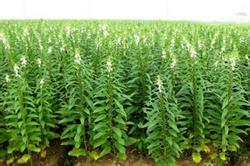
Why Are Sesame Plants Afraid of Continuous Cropping? An Analysis of the Causes of Continuous Cropping Harm
1. The key lies in timely topping. Usually, spring sesame retains the first pair of true leaves, and summer sesame retains the second pair of true leaves. Experiments have shown that this is the best time for topping, inducing a double-stem rate of 100%. The specific timing is: when the second pair of true leaves of spring sesame is half-unfolded, and when the third pair of true leaves of summer sesame is half-unfolded, with an interval of about one week...
-
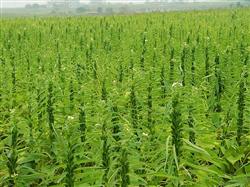
A Complete Analysis of the Key Technical Points for Sesame Cultivation and Management
Most farmers believe that sesame is a low-yielding, drought-tolerant crop that requires only extensive management. As a result, for many years the yield of spring sesame has been less than 150 kg per mu, and the yield of summer sesame or intercropped sesame has been below 100 kg per mu. Experiments have proven that as long as good seed is combined with good methods and cultivation measures are improved, sesame yields can be increased by more than 20%. 1. Applying...
-

Cause analysis and prevention and control methods for shiitake mushroom log rot
Causes and prevention and control methods of shiitake mushroom log rot
-

What Are the Prospects for Pepper Cultivation? Market Conditions and Profit Analysis
The Cultivation Prospects of Pepper
-
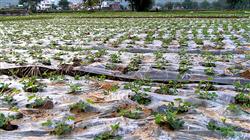
A Complete Analysis of the Key Points of Spring Peanut Cultivation Techniques
I. Fine land preparation and sufficient base fertilizer. For spring peanuts, choose sandy soil with relatively high soil fertility and convenient drainage and irrigation. Apply 150 dan of high-quality farmyard manure, 100 jin of compound fertilizer, and 2 jin of boron fertilizer per mu. After plowing and harrowing to level, open furrows with a bed width of 5.2 chi and a ditch depth of 0.6 chi, ensuring the three ditches are connected. II. Select...
-
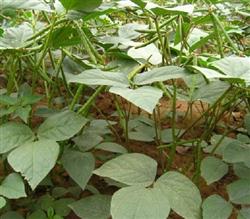
How is the fertilization and stress-response technology for mung beans implemented? A full analysis of the key points
Mung bean is a major crop in our city, with a planting area of more than 1 million mu every year and a yield of more than 110,000 tons, accounting for more than 30% of the country's annual mung bean output. Baicheng mung beans, with their large seeds, plump grains, bright color, fresh green appearance, no off-colors, no pollution, and high protein content, have become a sought-after commodity on the international market...
-
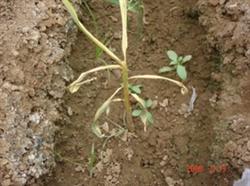
How to prevent and control ginger pests and diseases? A full analysis of practical techniques
(1) Ginger blast 1. Pathogen: a bacterial disease, Ralstonia solanacearum. 2. Symptoms of diseased plants: leaves first droop and lose their luster, then turn withered yellow from bottom to top, and finally die. The stem first becomes water-soaked at the base, turns yellow, dies, and breaks off at the base and falls over. The rhizome is water-soaked, turns brown and rots, and when squeezed a white juice flows out with a foul odor.
-
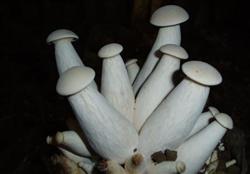
Two High-Efficiency Cultivation Techniques for the Shaggy Mane Mushroom and Cost Analysis
I. The 10,000-yuan courtyard-economy greenhouse model. 1. Greenhouse investment: (1) A bamboo-frame greenhouse 20 m long and 5 m wide, covering 100 sq m, requires 60 bamboo poles 4-5 m long, of which 40 are used as supports, inserted one about every 1 m, with 20 on each side, crossed and tied into an arch, and the other 20 used for horizontal...
条件筛选