-
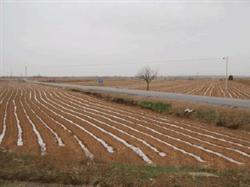
A Complete Analysis of the Key Technical Points for Soil Testing and Formula Fertilization in Spring Corn
1. Choose suitable varieties. Select suitable and superior varieties according to local conditions; based on heat resources and actual production conditions, choose medium-to-late maturing varieties with a growth period of 120-130 days. Among spring corn varieties with relatively outstanding comprehensive traits, the main one is Nongda 108, etc. 2. Fine land preparation. Spring corn requires deep plowing, and the earlier the autumn plowing...
-
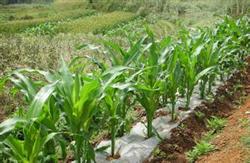
A Full Analysis of Key Spring Corn Cultivation Techniques
Adapt to local conditions and select improved varieties. For plains and hilly areas, promote Yedan 13 and Xiyu No. 3, paired with Huayu No. 4, Zhongdan 32, Chenghai No. 1, and Yuanzheng 808; for intercropping in cotton fields, choose the short-stalked, short-growth-period Yedan 22, Yedan 51, and 9362; in suburban areas where fresh eating is the main purpose, waxy corn varieties such as Zhongnuo No. 1 can be planted; in western Hubei, promote...
-
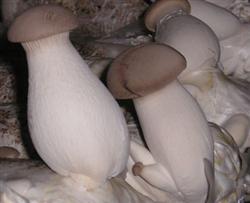
Analysis of Common Problems in King Oyster Mushroom Cultivation
King oyster mushroom is one of the edible mushroom species developed in China in recent years. Its production cycle is short, results come quickly, and its economic benefits are relatively high, so its planting area has continued to expand. However, problems often arise in king oyster mushroom production, causing huge losses to mushroom farmers, so attention must be paid to them. 1. Contamination of mushroom bags causes...
-
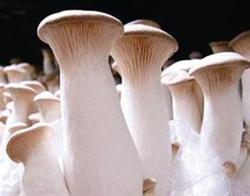
Analysis of Key Points of the New Technology of Bag Cultivation with Soil Casing for King Oyster Mushroom
King oyster mushroom, also known as Pleurotus eryngii, is one of the rare edible fungi. Its flesh is thick and plump, crisp and tender, milky white in color, delicious in taste, and rich in nutrients, and it is hailed as "the meat among vegetables." By adopting the following new technology of indoor fruiting and outdoor soil casing cultivation, the biological conversion rate can reach 100%-120%, and the mushroom bodies have good commercial quality. Compared with cultivation without soil casing...
-
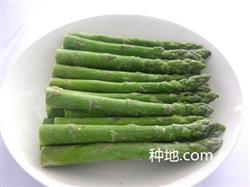
What are the nutritional benefits of asparagus? A detailed analysis for you
A netizen commented: I grow asparagus myself and sell it at the market, but I don't know how to get customers to buy it. What are the nutritional benefits of asparagus? The ways to eat asparagus are quite [varied]. Below are some home-style ways to prepare it: the tender stems of asparagus are rich in protein, vitamins, minerals, and the trace [elements] the human body needs...
-
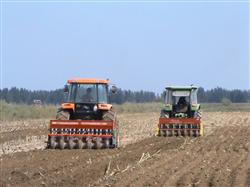
Current Wheat Growth Analysis and Spring Management Recommendations
Seven parts sowing, three parts management: improving sowing quality is the key to a bountiful grain harvest. At present, spring wheat in our province is about to enter the sowing period. How well we manage the sowing stage and improve sowing quality bears on the overall prospects for a bumper spring wheat harvest all year. 1. Select good varieties. To achieve a high wheat yield, soil is the foundation, fertilizer is the nutrition, and water is the lifeline, ...
-
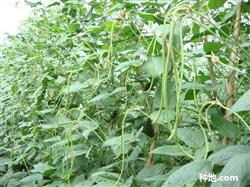
How to prune yardlong beans? Analysis of the correct methods and techniques
How should yardlong beans be pruned? Many vegetable growers who ask for guidance grow yardlong beans, but most of them follow their previous experience of growing open-field yardlong beans and rarely prune, which leads to tangled branches, mutual shading, reduced flower bud differentiation on side branches, a low rate of flowering and pod setting, lower yields in the mid-to-late stages, and serious "summer dormancy" during the hot season...
-

What Are the Prospects for White Hypsizygus Mushroom Cultivation? Market Potential and Profit Analysis
The Cultivation Prospects of White Hypsizygus Mushroom
-
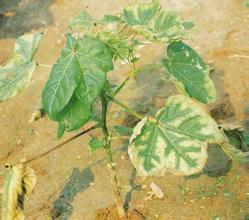
A Complete Analysis of Key Cotton Field Management Techniques
Water and fertilizer are the two most active factors in cotton production measures, and the regulation and control of water and fertilizer play a very important role in determining cotton yield. However, some cotton farmers are unrealistic and, in pursuit of higher cotton yields per unit area and higher cotton-growing profits, blindly irrigate and fertilize, causing cotton yields to decline, and in some cotton fields water...
-
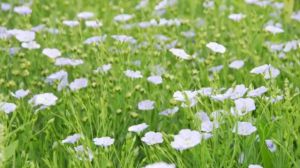
What is the difference between ramie and flax? A detailed analysis of the differences between the two
Leaf differences: Ramie leaves are alternate, herbaceous, round-ovate or broadly ovate, with the leaf tip abruptly pointed; flax leaves are alternate, with blades linear or linear-lanceolate, and the leaves are rolled inward. Flower differences: Ramie has axillary paniculate inflorescences, with petals narrowly elliptic; flax has cymose inflorescences, with 5 petals, obovate, usually blue or blue-purple in color.
条件筛选