-
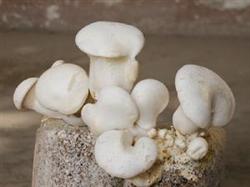
How to prevent deformed mushrooms in white king oyster mushrooms? Cause analysis and solutions
1. Unreasonable room and shed structure. White king oyster mushroom cultivation sites are divided into indoor mushroom rooms and outdoor mushroom sheds. Because of unreasonable design, air often does not circulate and severe oxygen deficiency occurs, causing the aerobic white king oyster mushroom to develop deformities. An ideal mushroom shed should face south from the north or face east from the west. The room or shed should not be too large. Generally, a rectangular shed room should hold 300... per shed.
-
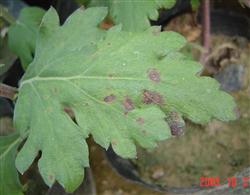
Symptoms and Pathogen Analysis of Chrysanthemum Black Spot Disease
Chrysanthemum black spot, also known as brown spot or leaf blight, occurs in all chrysanthemum-growing regions. Besides harming chrysanthemums, it can also infect wild chrysanthemum, sweet chrysanthemum, pyrethrum and other plants in the Asteraceae family. After infection, mildly affected plants develop scorched, dropping leaves, while severely affected plants may die completely. It seriously affects plant growth and ornamental value. Symptoms...
-
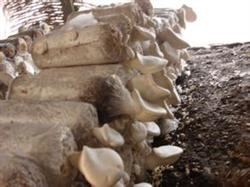
A Full Analysis of the Key Technical Points for Cultivating White King Oyster Mushroom (Pleurotus nebrodensis)
Making and Culturing the Fruiting Mushroom Logs. Formula for fruiting mushroom logs: (1) 92% cottonseed hulls, 3% cornmeal, 5% wheat bran, 65% moisture content. (2) 70% cottonseed hulls, 3% cornmeal, 20% sawdust, 7% wheat bran, 2% gypsum, 5% quicklime, 65% moisture content. Preparation before production: in Jixian County, bagging generally starts in mid-to-late August when the average temperature is 20°C...
-
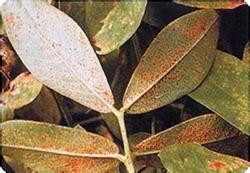
Analysis of the Causes of Peanut Rust Occurrence and Spread
What are the causes of peanut rust occurrence and spread? First, peanut rust is a fungal disease caused by Puccinia arachidis. The urediniospores are yellow, round or nearly round, with minute spines on the surface, and each urediniospore has one germination pore on each side of its middle section. Most urediniospores produce only one germ tube, and an appressorium forms at the tip of the germ tube, from which an infection hypha penetrates the peanut. Urediniospores can germinate only in the presence of water droplets or a water film. They have strong tolerance to low temperatures and poor tolerance to high temperatures. Under normal conditions, the germ tube penetrates the internal tissue after 65 hours, the hyphae continue to grow and produce haustoria, and after 7 days, pinpoint-sized white spots appear and begin to produce urediniospores; after 8 days, the white spots turn yellow-brown and form uredinia; after 10 days, the epidermis of the uredinia ruptures and releases urediniospores to continue infection. During the peanut growing period, the expansion and spread of peanut rust are mainly from local inoculum sources, but in the northern peanut regions, there is also the issue of external inoculum sources for the pathogen in early spring. The main factors affecting the occurrence and spread of peanut rust: First, the amount of overwintering inoculum. If the amount of overwintering inoculum is large, peanut rust may occur severely the following year.
-
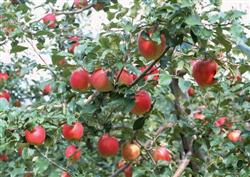
How to prune apple trees in summer? A full analysis of methods and techniques
How to prune apple trees in summer? Please give guidance. Summer pruning of apple fruit trees is also called growth-period pruning. Pruning during the growth period cuts off branches with leaves, which has a relatively large impact on fruit tree growth, so it should be kept as light as possible. In addition, summer pruning is auxiliary work to winter pruning. It promptly keeps the superior and removes the inferior among newly sprouted shoots, regulates the growth and development of the retained new shoots, and corrects their growth posture and direction. In this way, winter pruning can avoid heavy cutting and chopping, which would cause more damage to the tree body. The specific pruning techniques include the following:
-
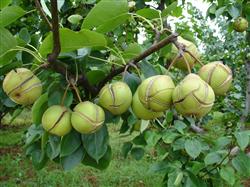
What to Do About Fruit Cracking in Pear Trees? Cause Analysis and Control Methods
What should be done about fruit cracking in pear trees? Please give guidance. Causes of fruit cracking in pear trees: First, excessive fruit growth, imbalanced soil moisture supply, and uneven fruit growth; second, no potassium fertilizer applied or insufficient potassium fertilizer causing fruit cracking; third, pear scab can also severely cause cracking. To control fruit cracking in pear trees, it should be done from May to July...
-
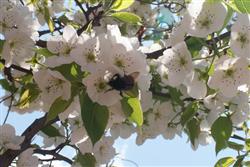
What pesticide should be sprayed before the Crisp Pear blooms? Spraying scheme analysis
What pesticide should be sprayed before the Crisp Pear blooms? Please explain in detail: spray 5 degrees Baume lime sulfur once before spring bud break to eliminate overwintering pests and diseases. For trees infected with rot disease and black shank disease, scrape off the diseased spots and apply 843 Recovery Agent undiluted. For leaf pests such as pear aphids, pear psyllids, and aphid-eating weevils, from bud break to after petal fall, spray 20% fenvalerate 1000 times dilution, or 5% beta-cypermethrin 1000 times dilution plus 3000-4000 times dilution of 10% imidacloprid.
-
Does Planting Eucalyptus Destroy the Land? An Analysis of Eucalyptus's Impact on Soil
1. Suitable Environment Eucalyptus prefers a warm climate but cannot tolerate damp heat; when the climate is too hot, its growth suffers. In Yunnan it is mainly distributed in zones at an altitude of 1,200-2,400 m. Its cold tolerance is not strong, and it can only withstand short periods of low temperatures around -7 degC. If exposed to -5 degC for 2-3 days, it will suffer varying degrees of cold damage, with mild cases affecting the twigs...
-
When is the best time to apply topdressing to sweet potatoes? An analysis of the best topdressing time
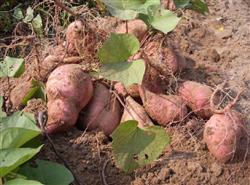
When is the best time to apply topdressing to sweet potatoes? Please give guidance. From late August to early October is the tuber bulking period for spring and summer sweet potatoes. This period is the key period for yield formation and also the period with the highest fertilizer demand. The following three methods can be used for topdressing. 1. Hole-eye topdressing method: use a wooden peg to make a hole about 30 cm deep at 20-30 cm from the main root, put in an appropriate amount of three-element compound fertilizer, and seal it well with moist soil. If one hole is made on each side of the ridge, the effect is even better. This method increases yield by about 20% per mu.
-
Analysis of the Concept of Disease- and Pest-Free Substitute-Material Shiitake and New Cultivation Techniques
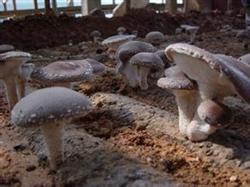
The large-cup mushroom, also known as pig-stomach mushroom, has fruiting bodies that grow in clusters, cup-shaped or shallow funnel-shaped, pale yellow, with thick flesh and a thick stalk, crisp and tender and delicious, and rich in nutrients. Under natural conditions, the fruiting bodies appear from May to October, and it has the characteristics of both wood-rotting and soil-borne growth. Its cultivation essentials are briefly introduced as follows: 1. Seasonal arrangement: large-cup mushroom fruiting...
条件筛选