How should the first hurdle of pear tree management be handled well?
Rationally distributing the tree's stored nutrients and reducing useless consumption is one of the important techniques for promoting normal tree growth and producing high-quality fruit. The period from flowering to fruit set is an important time that determines the number of fruits set on the pear tree that year, the development of young fruit, and whether the leaf area that creates the material conditions for later fruit development can form early. During this period...
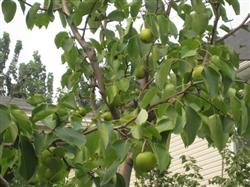
Rationally distributing the tree's stored nutrients and reducing useless consumption is one of the important techniques for promoting normal tree growth and producing high-quality fruit. The period from flowering to fruit set is an important time that determines the number of fruits set on the pear tree that year, the development of young fruit, and whether the leaf area that creates the material conditions for later fruit development can form early. During this period, reducing useless consumption by the tree through measures such as bud removal and flower bud thinning is the first hurdle in pear tree management for the whole year.
Bud removal: Remove buds unrelated to fruit production, including buds that readily produce water sprouts and dormant buds that sprout relatively late. Buds near the pruning cuts on the underside of main branches and secondary main branches after strong branches are pruned in winter, buds at the curved parts of large branches, buds on water sprouts growing on the underside of large side branches and on branch segments left after short fruiting branches are pruned, and buds near the branching points of side branches readily produce water sprouts. After buds break in early spring, they should be removed when they grow to 2-5 mm. The earlier the bud removal, the better, until the flowering stage, so as to promote the transport of the tree's stored nutrients to the fruiting parts. If removal is delayed until the buds grow 5-10 mm, although water sprout occurrence can be reduced, the loss of stored nutrients is greater and the tree vigor is likely to weaken. Dormant buds near the pruning cuts after large branches are pruned in winter, at the places where blind buds of short fruiting branches cluster, and buds that sprout relatively late often readily form water sprouts or useless leaves, and should also be removed in time.
Flower bud thinning: Flower buds can be thinned from the time the scales fall off until before flowering, but it is best to thin them when the flower buds are exposed. When thinning buds, press the flower buds downward with the fingers so that the pedicels break. At the same time, care should be taken to protect the young leaves growing from the inflorescence, because these leaves unfold early and are the basis for the early formation of the leaf area of the whole tree. When thinning buds, generally keep one inflorescence per standard of about 20 cm, thinning the weak and keeping the strong, thinning the small and keeping the large; thinning the dense and keeping the sparse, thinning axillary (axillary flower buds) and keeping terminal (terminal flower buds); thinning the lower (lower part of the canopy) and keeping the upper (upper part of the canopy), using fruit to control upper growth; and thinning flower buds that break dormancy late. After the inflorescences extend, secondary inflorescences should be removed in time, keeping normal flowers. When pollination conditions are good and some flowers have completed fertilization and can meet the requirements for a high yield, 0.3 degrees Baume lime sulfur mixture can be sprayed in combination with disease and pest control to kill the stigmas of late flowers and thereby thin flowers.