What is the difference between pruning methods for pear trees and apple trees
Post-bloom management of pear trees is a critical period in the whole year's management. Whether the comprehensive management measures during this period are appropriate directly affects the fruit set rate and fruit quality. The key points of pear tree management during this period are: 1. Pollination Pear flowers generally open after 8 o'clock in the morning. Flowers that open on the same day can be pollinated, and pollination is best 1 to 2 days after the flowers open...
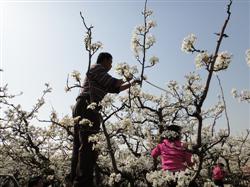 1. Pear trees are tall, have strong trunk dominance, grow slowly, and live long. Under the same management conditions, compared with apple trees of the same age, young pear trees have a smaller crown diameter, thinner trunk circumference, and a conical crown; but after fruiting, especially after reaching full fruit-bearing age, the tree shape is more spreading than that of apple trees. Therefore, when training and pruning young pear trees, pruning should be lighter than for apple trees; the growth vigor and upward growth rate of the central leader should be controlled promptly and appropriately to promote the growth vigor of other branches.
2. Pear trees have a high bud-break rate but low branching ability. Most pear varieties have a relatively high bud-break rate and weak branching ability, so there are fewer branches to choose from during training, and it is relatively difficult to develop a standard tree shape. To reduce the amount of pruning and bring pear trees into bearing earlier, do not insist on a strict tree shape during training, especially for side branches: keep them if present, and wait if absent. Wait for the angle to open naturally, and then fill in side branches after new branches sprout from the rear portion.
3. Pear trees have strong apical dominance and mostly extend along a single axis, making it relatively difficult to develop large and medium-sized fruiting branch groups with many branches and wide opening angles. During the development of fruiting branch groups, vigorous branches should not be left unpruned for extended growth. They should first be cut back to stimulate branching, with severe cutting and light leaving unpruned each year; once the number of branches is sufficient, then leave them unpruned for extended growth to bear fruit, bear a set amount of fruit, and leave some margin.
4. More main and side branches should be retained than for apple trees. The extended tips of these scaffold branches must not be left unpruned or cut back too lightly, so as to avoid a relative increase in blind nodes in the rear portion. As scaffold branches extend outward, the short and medium branches that formed earlier in the rear portion tend to age, become ineffective branches for a long time, and eventually die off, causing premature aging in the inner canopy and gaps with missing branches. Once this situation occurs, it cannot be overcome without heavy renewal pruning.
5. The accessory buds at the base of pear branches develop well and live long, and are the main source of dormant buds, so pear trees have a stronger ability to regenerate branches after renewal than apple trees. Therefore, after entering full fruit-bearing age, when scaffold branches grow weak, the fruiting area shifts severely outward, or old trees are renewed, this characteristic can be used for renewal and rejuvenation to extend the fruit-bearing years.