-
Timely potassium supplementation for spring wheat is crucial
Since the launch of the spring action for soil testing and formulated fertilization, soil and fertilizer experts from the Chinese Academy of Agricultural Sciences have taken active action, going deep into the fields to guide scientific fertilization. Recently, experts from the Chinese Academy of Agricultural Sciences went to Gaocheng, Hebei, to conduct a follow-up survey of wheat growth. The survey found that due to the low ground temperature this spring, the winter wheat in this area has turned green...
-
What are the methods for preventing lodging in spring wheat?
"Lodging" is one of the main obstacles affecting wheat yield under conditions of high fertilizer and water. In recent years, the promotion and application of plant growth regulators in wheat production has opened up a new way to prevent lodging and promote increased yield, and is an important supporting technical measure for high and stable wheat yields. 1. Spraying paclobutrazol during the wheat jointing stage...
-
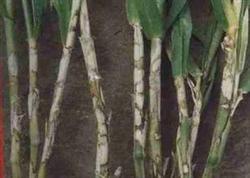
Key Techniques for Spring Control of Wheat Sharp Eyespot
Wheat sharp eyespot is a fungal disease mainly spread through the soil. With the improvement of yield levels, the promotion of high-yielding varieties, and wheat field management with heavy irrigation and fertilization, its damage has become increasingly serious. After wheat sowing, if the germ is infected by the pathogen during germination, the coleoptile turns brown, and in severe cases rots and dies; after the standing and jointing stages, the diseased plant rate rises significantly...
-
Spring disease, pest and weed control in wheat enters a critical period
If disease centers are found in the field, spray promptly to control them. If the diseased leaf rate reaches 5% and the severity is below 10%, use 50 g of 15% triadimefon wettable powder per mu, or 40 mL of 20% triadimefon emulsifiable concentrate per mu, or 30 g of 25% triadimefon wettable powder per mu, or 15-30 g of 12.5% diniconazole wettable powder per mu, ...
-
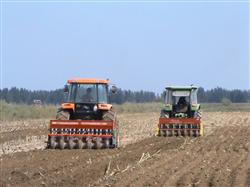
Current Wheat Growth Analysis and Spring Management Recommendations
Seven parts sowing, three parts management: improving sowing quality is the key to a bountiful grain harvest. At present, spring wheat in our province is about to enter the sowing period. How well we manage the sowing stage and improve sowing quality bears on the overall prospects for a bumper spring wheat harvest all year. 1. Select good varieties. To achieve a high wheat yield, soil is the foundation, fertilizer is the nutrition, and water is the lifeline, ...
-
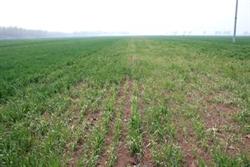
Key Technical Points for Spring Field Management of Dryland Wheat
I. Causes of Wheat Seedling Death in Winter and Spring 1. Internal causes refer to the ability of the wheat plant itself to resist cold and drought. Using varieties with poor cold resistance easily leads to seedling death. In individual cases, wheat seedlings sown too early that have reached the two-glume stage of spike differentiation before winter have weakened cold tolerance and often suffer severe seedling death when exposed to freezing injury. Some late and weak seedlings, having accumulated...
-
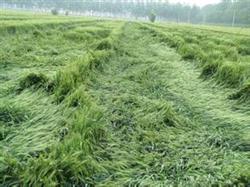
What are the spring lodging prevention measures for wheat? Explained clearly in one article
Lodging is one of the main factors affecting high and stable yields and good quality in wheat. Wheat lodging mainly occurs in high-yield wheat fields with ample fertilizer and water, excessive wheat growth, overly large populations, and dense, shaded field conditions. Early spring is the key period for preventing wheat lodging, and its comprehensive lodging prevention technical measures are: scientifically manage fertilizer and water. For high-yield wheat fields with a population of more than 650,000 plants per mu at the green-up stage, wait until the first internode of wheat has reached its final length (that is, late jointing stage), then apply topdressing and irrigation, applying 7.5-10 kg of urea per mu. This can reduce ineffective tillers, lower the length of basal internodes, promote thick and strong stems, and prevent lodging later, while also increasing grain number per spike and improving quality.
-
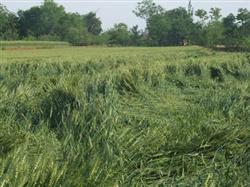
Technical Guidance on Spring Fertilization Management for Wheat
1) Spraying paclobutrazol. At the wheat stem elongation stage, spraying 30 kg of 200 ppm paclobutrazol solution per mu can dwarf the plants, enhance lodging resistance, and also control wheat powdery mildew and improve the plant's nitrogen uptake and utilization rate. (2) Spraying chlormequat chloride. For wheat fields with large populations and vigorous growth, at the early jointing stage, spray per mu 0....
-
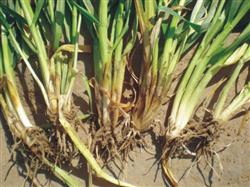
Spring Occurrence Patterns and Control Methods of Wheat Sharp Eyespot
Wheat sharp eyespot is a fungal disease mainly spread through the soil. As yield levels have increased, with the promotion of high-yielding varieties and wheat field management involving heavy watering and heavy fertilization, its damage has become increasingly serious. The pathogen of wheat sharp eyespot has a broad host range; besides infecting wheat, it can also infect corn, rice, foxtail millet, sorghum and many other...
-
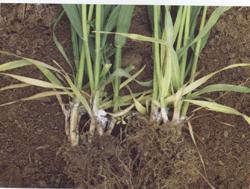
Four protection measures for wheat spring field management
I. Occurrence and harm of wheat sharp eyespot. Wheat sharp eyespot is a fungal disease mainly transmitted through soil. With the improvement of yield levels, the promotion of high-yielding varieties, and wheat field management with heavy water and heavy fertilizer, its harm has become increasingly serious. The pathogen of wheat sharp eyespot has a wide host range; besides infecting wheat, it can also...
条件筛选