Current Wheat Growth Analysis and Spring Management Recommendations
Seven parts sowing, three parts management: improving sowing quality is the key to a bountiful grain harvest. At present, spring wheat in our province is about to enter the sowing period. How well we manage the sowing stage and improve sowing quality bears on the overall prospects for a bumper spring wheat harvest all year. 1. Select good varieties. To achieve a high wheat yield, soil is the foundation, fertilizer is the nutrition, and water is the lifeline, ...
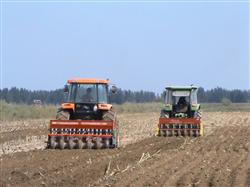 After the onset of winter in 2009, the climate was unusual, severely affecting the growth and overwintering of winter wheat. In response to this situation, around the Spring Festival we conducted two rounds of field surveys of wheat fields, covering 30 counties (cities) in 8 regions of Hebei Province. The following is an analysis of the on-site survey results and spring management recommendations.
1. Soil moisture conditions. Overall, soil moisture is generally good. However, in wheat fields with poor land preparation, because the soil is loose and there is a lot of straw, ventilation and air leakage are severe, the return of moisture to the surface is not obvious, and the dry soil layer is still 3-4 cm deep. As temperatures rise, the return of moisture is not obvious. These wheat fields will begin to show signs of drought. With few secondary roots, the onset of drought will clearly affect growth.
2. Wheat growth conditions. Compared with previous years, wheat growth conditions across the province this year are generally poor. The common characteristics are small populations, weak individual plants, and severe freeze damage. There are three reasons:
(1) Climatic factors.
In early November last year, just as wheat was in its peak growth period, a strong cold wave arrived, temperatures dropped sharply, and the crop suffered frost damage; leaves in some wheat fields were frozen and withered. Before the wheat had recovered well from the frost, from November 10 to 13 there was a sudden heavy snowstorm. With essentially no cold-hardening, insufficient nutrient accumulation, and having already suffered frost damage, the wheat was then covered and smothered for a long period, with weak or essentially no photosynthesis. But at that time the soil temperature was still high, so the wheat seedlings grew slowly and respired beneath the snow, increasing their own consumption. On this basis, after the snow melted, the crop happened to encounter sustained severe low temperatures, thus causing severe freeze damage to this year's wheat seedlings. This is the key factor behind this year's severe wheat freeze damage.
(2) Extensive management.
The survey found that extensive tillage and cultivation aggravated the degree of freeze damage. All wheat fields with poor land preparation and shallow sowing suffered severe freeze damage, with a relatively high seedling death rate.
(3) Variety characteristics. Some varieties could not withstand this exceptional weather change, the likes of which had not occurred in decades, and showed obvious maladaptation, with severe desiccation and even seedling death.
The specific manifestations of overall wheat field growth conditions are:
1. Small populations. Wheat fields across the province were basically below 600,000 stems per mu, mostly 400,000-500,000, which is 200,000-300,000 fewer than previous years, or even more.
2. Weak individual plants. Because the pre-winter growth period in 2009 was more than 20 days, accumulated temperature was low; wheat seedlings mainly showed "two small and two few," namely small seedlings with few tillers, and small tillers with few roots. Overall, the province can be roughly divided into two types: one overwintering with tillers, and the other overwintering as "bachelors." Those sown early at the appropriate time mostly overwintered at the 3-leaf 1-heart 4-leaf age, with 1-2 tillers, 2-3 stems and tillers per plant, and 1-3 secondary roots, roughly 1-2 fewer leaves, 2 fewer tillers, and more than 2 fewer secondary roots than previous years. A small number of wheat fields could reach 4 leaves 1 heart (in a few cases 4 leaves 1 large heart, 1 small heart) or 3 leaves 1 large heart, 1 small heart, overwintering at the 5-leaf age, with 2-3 tillers, 3-4 stems and tillers per plant, and about 4 secondary roots. Such wheat fields did not account for a large proportion, and most were sown too shallow and often suffered relatively severe freeze damage; together with the above-mentioned 4-leaf-age wheat fields, they are classified as second-class seedlings, and these are the main body of wheat fields this year. Wheat fields sown later at the appropriate time had only 2-3 leaves, no tillers, and no secondary roots. There were also a small number of late-sown wheat fields after crop rotation, with only a single needle-like shoot or even still covered in soil. Overall, there were no or few first-class seedling fields. Combined with the impact of freeze damage, strictly speaking, this year all are third-class seedlings.
3. Severe freeze damage. Due to climatic reasons, regardless of seedling age or variety, all consistently showed overwintering with withered and dry leaves, and freeze damage was relatively severe. There were only differences in degree, mainly determined by land preparation and sowing quality, variety, and the intensity of cold waves between regions, and the differing snowfall intensity in November, with some differences being quite large.
(1) Tillage and cultivation. For the same variety in the same region, where land preparation was poor and sowing was shallow (too much straw in the surface and shallow layers, soil too loose), the aboveground parts dried up severely, or completely dried up, with seedling death, even severe seedling death.
(2) Variety. Under normal planting, differences among varieties in overwintering within the same region appear every year; this is normal. But this year the differences were relatively large, basically falling into three types: ① Varieties that overwintered with some green tissue, with no seedling death at all. ② Varieties that overwintered with withered and dry leaves, with basically no seedling death. ③ Varieties that overwintered with withered and dry leaves and had seedling death. These varieties were all ones that suffered severe freeze damage during the strong cold wave in early November, and this was relatively prominent in some regions.
(3) Region. The degree of freeze damage between regions coincided with the intensity of cold waves, November snowfall, and snow cover duration. Freeze damage was most severe in Shijiazhuang, basically overwintering with withered and dry leaves, with seedling death, and some varieties had severe seedling death. Handan and Hengshui were the least affected, with most wheat field seedlings overwintering with some green tissue. In places such as Wanli in Daming and Liuji in Jingxian, many plots of Shimai 15 and Shijiazhuang No. 8 overwintered with nearly half green tissue. Xingtai, Cangzhou, and Baoding were in the middle, with some fields overwintering completely withered, while most overwintered with some green tissue. Apart from a few plots with special conditions, there was basically no seedling death. In the north (including Tianjin), although the aboveground parts of wheat seedlings dried up severely, there was completely no seedling death. That is to say, overall across the province, apart from Shijiazhuang, other wheat-producing cities had little problem with wheat overwintering seedling death. As for Shijiazhuang, severe seedling death also occurred only in local areas and a few varieties. Therefore, by strengthening spring management, promoting seedling transformation and upgrading, there is still great hope of achieving a bumper harvest.
3. Management recommendations. Because wheat freeze damage this year is generally more severe than in previous years, compared with normal years the green-up stage will be delayed, especially in wheat fields with severe freeze damage where all leaves were frozen to death and it takes a long time for leaves to regrow from the growing point, thus further increasing the difficulty of spring wheat management. Therefore, this year's spring management should begin as early as possible and take the initiative. The main direction of spring wheat management should be to promote early and rapid growth of wheat seedlings, effectively utilize spring tillers, increase the spike-bearing rate, and increase the number of grains per spike. Specific measures are as follows:
(1) Compaction and raking.
All wheat fields should immediately carry out compaction and raking, in order to raise moisture, preserve moisture, clear the ridges, increase temperature, and promote early seedling growth.
(2) Scientific water and fertilizer management.
1. For wheat fields with poor land preparation, shallow sowing, no pre-winter irrigation, and no obvious return of soil moisture to the surface, irrigate immediately after the frozen layer has completely thawed, and apply a topdressing of the quick-acting nitrogen fertilizer ammonium bicarbonate at 15 kg/mu.
2. At present, most wheat fields (the main body of wheat fields) have good soil moisture. Do not rush to irrigate and fertilize, to prevent soil temperature from dropping after irrigation and slowing seedling growth. However, appropriate early management is still needed. Based on a comprehensive analysis of the pros and cons, this year's irrigation and fertilization time should be at the stem-erection stage (mid-to-late March in central and southern Hebei). The amount of irrigation should not be too large. Depending on the basal nitrogen fertilizer application, apply urea at 10-20 kg per mu as topdressing. If no potassium fertilizer was applied as basal fertilizer, apply potassium chloride at about 10 kg per mu as topdressing; for topdressing, it is best to use a nitrogen-potassium compound fertilizer.
3. For late-sown wheat, begin water and fertilizer management after new tillers and new roots have grown.
(3) Prevent late spring cold.
On the basis of severe overwintering freeze damage to wheat, if late spring cold occurs again, it would be a fatal blow to wheat, "adding frost to snow." Moreover, since the Beginning of Spring, temperatures have fluctuated sharply, so measures must be taken, with prevention as the priority, and one must absolutely not treat it lightly or harbor a fluke mentality. Irrigation is an effective measure to prevent late spring cold. For all types of wheat fields, properly arrange the rotation irrigation order, and complete one full irrigation before the jointing stage.
(4) Increase foliar fertilizer application to promote seedling transformation.
Because wheat seedling vigor is weak this year and root fertilizer uptake capacity is weak, attention should be paid to increasing foliar fertilizer application to promote seedling transformation. When there are about two spring-grown leaves, spray a 0.3%-0.5% potassium dihydrogen phosphate solution at 30 kg/mu, or other foliar fertilizers or growth regulators proven effective by local practice. It can be sprayed continuously at intervals of 7-10 days. When implementing, combine it as much as possible with chemical weed control, pest and disease control, and other farming measures, striving for multiple effects from one spray and reducing labor input.
(5) Strengthen control of diseases, insects, and weeds.
1. Strengthen monitoring and control of diseases such as sheath blight, root rot, and powdery mildew. Because wheat suffered severe overwintering freeze damage and green-up is late, wheat seedling growth is weak, and resistance to sheath blight, root rot, and powdery mildew has declined. Therefore, pay close attention to disease occurrence, strengthen monitoring and prevention, and use fungicide sprays.
2. Pay close attention to the occurrence and damage of wheat spider mites.
3. Raise awareness and carry out scientific weed control. Because wheat seedlings this year are small and weak, weed occurrence will worsen. Therefore, raise awareness and carry out scientific weed control. Because snow fell early last year, most wheat fields had no time to implement "spring weeds treated in autumn," and the weed control effect in wheat fields where herbicides had already been sprayed will also decline. Therefore, spring chemical weed control work must be done well. However, because wheat seedling vigor is weak this year, wheat fields with severe freeze damage generally should not be sprayed again with herbicides for controlling grass weeds, to prevent phytotoxicity. Herbicides for broadleaf weeds should be selected. After the daily average temperature is above 10°C, use tribenuron-methyl-type agents to control weeds, such as 10% tribenuron-methyl at 15 g per mu, mixed with 30 kg of water, and sprayed evenly. Weed control should be combined with pest and disease control and foliar fertilizer spraying. In plots with severe grass weed occurrence, hoeing and hand-pulling should be the main methods.
(6) Scientifically reduce disasters and lower losses.
For wheat fields where seedling death is determined to be extremely severe, depending on the situation, they may be changed to intercropping or replanting with spring-sown crops such as cotton, peanuts, watermelon, vegetables, spring corn, and oil sunflower.