Timely potassium supplementation for spring wheat is crucial
Since the launch of the spring action for soil testing and formulated fertilization, soil and fertilizer experts from the Chinese Academy of Agricultural Sciences have taken active action, going deep into the fields to guide scientific fertilization. Recently, experts from the Chinese Academy of Agricultural Sciences went to Gaocheng, Hebei, to conduct a follow-up survey of wheat growth. The survey found that due to the low ground temperature this spring, the winter wheat in this area has turned green...
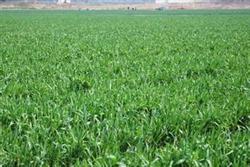
Since the launch of the spring action for soil testing and formulated fertilization, soil and fertilizer experts from the Chinese Academy of Agricultural Sciences have taken active action, going deep into the fields to guide scientific fertilization. Recently, experts from the Chinese Academy of Agricultural Sciences went to Gaocheng, Hebei, to conduct a follow-up survey of wheat growth. The survey found that due to the low ground temperature this spring, the winter wheat in this area greened up 10 days later than in previous years. The first internode of the wheat is longer than in previous years, while the second internode has not yet grown well, and the stems are relatively soft. Winter wheat has 12-16 nodes, and the second internode is the key one. Technicians worry that if this continues, once dry and hot weather occurs in June, it could cause large-scale lodging of the wheat, seriously affecting wheat yield and quality.
According to further investigation by the experts, this phenomenon is relatively common in Gaocheng, Hebei, and farmers in the winter wheat region are advised to attach great importance to it. If emergency measures are taken within one week, this problem can still be alleviated.
The specific measures proposed by the experts are: spray the wheat leaves with 30 kg of a 1% potassium nitrate solution, and spray again 3-5 days after the first spraying for a better effect. The direct cost of spraying potassium nitrate is about 1 yuan per mu, with low investment and remarkable results. At present, the agricultural administrative department and agricultural technology extension units of Gaocheng, Hebei, have already taken action, notifying farmers to spray potassium fertilizer according to the recommendations of the soil and fertilizer experts.
In response to the problems in wheat growth caused by low temperatures this spring, the experts offered the following recommendations to farmers for fertilizing winter wheat in future planting: of the potassium fertilizer previously applied all at once as base fertilizer, half can be reserved for application from the late tillering stage to the early jointing stage of wheat, mainly by spraying potassium nitrate once, which can not only replace paclobutrazol (a hormone) and similar substances, but also ensure the wheat's need for nitrogen and potassium during this period.