-
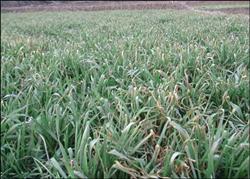
How to remedy wheat after a spring frost
Every year in February and March of spring, cold air often breaks out and moves southward in the north, with a large temperature drop during the process, and wheat that has jointed too early often suffers frost damage. At this time, for seedlings growing too vigorously, the method of pressing should be adopted to inhibit growth; for weak seedlings, reasonable topdressing should be applied to promote weak ones into strong ones, so as to enhance cold resistance, and at the same time attention should be paid to listening to the weather...
-
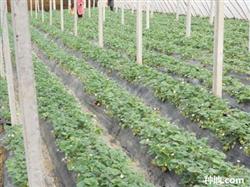
What disasters should be prevented in spring strawberry planting?
How should strawberries be top-dressed with fertilizer? Please advise. Strawberries like fertilizer and have a relatively high fertilizer requirement, needing to absorb a large amount of nutrients from the soil each year. According to estimates, for every 750 kg of fruit harvested per mu of land, 10 kg of pure nitrogen, 2.5 kg of phosphorus, and 10 kg of potassium are needed. Top-dressing promotes early growth. On the premise of applying sufficient organic fertilizer, when the soil thaws...
-
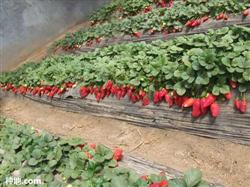
What are the key points of spring management techniques for strawberries?
How to manage strawberries well in spring? Please guide the key points of spring strawberry management: Strengthening spring management of open-field strawberries is the key to promoting early fruiting, good quality, and high yields. The measures are as follows: Remove cold-protection covers. When the daily average temperature stabilizes at around 10°C, you can begin to gradually remove the cold-protection covers from the strawberry plants...
-
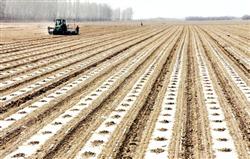
Detailed Explanation of Key Technical Points for Spring Cotton Sowing
Determine the density according to variety, soil fertility and planting method, and plant at a reasonable density to achieve full emergence from a single sowing. Generally, when a single spring cotton variety is planted, the density per mu is kept at around 3500 plants, with a row spacing of 1 m and a plant spacing of 19 cm; for semi-spring varieties, the density per mu is generally kept at around 4500 plants, with a row spacing of, and a plant spacing of 15 cm; for summer cotton varieties, ...
-
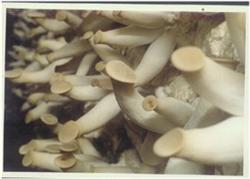
Key Techniques for High-Yield Cultivation of King Oyster Mushroom in Winter and Spring
Cultivating king oyster mushroom in winter and spring is not only easy to achieve high yields, but the mushrooms also have thick, tender flesh, a delicious taste and rich nutrition, making them highly popular with consumers. The main techniques for high-yield cultivation of king oyster mushroom in winter and spring are as follows: 1. Cultivation time. From spawning to fruiting takes about 50 to 60 days. Generally, bag preparation and cultivation can be scheduled from October of the current year to February of the following year, and fruiting can occur from November of the current year to March of the following year. Cultivation can be done indoors or in outdoor greenhouses.
-
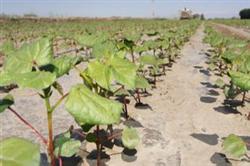
How to improve the emergence rate and seedling survival rate of cotton in spring
Main reasons for low cotton emergence rate and seedling survival rate: Poor land preparation: mainly uneven land, uneven soil moisture, and excessively thick dry soil layers in some places, resulting in incomplete emergence after sowing. Long-term cotton planting with plastic film: causing excessive residual film in the topsoil, so that some seeds are sown directly onto the plastic film in the soil and cannot...
-
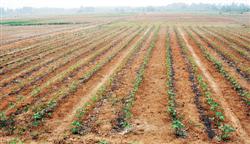
Spring cotton production technical guidance: how to manage the Yellow River basin cotton region
Raising seedlings and transplanting Simplified seedling raising and transplanting. First, choose a good seedling-raising site. It should be high-lying, sheltered from the wind and facing the sun, with convenient access to water and transportation. Second, prepare materials. Use seedling-raising substrate plus clean river sand to make a seedbed or fill plug trays, replacing nutritional pots, and prepare enough materials for 500 seedlings per sq m of seedbed. Third, sow at the right time...
-
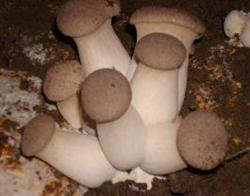
Key technical points for getting more mushrooms from king oyster mushrooms in spring
1. Grasping the best fruiting period for king oyster mushrooms. King oyster mushrooms have been cultivated in Panjin, Liaoning, for several years now, and the experience gained is that the most suitable fruiting period for producing king oyster mushrooms in local mushroom sheds is from early March to the end of April in spring, and from late September to early November in autumn. Without heating facilities, during this period...
-
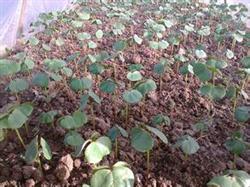
Method for Relay Intercropping Cotton with Spring Cauliflower and Summer Lettuce
The real culprit behind this headless cotton phenomenon is a pest called cotton thrips, which is the most serious pest damaging cotton fields, with tobacco thrips being the main species. The adults and nymphs of tobacco thrips are very small, difficult to see with the naked eye, and can only be seen on the underside of leaves with a magnifying glass. It damages cotton seedlings as adults or 1st and 2nd instar nymphs...
-
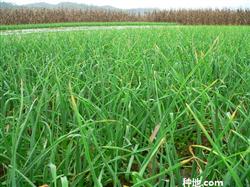
Detailed Explanation of Key Technical Points for Spring Field Management of Garlic
How to manage garlic in spring? Please introduce the water and fertilizer management of garlic after it turns green in spring, which is the key to a bumper garlic harvest. As the weather warms and the plants turn green, water and fertilizer uptake gradually increases, especially during the bolt-bearing stage and the bulb enlargement stage, which are the peak periods of water and fertilizer demand for garlic. Therefore, throughout the entire growth period of garlic, timely irrigation and topdressing should be carried out according to soil moisture, soil fertility and seedling conditions...
条件筛选