Spring disease, pest and weed control in wheat enters a critical period
If disease centers are found in the field, spray promptly to control them. If the diseased leaf rate reaches 5% and the severity is below 10%, use 50 g of 15% triadimefon wettable powder per mu, or 40 mL of 20% triadimefon emulsifiable concentrate per mu, or 30 g of 25% triadimefon wettable powder per mu, or 15-30 g of 12.5% diniconazole wettable powder per mu, ...
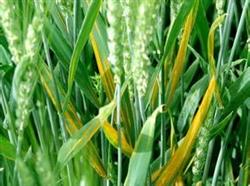 As the climate warms, wheat successively enters the greening-up, stem-erecting and jointing stages. This stage is an important period for promoting weak seedlings to become strong and controlling excessive growth for steady development, and it is also a critical stage for wheat disease and pest control.
In view of the occurrence characteristics and existing problems of wheat diseases, pests and weeds this year, a reporter recently interviewed Professor Wang Baotong of the College of Plant Protection at Northwest A&F University. On how to do a good job in spring wheat disease, pest and weed control and ensure a bumper wheat harvest, Professor Wang provided farmers with some methods.
Spring weed control in wheat fields. In fields where chemical control was not carried out last winter and weeds are severe, control should be carried out promptly in spring. Because after wheat greens up in spring, the suitable time for chemical control is relatively tight, and temperatures are unstable, improper use of herbicides can easily cause phytotoxicity. Therefore, the following points must be noted when using chemicals:
① The spraying time must be from wheat greening-up to before jointing, with the daily average temperature stable above 10 degrees. After wheat jointing, chemical herbicides must not continue to be used to prevent phytotoxicity. ② Pay attention to weather changes before application; when there is a strong temperature drop within 2-4 days before application, it is not suitable to apply chemicals. ③ Strictly control the dosage and do not increase or decrease it at will; for some new herbicide varieties, they must not be used blindly. ④ Spray evenly and thoroughly, ensuring no missed spraying and no repeated spraying. ⑤ Select the correct herbicide type according to the weed species in the field.
Field control of spring diseases and pests. The period from wheat greening-up to jointing is when wheat diseases and pests begin to occur and cause damage, and it is also a critical period for disease and pest control. Therefore, forecasting must be done well, and according to the occurrence of diseases and pests in the field, the best control period should be determined and pesticide varieties selected. For airborne diseases and migratory pests such as wheat stripe rust, powdery mildew and aphids, unified prevention and control should be adopted. For locally occurring diseases such as wheat take-all and cyst nematodes, measures should be taken to control their spread, avoid human and harvesting machinery transmission to non-epidemic areas, and slow the spread rate.
① Wheat rust, powdery mildew and leaf blight: For these epidemic diseases, regular investigation and observation must be carried out. Before wheat heading, when wheat powdery mildew reaches a diseased plant rate of 15% or a diseased leaf rate of 5%, wheat stripe rust reaches a diseased leaf rate of 0.5-1%, wheat leaf rust reaches a diseased leaf rate of 5%, or wheat leaf blight reaches a diseased leaf rate of 1%, as long as any one of the above diseases reaches the control threshold, control should be carried out immediately.
② Wheat sheath blight: The greening-up and jointing period is the peak period for the occurrence and development of wheat sheath blight. In early to mid-March, when the diseased plant rate in the field reaches 10%, control should be carried out as early as possible.
③ Wheat blossom midge: Before April 20, spread toxic soil for control during the pupal stage. Control during the pupal stage is most effective against wheat blossom midge, as it can directly kill some pupae and larvae that have moved up to the soil, and can also suppress adults.
④ Wheat red spider mite: When there are 200 mites per single chi of row length, use 8-10 mL of 1.8% abamectin per mu added to 50 kg of water for spraying, or spray with a 2000-3000 times dilution of 15% pyridaben emulsifiable concentrate for control.
⑤ Wheat aphid: During the wheat jointing stage, reduce the aphid source base. When there are more than 500 aphids per 100 wheat plants on average, or the aphid-infested plant rate is greater than 25%, use 50 mL of 25% aphid-mite clear emulsifiable concentrate per mu, a 2500 times dilution of 20% imidacloprid, or a 3000 times dilution of 25% pirimicarb for spraying control.